A Guide to Safe and Successful Rat Introductions
Introducing a new rat to your existing group (or "mischief") is an exciting step, but it must be handled with care and patience. Rats are territorial and have complex social hierarchies. A proper introduction process is crucial to prevent stress, injury, and to foster a peaceful, bonded colony.
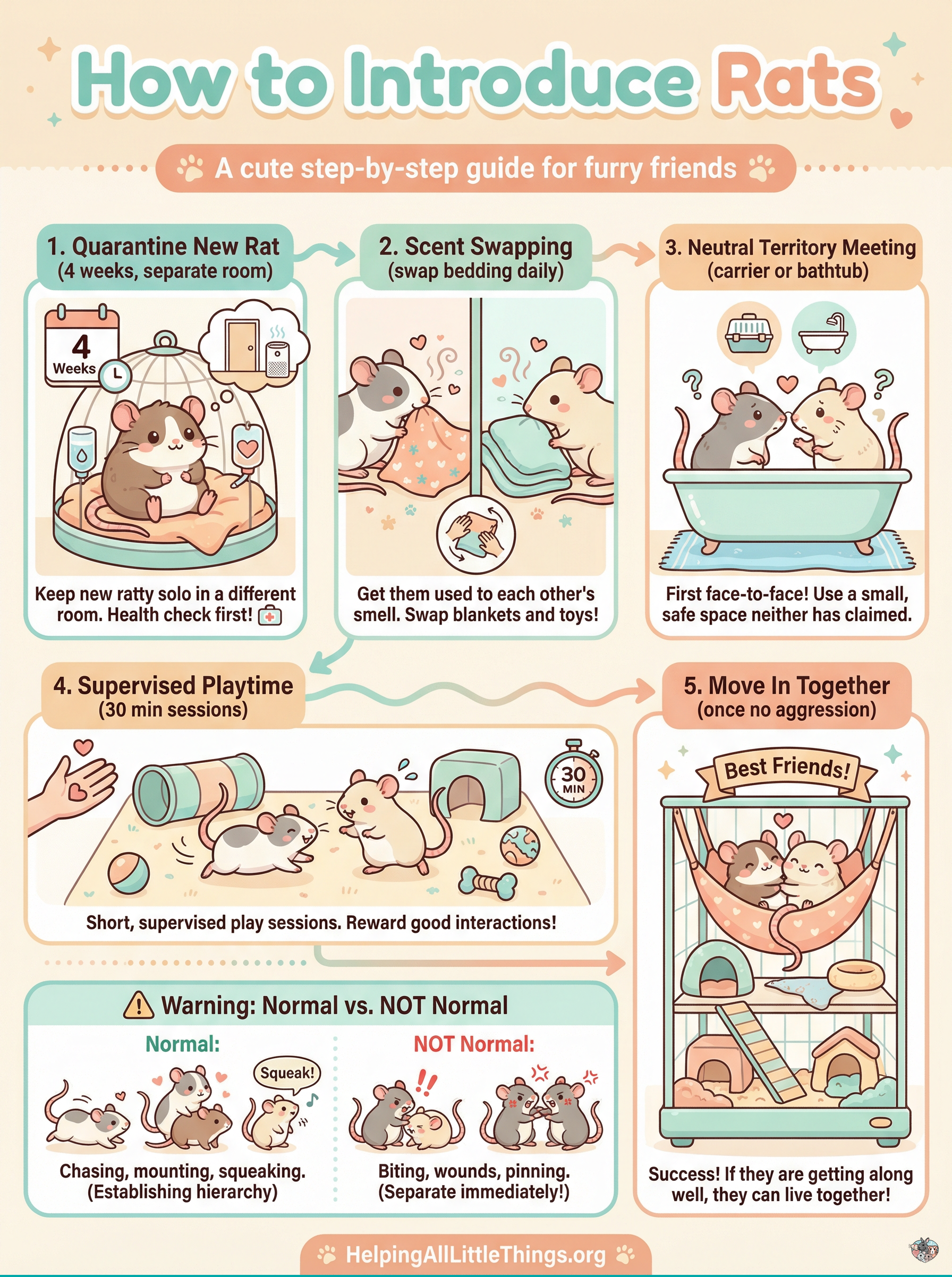

Step 1: Quarantine (4 Weeks)
This is the most critical step and should never be skipped.
- Why: New rats can carry parasites or illnesses that are not immediately apparent — including mycoplasma, which may not show symptoms for weeks. A full four-week quarantine period gives you time to catch slow-developing conditions before they spread to your existing rats [1].
- How: House the new rat(s) in a separate cage in a completely different room from your current rats. Handle and feed your existing rats first, then wash your hands thoroughly before interacting with the new rat(s) to prevent cross-contamination. Do a basic health check on arrival: check for signs of respiratory distress, parasites, wounds, or unusual discharge.
Step 2: Scent Swapping
After the quarantine period, you can begin to familiarize the rats with each other's scents.
- How: Swap items between the cages daily — a small piece of bedding, a fabric toy, or a hammock. Daily swaps build up scent familiarity faster and allow them to get used to each other's smell in a completely non-threatening way.
Step 3: The First Meeting (Neutral Territory)
The first face-to-face meeting should always take place in a neutral space that neither group has claimed as their territory.
- Where: A dry bathtub, a small bathroom, or a playpen are good options. The space should be small enough that the rats will interact, but large enough that they can retreat if they feel overwhelmed.
- What to Expect: Initial interactions may include sniffing, grooming, and some mild chasing or pinning as they establish a social hierarchy. This is normal [2].
- Supervision is Key: Never leave the rats unattended during these initial meetings. Aim for sessions of around 30 minutes and always end on a positive note — separate them before any tension escalates.
Step 4: Increasing Time and Space
As the rats become more comfortable with each other, you can gradually increase the duration of their supervised time together and move to a slightly larger neutral area.
Step 5: The Clean Cage Method
Once the rats are consistently getting along in the neutral space, it's time to move them into a shared cage.
- How: Thoroughly clean and disinfect the permanent cage and all accessories (hammocks, toys, bowls) to remove all existing scents. Rearrange the layout of the cage completely. This makes the cage feel like a new, neutral territory for everyone [3].
- Introduction: Place all rats in the clean cage at the same time.
Warning Signs of Aggression
It's important to distinguish between normal dominance behavior and true aggression.
- Normal: Squeaking, light pinning, chasing, grooming.
- Aggressive (Separate Immediately):
- Puffed-up fur and hissing
- Aggressive sidling or posturing
- A true, rolling fight where the rats are locked together
- Any bite that draws blood [3]
If you see any signs of true aggression, separate the rats immediately and go back a step in the introduction process. Some introductions can take weeks or even months. Patience is key.
References
[1] Owning Pet Rats — VCA Animal Hospitals, 2023
[2] Introduction to Rats — Merck Veterinary Manual, 2024
[3] Keeping Pet Rats Together - Introducing Rats — RSPCA, Unknown