Eye & Vision Issues in Rats
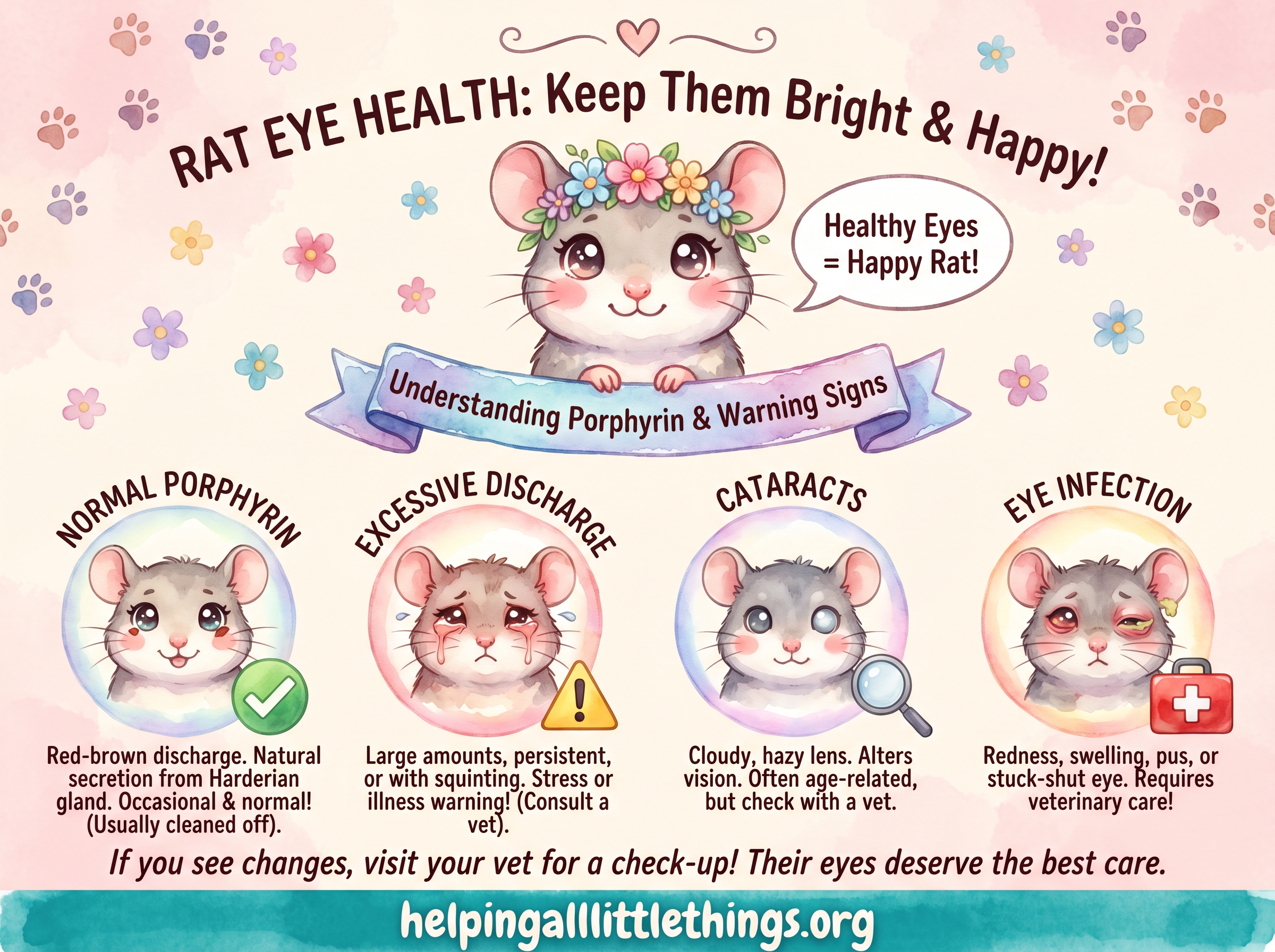

Eye issues are a common concern for rat owners, but they are often a window into the rat's overall health rather than a primary problem. A healthy rat's eyes should be bright, clear, and free from discharge. The most frequent and important eye-related sign to understand is the presence of a red discharge called porphyrin.
Porphyrin: The Barometer of Rat Health
Frequently, owners become alarmed when they see a red, blood-like crust around their rat's eyes or nose. This substance is not blood. It is a red-pigmented, iron-containing secretion called porphyrin, which is produced by the Harderian gland, a specialized gland located behind the eyeball.
- What it Means: While a tiny speck of porphyrin upon waking can be normal (the rat equivalent of "sleep" in our eyes), an excess of porphyrin is a key indicator of stress or illness. It is one of the most reliable signs that a rat is feeling unwell.
- Common Causes: The underlying stressor can be anything from:
- Respiratory Disease: A flare-up of Mycoplasma is the most common cause.
- Pain: Pain from an injury, internal tumor, or other condition.
- Environmental Stress: A dirty cage with high ammonia levels, poor nutrition, or social stress from bullying.
- Action: If you see excessive porphyrin, it is a signal to observe your rat closely. Listen for any respiratory sounds, check for weight loss, feel for any new lumps, and assess their environment. Porphyrin is a symptom; your job is to find the cause.
Common Eye Problems
-
Eye Infections (Conjunctivitis):
- Cause: Bacterial infections of the eye are common, but they are almost always secondary to another problem. A respiratory infection can easily lead to an eye infection, or the eye may become infected if the rat is rubbing it excessively due to irritation or pain.
- Signs: The eye may be squinted or held shut, often with a discharge. The surrounding pink tissue may be red and swollen.
- Action: A veterinarian can prescribe a rat-safe antibiotic eye drop or ointment. However, it is crucial to also diagnose and treat the underlying reason for the infection.
-
Cataracts & Blindness:
- Cause: Rats have naturally poor eyesight and rely much more on their whiskers, smell, and hearing. As they age, it is very common for them to develop cataracts or other degenerative conditions that lead to blindness. Ruby-eyed and pink-eyed rats have poorer vision from the start.
- Signs: The eye may develop a cloudy or white appearance. You may notice the rat is more hesitant or startles more easily.
- Action: No treatment is needed. Rats adapt exceptionally well to blindness. The most important thing is to not rearrange their cage environment, so they can navigate their familiar space by memory and touch.
-
Eye Boggling:
- What it is: This is a strange but normal behavior where a rat's eyes seem to vibrate or bulge in and out of their sockets. It is the rat equivalent of a cat's purr. It happens when a rat is extremely happy and relaxed, and is often accompanied by teeth grinding (bruxing).
- Action: Nothing! This is a sign of a very content rat.
-
Entropion (Patchwork Rats):
- What it is: Entropion — the inward rolling of the eyelid so that fur rubs against the cornea — is a genetic condition strongly associated with the patchwork (roan/husky) coat pattern in domestic rats. In one survey, 100% of patchwork rats examined had entropion. It causes chronic pain, corneal ulceration, and potential vision loss.
- Signs: Persistent eye discharge, squinting, redness, and visible inward rolling of the eyelid margin.
- Action: Consult an exotic animal veterinarian. Mild cases may be managed with lubricants and husbandry improvements. Structural entropion requires surgical correction. Because this condition is directly linked to the patchwork gene, ethical breeders and rescues strongly advise against breeding patchwork rats. See our full guide: Entropion in Small Pets
-
Microphthalmia (Congenital Small Eye):
- What it is: Microphthalmia is a congenital condition in which one or both eyes are abnormally small from birth. In rats, it has been linked to mutations in the connexin 50 gene, which is essential for normal lens development. Affected rats have significantly smaller eyes and dense cataracts from birth. The condition has also been documented across multiple generations of albino rat lines, indicating it can persist in a breeding population once established.
- Signs: One or both eyes appear visibly smaller than normal, often with a cloudy lens. The rat may navigate its familiar environment without apparent difficulty, as rats rely heavily on non-visual senses.
- Action: A veterinarian should assess whether the eye is comfortable and whether secondary complications are developing. See our full guide: Microphthalmia in Small Pets
Prevention
- Monitor for Porphyrin: Use the amount of porphyrin as a daily health check.
- Excellent Husbandry: Keep the cage clean with good ventilation to prevent respiratory flare-ups, which are the leading cause of eye issues.
- Manage Respiratory Disease: Work with your vet to manage chronic Mycoplasma infections effectively.
By understanding that a rat's eyes often reflect its internal health, you can be a more proactive and effective caregiver.