Understanding Rat Behavior: A Guide for Owners
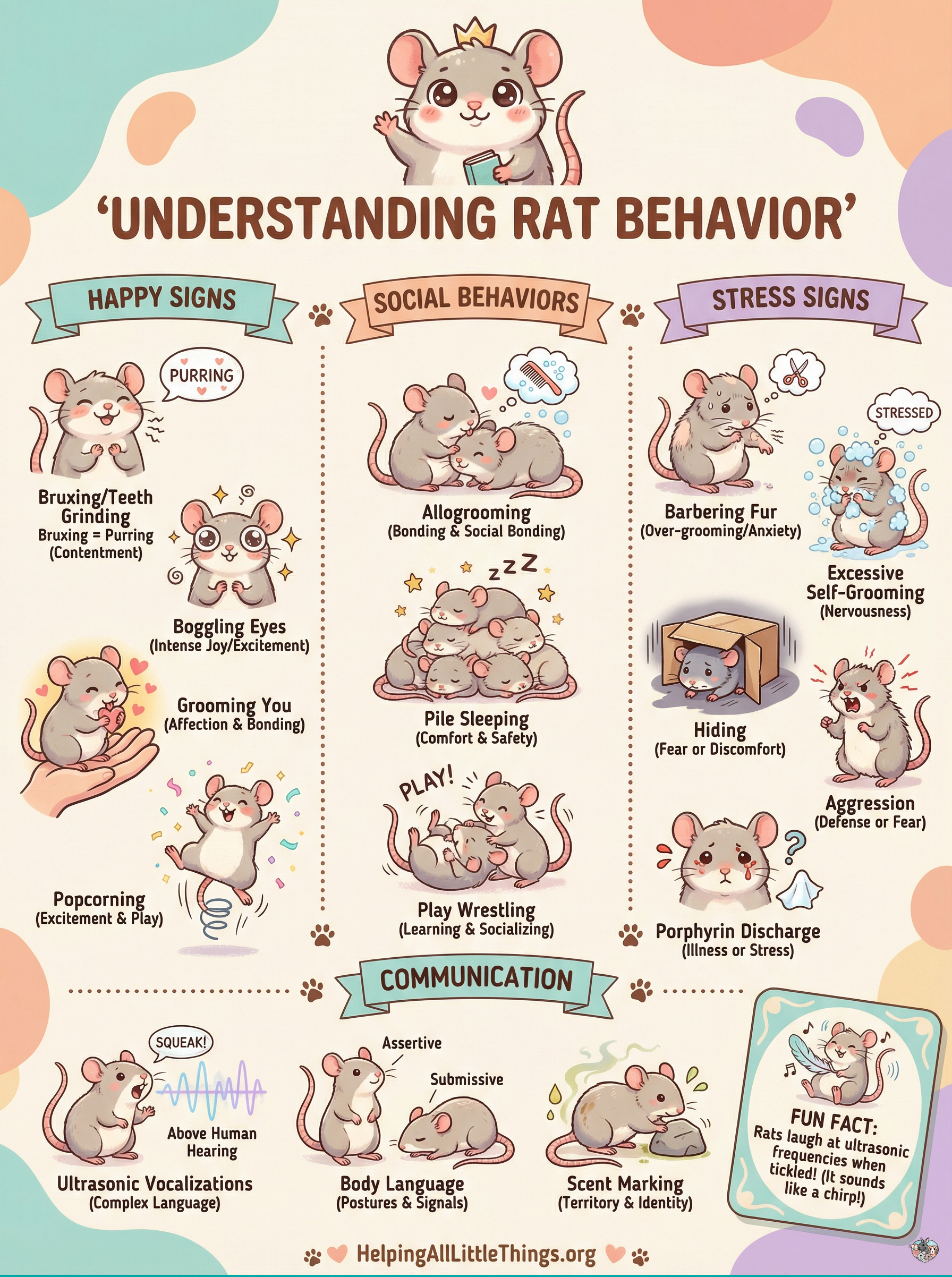

Rats are intelligent, social, and emotionally complex animals. Understanding their natural behaviors and unique ways of communicating is key to building a strong bond and providing them with the best possible care. This guide will help you interpret your rat's body language and understand the meaning behind their actions.
Common Rat Behaviors and What They Mean
Bruxing and Boggling
- What it is: Bruxing is a soft, repetitive grinding or chattering of the teeth. Boggling is when a rat's eyes seem to bulge or vibrate in and out of their sockets. It often happens at the same time as bruxing.
- What it means: This is the ultimate sign of a happy, relaxed, and contented rat! It's the rat equivalent of a cat's purr [1].
Grooming
- What it is: Rats are fastidious groomers and spend a lot of time cleaning themselves. They will also groom each other (allogrooming).
- What it means: Self-grooming is a sign of a healthy, comfortable rat. Social grooming helps reinforce social bonds within a group [2].
Scent Marking
- What it is: Rats will dribble small amounts of urine on objects, their cage, and even their owners.
- What it means: This is a normal way for rats to mark their territory and make their environment smell familiar and safe. It's a compliment—they are claiming you as part of their colony [2]!
Swaying or Head Weaving
- What it is: A rat, particularly one with pink or red eyes, may sway its head from side to side.
- What it means: Rats have poor eyesight. This swaying motion helps them perceive depth and distance more accurately [3].
Signs of a Happy and Healthy Rat
A content rat is typically active, curious, and interested in its surroundings. They should be eager to explore, play, and interact with their cage mates and owners. When relaxed, they will often brux, boggle, and enjoy being petted.
Signs of Stress, Fear, or Pain
It's just as important to recognize when your rat is not feeling well. Signs of stress or pain can be subtle:
- Hiding: A rat that is constantly hiding and avoids interaction may be fearful or in pain.
- Piloerection: The fur stands on end, making the rat look puffy. This is a sign of fear, aggression, or illness.
- Aggression: A normally friendly rat that suddenly becomes aggressive may be in pain.
- Hunched Posture: A rat that sits hunched with its fur puffed up is often in significant discomfort.
- Lethargy: A lack of interest in food, play, or social interaction is a major red flag.
If you notice any of these signs, it's important to consult with a veterinarian to rule out any underlying health issues.
The Importance of Social Housing
Rats are highly social animals and should never be housed alone. They thrive in the company of other rats, and much of their natural behavior is tied to social interaction. A lone rat is a bored and stressed rat, which can lead to behavioral problems and a compromised immune system [2]. Always keep rats in pairs or small, same-sex groups.
References
[1] Owning Pet Rats — VCA Animal Hospitals, Unknown
[2] Special Considerations for Rats — Merck Veterinary Manual, Unknown
[3] Pet Rats Behaviour & Body Language — RSPCA, Unknown