A Guide to Proper Rat Nutrition
Proper nutrition is the cornerstone of your pet rat's health and longevity. As omnivores, rats have specific dietary needs that must be met to prevent obesity, nutritional deficiencies, and other health problems. This guide will walk you through the essentials of a balanced rat diet.
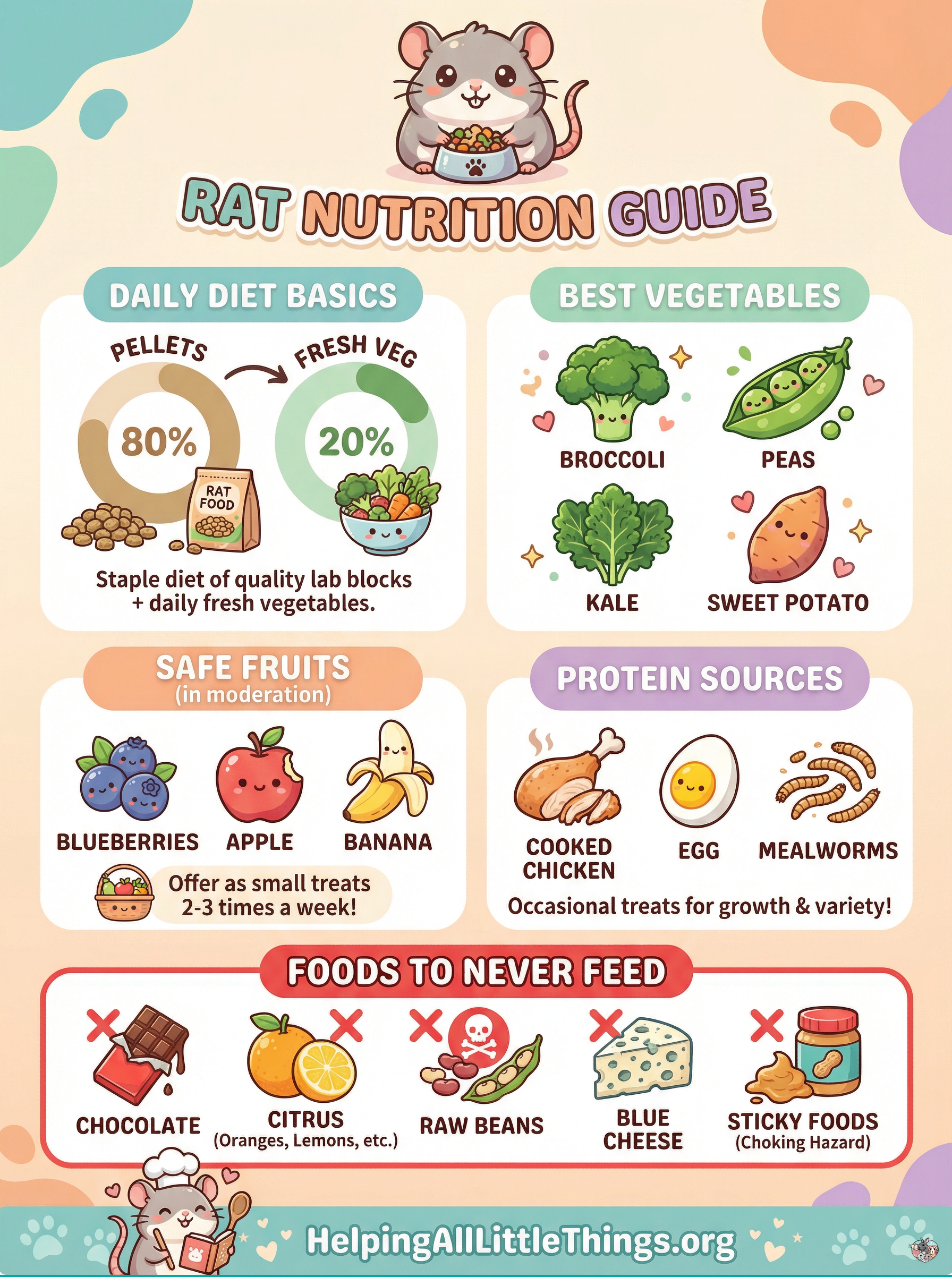

The Foundation: High-Quality Lab Blocks
The bulk of your rat's diet (80-90%) should consist of a high-quality, commercially produced rodent chow, often referred to as lab blocks or pellets [1]. These blocks are specially formulated to be nutritionally complete, ensuring your rat gets the right balance of protein, fat, and essential vitamins and minerals.
- What to Look For: Choose a block with approximately 14-16% protein and 4-5% fat for adult rats [1].
- What to Avoid: Steer clear of seed and grain mixes. Rats are notorious for selective feeding—picking out the tasty, high-fat seeds and leaving the nutritious pellets behind. This leads to an imbalanced diet and obesity [2].
Daily Fresh Foods
While lab blocks are the foundation, supplementing with fresh foods provides enrichment and additional nutrients. These should make up about 10-20% of your rat's daily intake.
- Vegetables: Offer a small amount of fresh, dark leafy greens and non-starchy vegetables daily. Good choices include kale, bok choy, broccoli, and carrots [3].
- Fruits: Fruits are high in sugar and should be given only as occasional treats. Berries, apples (without seeds), and kiwi are good options [3].
Foods to Avoid
Many human foods are unsafe for rats. Never feed your rat:
- Chocolate
- Grapes or raisins
- Avocado
- Onion and garlic
- High-sugar or high-fat processed foods
- Alcohol, caffeine, or carbonated drinks
- Sticky foods like peanut butter, which can be a choking hazard [3]
Water, Water, Everywhere
Your rats must have access to fresh, clean water 24/7. A sipper bottle is the most common method, but a heavy ceramic bowl can also be used. Check the sipper bottle daily to ensure it hasn't become clogged, and change the water every day to keep it fresh.
A Note on Homemade Diets
While homemade diets like the "Shunamite Diet" have gained some popularity, they are not recommended. It is extremely difficult to create a nutritionally complete and balanced diet at home. These diets often lack essential vitamins and minerals, which can lead to serious health problems over time. A high-quality lab block remains the safest and most reliable foundation for your rat's diet [4].
References
[1] Feeding Rodents — VCA Animal Hospitals, Unknown Year
[2] What should I feed my rats? — RSPCA Knowledgebase, 2024
[3] Nutrition in Rodents and Lagomorphs — Merck & Co., Inc., 2026
[4] Nutritional Physiology and Feeding of Companion Rodents. — Parsons JL, Veterinary Clinics of North America – Exotic Animal Practice, 2024