The Shadow of Compassion: Understanding and Addressing Animal Hoarding
Animal hoarding is a complex and tragic issue that sits at the intersection of animal welfare, public health, and mental illness. It is not born from a place of malice, but often from a deeply misguided sense of love and a compulsive need to “save” animals. This article aims to shed light on this sensitive topic with the delicacy it deserves, providing guidance for individuals who may be struggling, as well as for rescues navigating these difficult situations.
What is Animal Hoarding?
The American Society for the Prevention of Cruelty to Animals (ASPCA) defines animal hoarding as a situation where an individual possesses more than the typical number of companion animals and is unable to provide even minimal standards of nutrition, sanitation, shelter, and veterinary care, with this neglect often resulting in starvation, illness, and death. [1]
Crucially, a key feature is the individual’s denial of their inability to provide adequate care. They often believe they are the only ones who can properly care for their animals, even amidst overwhelming evidence to the contrary.
According to the Animal Legal Defense Fund, an estimated 250,000 animals are victims of hoarding each year in the United States. [2]
The Three Types of Hoarders
Research has identified three main profiles of individuals who hoard animals:
| Type | Description | Motivation |
|---|---|---|
| Overwhelmed Caregiver | Often begins with a reasonable number of animals but becomes overwhelmed due to changes in life circumstances (e.g., job loss, health issues, death of a spouse). They are often socially isolated and the animals are a primary source of comfort. | Genuine love for animals, but passive about acquisition and unable to say no. |
| Rescuer Hoarder | Driven by a powerful mission to save animals from any perceived threat. They actively acquire animals, often believing they are the only ones who can save them. They oppose euthanasia under any circumstances. | A compulsive need to rescue, often leading them to believe they are above the law and that established shelters are the enemy. |
| Exploiter Hoarder | Acquires animals purely to serve their own needs, with a marked lack of empathy for the animals. They are indifferent to the suffering they cause and may present as charming and manipulative to acquire more animals. | Sociopathic tendencies; the animals are a means to an end, whether for control, attention, or other personal gratification. |
The Consequences: A Cycle of Suffering
The impact of hoarding is devastating for both the animals and the people involved.
- For the Animals: Severe neglect leads to widespread disease (parasites, fungal infections, viruses), starvation, and injuries from fighting in overcrowded conditions. Animals are often not spayed or neutered, leading to uncontrolled breeding that exacerbates the problem. Carcasses of deceased animals are found in up to 60% of hoarding homes. [3]
- For the Hoarder: They often live in squalor, with homes contaminated by feces, urine, and decaying animal matter, posing serious health risks. They experience profound social isolation, and the condition is often linked to other mental health issues like depression, anxiety, and obsessive-compulsive disorder (OCD). [4]
Recognizing the Signs
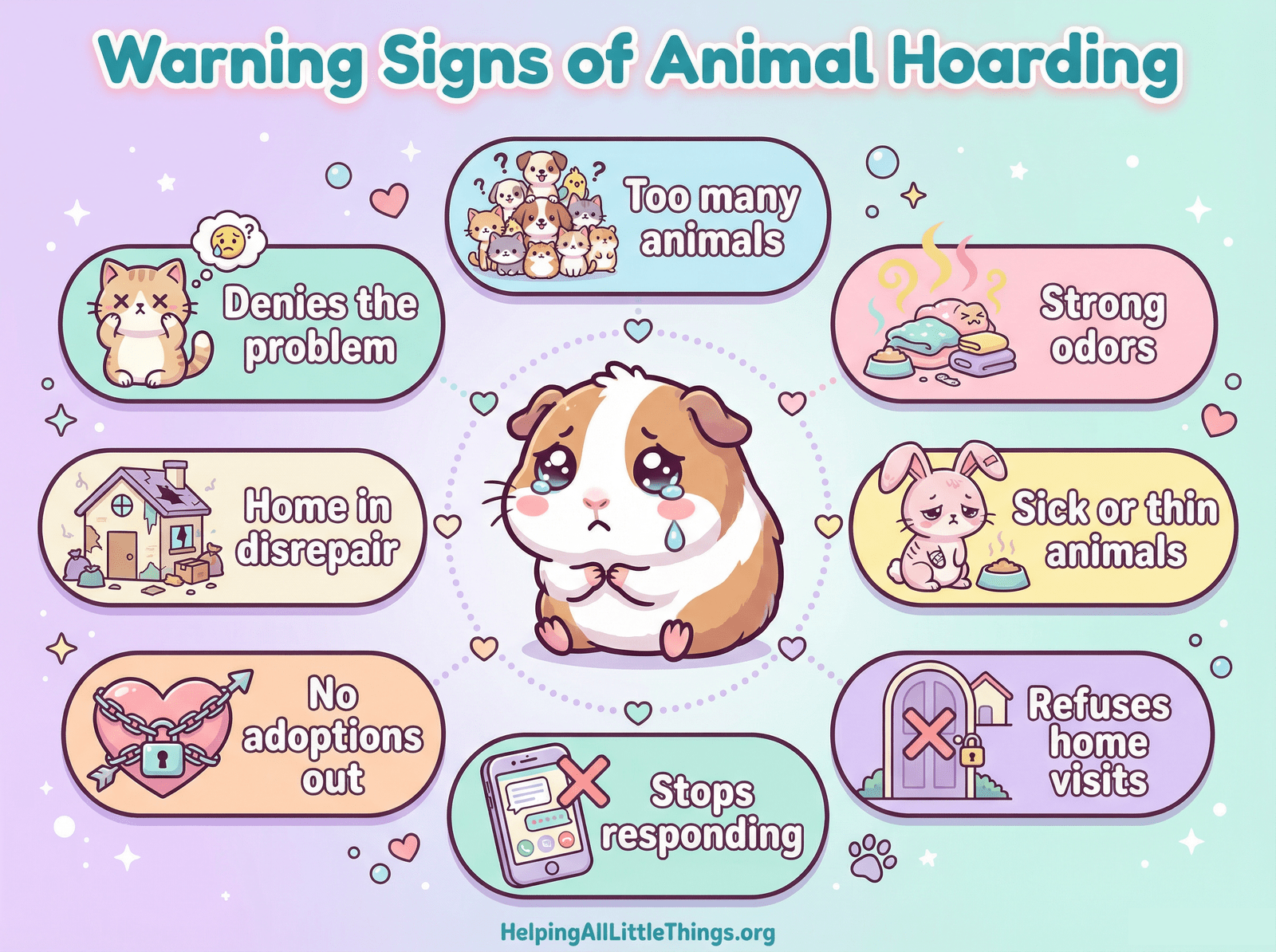

Whether you are concerned about a neighbor, a friend, or even a foster in your rescue network, certain signs are common.
Signs in an Individual or Neighbor:
- An unusually large number of animals on a property.
- A sharp decline in the condition of the home and yard (strong odors of ammonia, visible clutter, pests).
- The animals appear neglected, underweight, or sick.
- The person is socially isolated, rarely leaving home and refusing to let visitors inside.
- They continue to acquire animals despite the deteriorating conditions.
Red Flags for a Rescue or Foster:
For rescues, identifying a “rescuer hoarder” within your own network of fosters can be particularly challenging. These individuals often present as dedicated and passionate.
- Refusal of Home Visits: A consistent pattern of excuses to prevent a rescue representative from visiting their home is the biggest red flag. They may insist on meeting in public places to pick up or drop off animals.
- Ghosting or Evasiveness: They become difficult to contact, avoiding phone calls, texts, and emails, especially when asked for updates on a specific animal.
- Taking on Too Many Animals: They frequently volunteer for the most difficult medical or behavioral cases, often taking on more animals than they can reasonably handle.
- Criticism of Other Rescues/Shelters: They may express a belief that all other organizations are inadequate and that they are the only ones providing proper care.
- No Adoptions Out: The foster never seems to have animals ready for adoption, or they sabotage potential adoptions, claiming no adopter is good enough.
What To Do: A Delicate Approach
If You Are Worried About Yourself
If you are reading this and feel a sense of recognition, please know that you are not alone and help is available. The first step is the hardest: acknowledging that you are overwhelmed.
- Reach Out for Help: Confide in a trusted friend, family member, or your veterinarian. You can also contact your local humane society or animal control agency. Frame it as a request for help, not a surrender. Many organizations have programs to assist overwhelmed caregivers.
- Be Honest About the Numbers: It is critical to be truthful about how many animals are in your care. Hiding the true scope of the problem will only delay a real solution.
- Focus on the Animals’ Well-being: Try to shift your focus from your emotional attachment to what is truly best for the animals. They deserve clean living conditions, proper nutrition, and individual medical care.
- Seek Professional Support: Animal hoarding is a recognized mental health issue. Seeking therapy can help you understand the underlying causes of your compulsion and develop healthier coping mechanisms.
If You Are a Rescue Dealing with a Foster
This is an incredibly difficult situation that requires a firm but compassionate protocol.
- Document Everything: Keep meticulous records of all communication, home visit attempts, and any concerning reports.
- Insist on a Home Visit: Do not back down. A home visit is a non-negotiable part of any responsible foster program. If they refuse, it is grounds for immediate removal of all rescue animals.
- Involve Law Enforcement: If you have credible evidence of neglect or cruelty, or if the foster refuses to return the animals, you must contact your local animal control or law enforcement agency. This is not a betrayal; it is your legal and ethical duty to protect the animals in your care.
- Review Your Foster Program: Use this as an opportunity to strengthen your foster screening process. Require regular home visits, limit the number of animals per foster, and create a clear protocol for handling unresponsive or suspicious fosters.
Animal hoarding is a tragedy that unfolds in the shadows. By understanding its complexities and approaching it with a combination of empathy, firmness, and a commitment to the well-being of both animals and people, we can bring these situations into the light and begin the process of healing.
References
[1] ASPCA. "Animal Hoarding." https://www.aspca.org/helping-people-pets/animal-hoarding
[2] Animal Legal Defense Fund. "Animal Hoarding Facts." https://aldf.org/article/animal-hoarding-facts/
[3] Patronek, G. J. (1999). "Hoarding of animals: an under-recognized public health problem in a community." Public Health Reports, 114(1), 81–87.
[4] Frost, R. O., Patronek, G., & Rosenfield, E. (2020). "Animal Hoarding: A Public Health Problem." In The Oxford Handbook of Hoarding and Acquiring (pp. 259-274). Oxford University Press.