A Comprehensive Guide to Rat Care
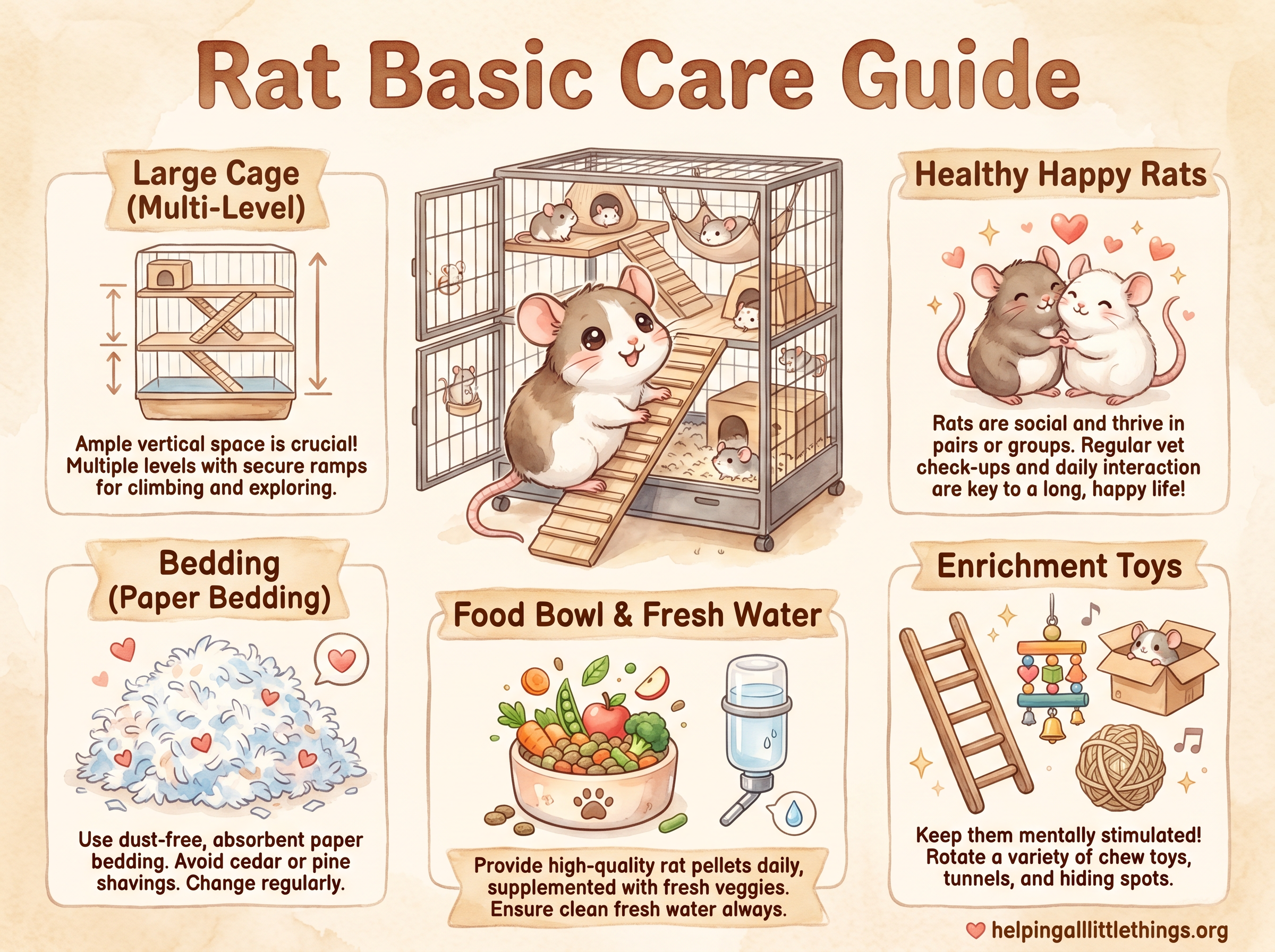

Rats are intelligent, social, and engaging pets that bring a unique joy to any home. To ensure they live long, happy, and healthy lives, it’s essential to understand and meet their specific needs. This guide provides a comprehensive overview of daily and weekly care routines for your pet rats.
The Importance of Social Housing
First and foremost, rats should never be housed alone. They are incredibly social animals that thrive in the company of their own kind. A lone rat is prone to depression, stress, and behavioral issues. Always keep rats in same-sex pairs or small groups [1].
Daily Care Routine
Consistency is key to keeping your rats healthy and happy.
- Check Food and Water: Ensure fresh food and water are always available. Water bottles should be checked daily to ensure they are working correctly, and water should be refreshed.
- Spot Clean: Remove any soiled bedding or litter to keep the cage clean and reduce ammonia buildup.
- Health Check: Take a moment to observe each rat. Look for any signs of illness such as lethargy, loss of appetite, porphyrin (red tears), or changes in breathing. Early detection is crucial [2].
- Social Interaction: Spend time with your rats every day. This can include gentle handling, talking to them, and offering treats. This builds a strong bond and helps you monitor their health.
Weekly Care Routine
A thorough weekly cleaning is essential for a healthy environment.
- Deep Clean the Cage: Remove all bedding, toys, and accessories. Wash the cage, food bowls, and water bottles with a pet-safe cleaner or hot, soapy water. Rinse thoroughly.
- Replace Bedding: Provide fresh, clean bedding. Use a dust-free, absorbent material like aspen shavings or recycled paper products. Avoid pine and cedar shavings [2].
- Enrichment Rotation: Rotate toys and cage accessories to keep your rats mentally stimulated and prevent boredom.
Diet and Nutrition
A balanced diet is the foundation of good health.
- Lab Blocks: The majority of your rat’s diet (90%) should be a high-quality rodent lab block [1].
- Fresh Foods: Supplement their diet with a small amount of fresh vegetables and fruits (5-10%) [1].
- Avoid Seed Mixes: Seed mixes encourage selective feeding and are not nutritionally complete [1].
Health and Veterinary Care
- Find a Vet: Locate a veterinarian who is experienced with exotic pets before you need one.
- Annual Checkups: An annual wellness exam is recommended to catch any potential health issues early [2].
- Spaying/Neutering: Spaying female rats can significantly reduce the risk of mammary tumors, and neutering males can help with hormonal aggression [2].
Keep a simple health journal for each rat, noting their weight, eating habits, and any changes in behavior. Early detection of changes — especially weight loss or labored breathing — can make a significant difference in treatment outcomes.
References
[1] Feeding Rodents — VCA Animal Hospitals, 2023
[2] Routine Health Care of Rats — Katherine E. Quesenberry, Kenneth R. Boschert, Merck Veterinary Manual, 2024
[3] Pet Rats in the UK — RSPCA, 2026