Is a Rat Right for Me and My Family?
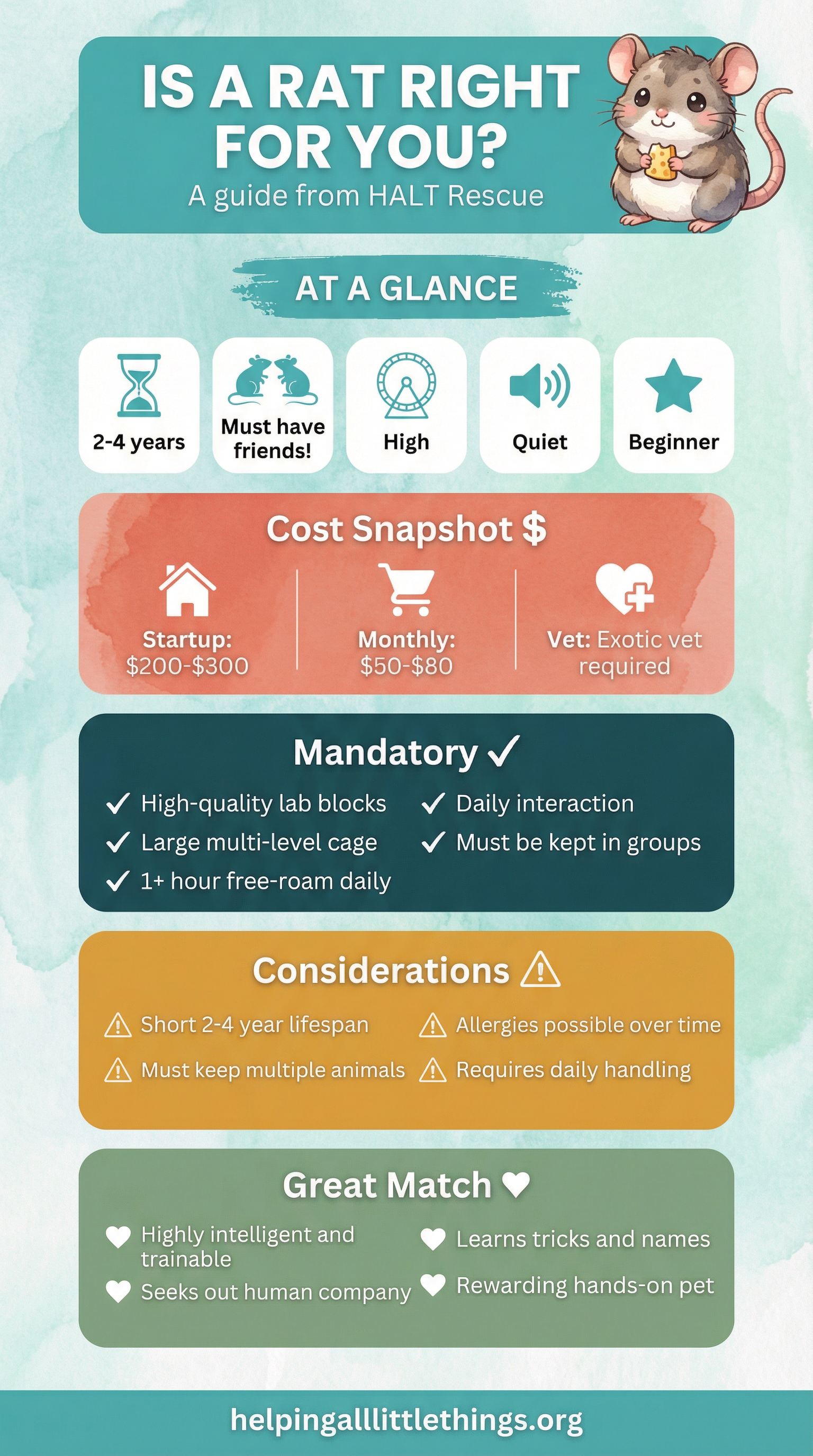

Rats are among the most intelligent, affectionate, and interactive small pets you can keep. They learn their names, come when called, enjoy being held and carried, and form genuine bonds with their people. They are also one of the most misunderstood pets — and one of the most frequently surrendered when families aren't prepared for their real needs.
The Basics
Rats typically live 2 to 4 years. That short lifespan is one of the most important things to understand before adopting. It means you will experience loss — often more than once, and sometimes in quick succession. For families with children, this is worth discussing openly before bringing rats home.
Rats are highly social animals and must be kept in pairs or groups — this is non-negotiable. A single rat will become depressed, anxious, and prone to illness. Plan to adopt at least two, and ideally three, so that if one passes, the remaining rat is not suddenly alone.
What They Need Every Day
- High-quality lab blocks (such as Oxbow or Mazuri) as the dietary foundation, supplemented with fresh foods
- A large, multi-level cage — minimum 2 cubic feet per rat, with good ventilation
- At least 1 hour of supervised free-roam time outside the cage daily; rats are highly active and need space to explore
- Daily interaction — rats that are not handled regularly become skittish and lose their tameness
- Spot cleaning daily and a full cage clean weekly
The Cost of Rat Ownership
| Category | Estimated Cost |
|---|---|
| Startup (cage, supplies, first vet visit, adoption fees) | $200–$300 |
| Monthly ongoing (food, bedding, fresh foods) | $50–$80/month |
| Veterinary care | Exotic vet required; respiratory illness is common and often requires treatment |
Rats are prone to respiratory infections, which can escalate quickly and require antibiotics from an exotic vet. They are also prone to tumors, particularly females, as they age. Vet costs can add up, and finding an exotic vet before you need one urgently is strongly recommended.
Think Twice If...
- The short lifespan is emotionally difficult for your family. Losing a beloved pet every 2–3 years — and potentially losing multiple rats in a short window — is genuinely hard. This is especially worth considering for young children.
- You are not prepared to keep multiple animals. You cannot keep just one rat. If you're not ready for the commitment of a small group, rats may not be the right fit.
- You have allergies to dander or bedding dust. Rat allergies are relatively common and can develop over time even if you weren't initially reactive.
- You cannot commit to daily handling and interaction. Rats that are not regularly socialized become fearful and difficult to handle.
Great Match If...
- You want a smart, trainable pet that genuinely interacts with you — rats can learn tricks, recognize their names, and seek out human company
- You enjoy hands-on daily interaction and have time to let them roam and play
- You can handle the emotional weight of a short lifespan and are prepared for it
- You have space for a large, well-ventilated multi-level cage
A Note About Rats and Children
Rats are actually excellent pets for older children and teenagers — they are gentle, rarely bite when properly socialized, and the bond they form with their people is remarkable. They are less ideal for very young children, as they are fast-moving and require calm, confident handling. With adult supervision and proper introduction, rats and kids can be a wonderful match.
HALT Rescue has extensive experience with rats and is happy to help you find the right match. Note that rat surrenders are currently paused due to capacity — contact us for current availability.