Creating the Ideal Habitat for Your Pet Rats
A well-designed habitat is crucial for the health, happiness, and safety of your pet rats. As active, intelligent, and social creatures, they need a space that supports their natural behaviors like climbing, burrowing, and exploring. This guide will walk you through the key components of an ideal rat habitat.

Choosing the Right Cage
The cage is the foundation of your rats' environment. It needs to be spacious, secure, and easy to clean.
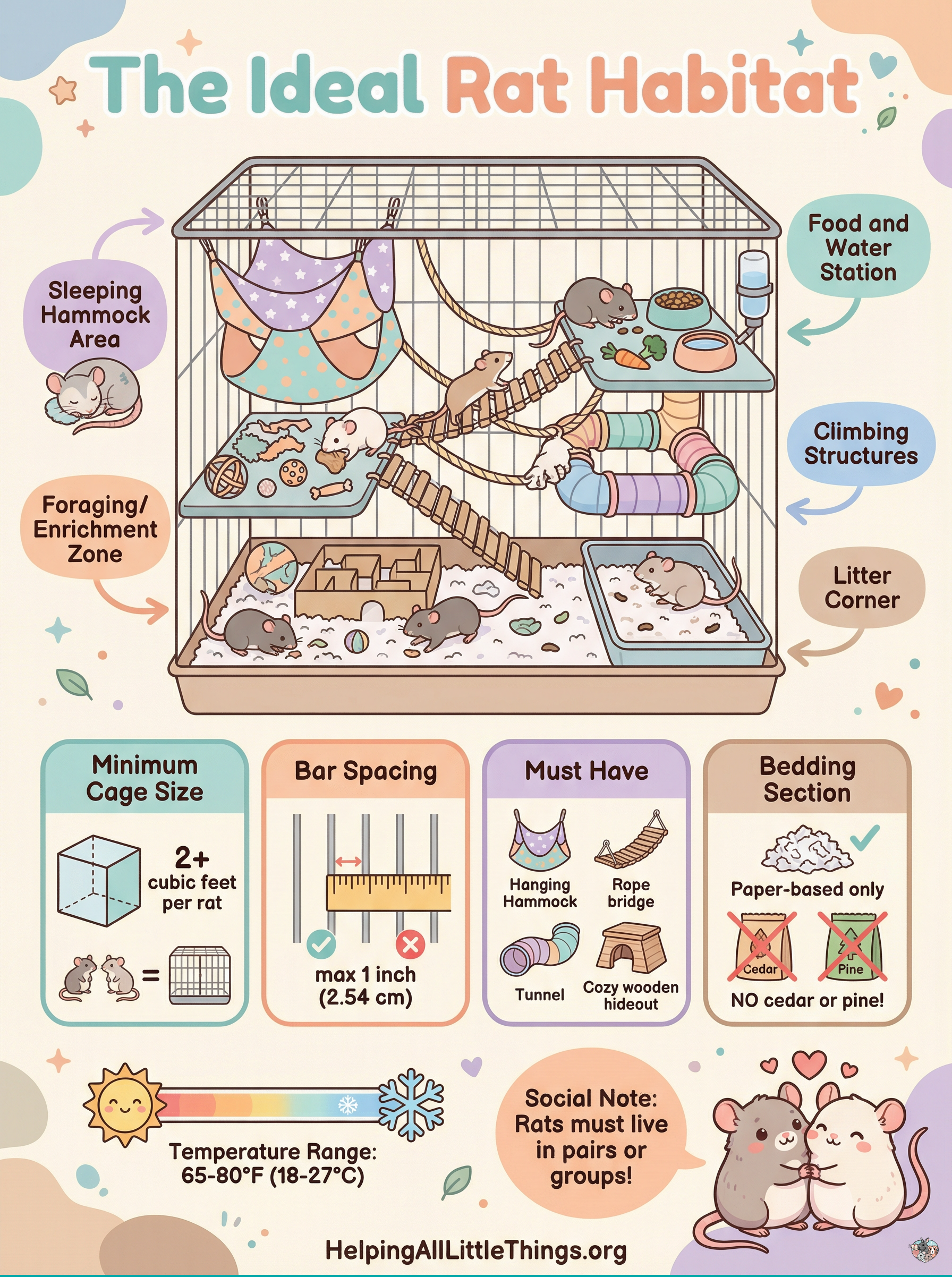
- Size Matters: The more space, the better. A good rule of thumb is to provide at least 2.5 cubic feet of space per rat. For a pair of rats, a cage that is at least 30" x 18" x 24" is a good starting point.
- Bar Spacing: Bar spacing should be no more than 1/2 inch to prevent escapes, especially for young rats.
- Solid Flooring: Avoid wire mesh or grid floors and ramps. These can cause painful foot injuries, a condition known as bumblefoot. All surfaces should be solid [1].
- Ventilation: Good ventilation is critical to prevent the buildup of ammonia from urine, which can cause serious respiratory problems [1]. Wire cages are superior to aquariums or plastic bins for this reason.
- Accessibility: Choose a cage with large doors that allow for easy cleaning and access to your rats.
Bedding and Substrate
Deep, absorbent bedding is essential for hygiene and for satisfying your rats' natural desire to burrow.
- Safe Options: Use dust-free, absorbent materials like aspen shavings, kiln-dried pine, or recycled paper products. A deep layer (4-6 inches) will allow your rats to dig and burrow [2].
- Materials to Avoid: Never use cedar shavings, as their aromatic oils are toxic to rats. Also avoid dusty beddings, corncobs, and scented litters, which can cause respiratory irritation [2].
Essential Cage Accessories
- Hiding Places: Rats are prey animals and need secure places to hide and sleep. Provide multiple hideouts like igloos, cardboard boxes, and fabric huts.
- Hammocks: Rats love to lounge and sleep in hammocks. Offer a variety of fabric hammocks, and wash them frequently.
- Food and Water: Use heavy ceramic bowls for food to prevent tipping. Water can be provided in a sipper bottle or a heavy bowl. Check water bottles daily for clogs and refresh water daily [1].
Enrichment: The Key to a Happy Rat
Boredom can lead to stress and behavioral problems. A constantly changing and stimulating environment is crucial for your rats' mental well-being.
- Climbing: Fill the vertical space in the cage with ropes, ladders, and branches to encourage climbing.
- Chewing: Rats' teeth grow continuously and they need safe items to chew on. Provide untreated wood blocks, cardboard, and toys designed for chewing [1].
- Foraging: Instead of just putting food in a bowl, scatter it around the cage or hide it in puzzle toys to encourage natural foraging behavior.
- Out-of-Cage Time: Supervised free-roam time in a rat-proofed area is essential for exercise and exploration.
Location, Location, Location
Where you place the cage is also important. Keep it in a temperature-controlled room, away from direct sunlight, drafts, and loud noises. Rats are sensitive to high temperatures and can suffer from heatstroke at temperatures above 80°F (27°C) [2].
References
[1] Housing Rodents — VCA Animal Hospitals, Unknown
[2] Providing a Home for a Rat — Merck Veterinary Manual, 2024
[3] Creating a good home for rats — RSPCA, Unknown