Rat Treat Guide
This guide is meant to help you quickly check whether a food is generally safe as a treat for your rats. Research on rat nutrition is limited, so some guidance is based on related species or high-dose studies. If you're unsure or worried about something your rat ate, reach out to your vet.
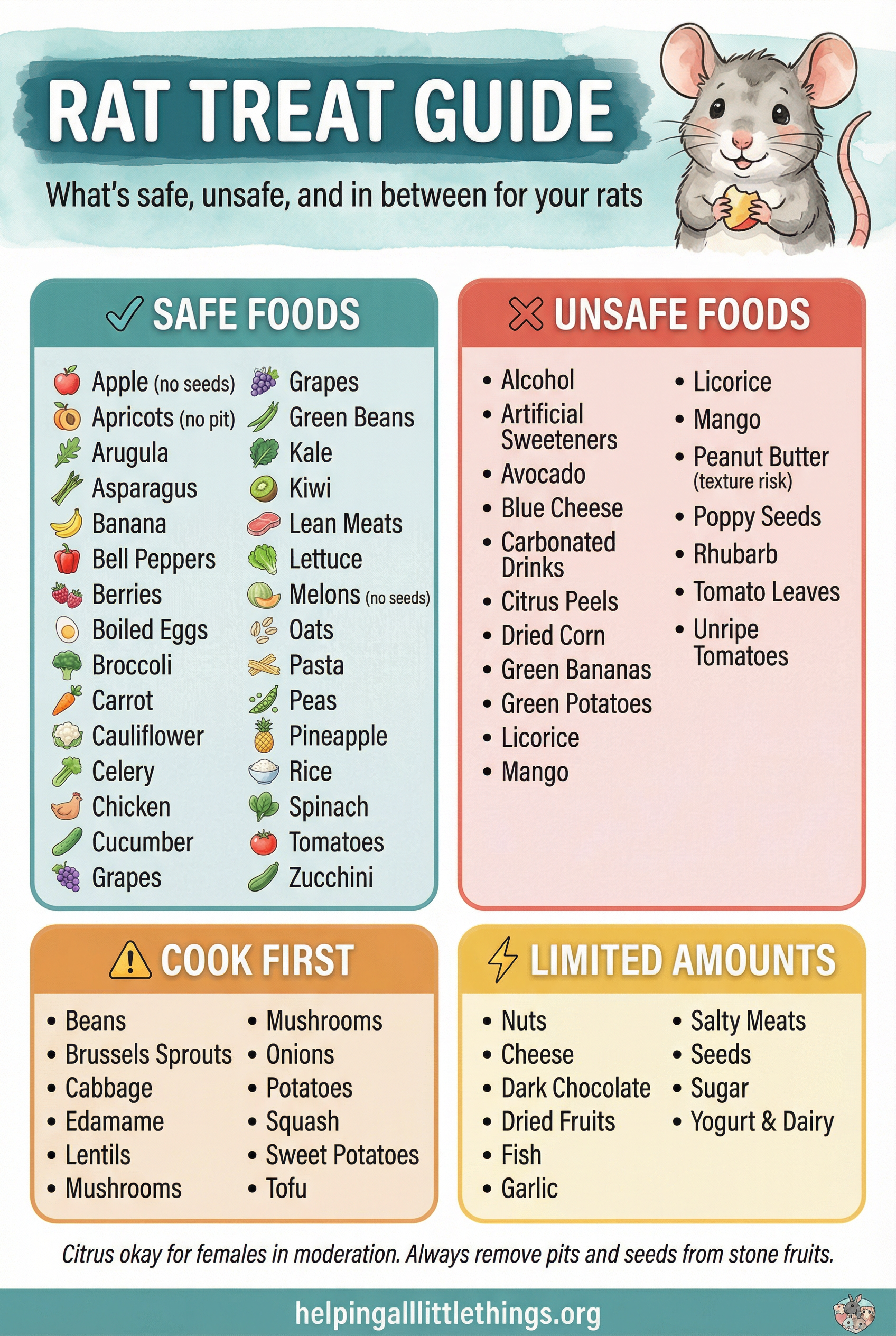

Safe Foods
The following foods are generally safe to offer as treats or dietary supplements for rats:
| Food | Notes |
|---|---|
| Apples | Remove seeds |
| Apricots | Remove the pit |
| Arugula | |
| Asparagus | |
| Baby food | Plain, unsweetened varieties |
| Bamboo | Food grade only |
| Banana | Fresh only; see limited amounts for details |
| Bell peppers | |
| Berries | Strawberries, blueberries, raspberries, etc. |
| Boiled or scrambled eggs | |
| Bok choy | |
| Bones | Chicken, pork, or beef — monitor for choking |
| Bread / crackers | Plain, in small amounts |
| Broccoli | |
| Carrot | |
| Cauliflower | |
| Celery | |
| Cherries | Remove the pit |
| Chicken | Cooked, plain |
| Coconut | |
| Cranberries | |
| Crickets | Not wild-caught |
| Cucumber | |
| Currants | |
| Figs | |
| Grapes | Purple grapes may have cancer-preventive properties |
| Green beans | |
| Kale | |
| Kiwi | |
| Lean meats | Chicken, turkey, lean cuts of pork and beef |
| Lettuce | |
| Mealworms | Not wild-caught |
| Melons | Remove seeds |
| Nectarines | Remove the pit |
| Oatmeal / oats | |
| Pasta | Cooked or dry |
| Peaches | Remove the pit |
| Pears | Remove seeds |
| Peas | |
| Pineapple | |
| Pomegranate | |
| Popcorn | Plain, no butter or salt |
| Pumpkin | |
| Rice | |
| Rolled oats | |
| Soy products | |
| Spinach | |
| Sunflower seeds | See limited amounts |
| Tomatoes | Ripe only; avoid leaves and unripe fruit |
| Wheat cereals | Plain, low-sugar |
| Zucchini |
Unsafe Foods
The following should never be fed to rats:
- Alcohol
- Alfalfa / hay (not appropriate as a food source for rats)
- Artificial sweeteners
- Avocado
- Blue cheese
- Carbonated drinks
- Citrus peels
- Dried corn
- Edible moldy foods
- Green bananas
- Green potatoes / potato eyes
- Spoiled food
- Licorice
- Mango
- Peanut butter (choking hazard due to sticky texture)
- Poppy seeds
- Rhubarb
- Tomato leaves
- Unripe tomatoes
Plain citrus fruit (oranges, clementines, etc.) is unsafe for male rats due to a compound called d-limonene, which can cause kidney damage. It is generally considered safe for females in small amounts.
Cook First
These foods should only be offered cooked — raw versions can cause digestive upset or contain compounds that are harmful before cooking:
- Beans
- Brussels sprouts
- Cabbage
- Edamame
- Lentils
- Mushrooms
- Onions (toasted or lightly cooked is acceptable)
- Potatoes
- Squash
- Sweet potatoes
- Tofu
Limited Amounts
These foods are not toxic but should only be given occasionally and in small quantities:
- Nuts — almonds, cashews, peanuts, walnuts (high fat)
- Bananas — fresh only; high sugar
- Beets and high-oxalate or high-nitrate vegetables
- Bones — monitor and remove when your rat is done
- Cheese — rats become less lactose-tolerant with age
- Dark chocolate — small amounts only; never milk or white chocolate
- Dried fruits — high sugar concentration
- Fatty foods
- Fish
- Garlic — small amounts only
- Heavily salted or seasoned foods
- Salty meats (e.g., ham)
- Seeds — sunflower, pumpkin, etc. (high fat)
- Shellfish
- Sugar
- Yogurt and other dairy products
If you're unsure whether a specific food is safe, err on the side of caution and check with a vet experienced with small mammals before offering it. When something new is introduced, offer a small amount first and monitor for any digestive changes.