Proper Handling of Pet Rats
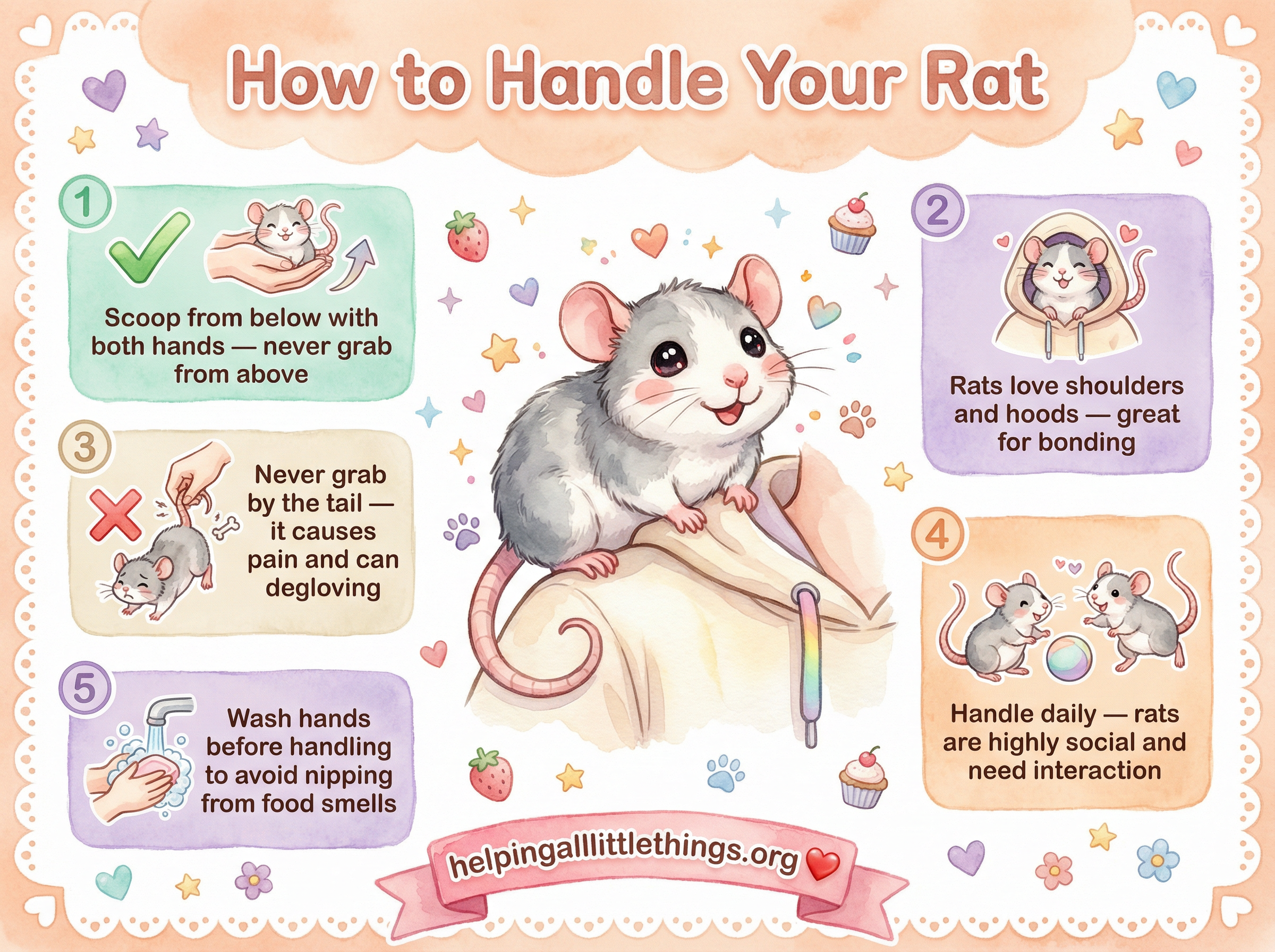

Proper handling is the foundation of a positive relationship with your pet rats. Rats are intelligent and social animals that can form deep bonds with their owners, but this requires building trust through gentle, confident, and consistent handling. [1]
This guide will cover the best methods for picking up, holding, and interacting with your rats to ensure they feel safe and secure in your hands.
Building Trust First
Before you can comfortably handle your rats, they need to learn that you are not a threat. This is especially true for young or timid rats.
- Scent Association: Let your rats get used to your scent by placing a worn t-shirt or piece of fleece in their cage. [2]
- Treats are Key: Offer them liquid treats like yogurt or baby food on a spoon, then on your finger. This teaches them that your hand brings good things. [3]
- Gentle Touch: Once they are comfortable taking treats, gently stroke them while they are eating.
How to Pick Up a Rat
Never chase a rat around the cage to pick it up. The goal is to make being picked up a calm and neutral-to-positive experience.
There are two main, safe methods for lifting a rat:
- The Scoop: This is the most preferred method for tame rats. Simply scoop them up from underneath by placing your hand under their belly and lifting them into your cupped hands. [4]
- The Over-the-Shoulders Grip: For rats that are still a bit nervous or squirmy, this method provides more security. Place your hand gently but firmly over the rat’s back, with your fingers around their rib cage and your thumb behind their front leg. Lift them confidently. [5]
Important: Never, ever pick up a rat by the tail. The skin on their tail can easily be damaged, an injury known as "degloving," which is extremely painful and requires veterinary attention. [6]
Holding and Cuddling
Once you have your rat in your hands, hold them securely against your body to help them feel safe. Many rats love to sit on their owner’s shoulder, burrow into a loose sweater or bathrobe, or simply cuddle in their lap. [7]
Pay attention to your rat’s body language. A relaxed rat will be calm, while a stressed rat may be tense or try to squirm away. Always end handling sessions on a positive note, ideally before your rat gets antsy. Offering a treat after a handling session reinforces the positive association.
With patience and consistency, even the most timid rat can learn to enjoy being handled, leading to a much more rewarding and interactive relationship for both of you.
References
[1] PetMD. (2024). Caring for a Pet Rat: What to Expect. https://www.petmd.com/exotic/care/caring-for-pet-rat
[2] Facebook Community. (2024). How to tame pet rats?. https://www.facebook.com/groups/1031467444864510/posts/1546589380018978/
[3] Rat Trix. (n.d.). Taming your rats. https://rattrix.weebly.com/taming-your-rats.html
[4] Quora Community. (n.d.). How do you pick up a rat without getting bit?. https://www.quora.com/How-do-you-pick-up-a-rat-without-getting-bit
[5] University of Bristol. (n.d.). Handling a Rat. https://www.bristol.ac.uk/media-library/sites/vetscience/documents/clinical-skills/Handling%20a%20Rat.pdf
[6] Pender Veterinary Centre. (n.d.). Caring For Your Pet Rat. https://www.pendervet.com/blog/caring-for-your-pet-rat
[7] PDSA. (n.d.). Rats as pets. https://www.pdsa.org.uk/pet-help-and-advice/looking-after-your-pet/small-pets/rats-as-pets