Dental Health in Rats
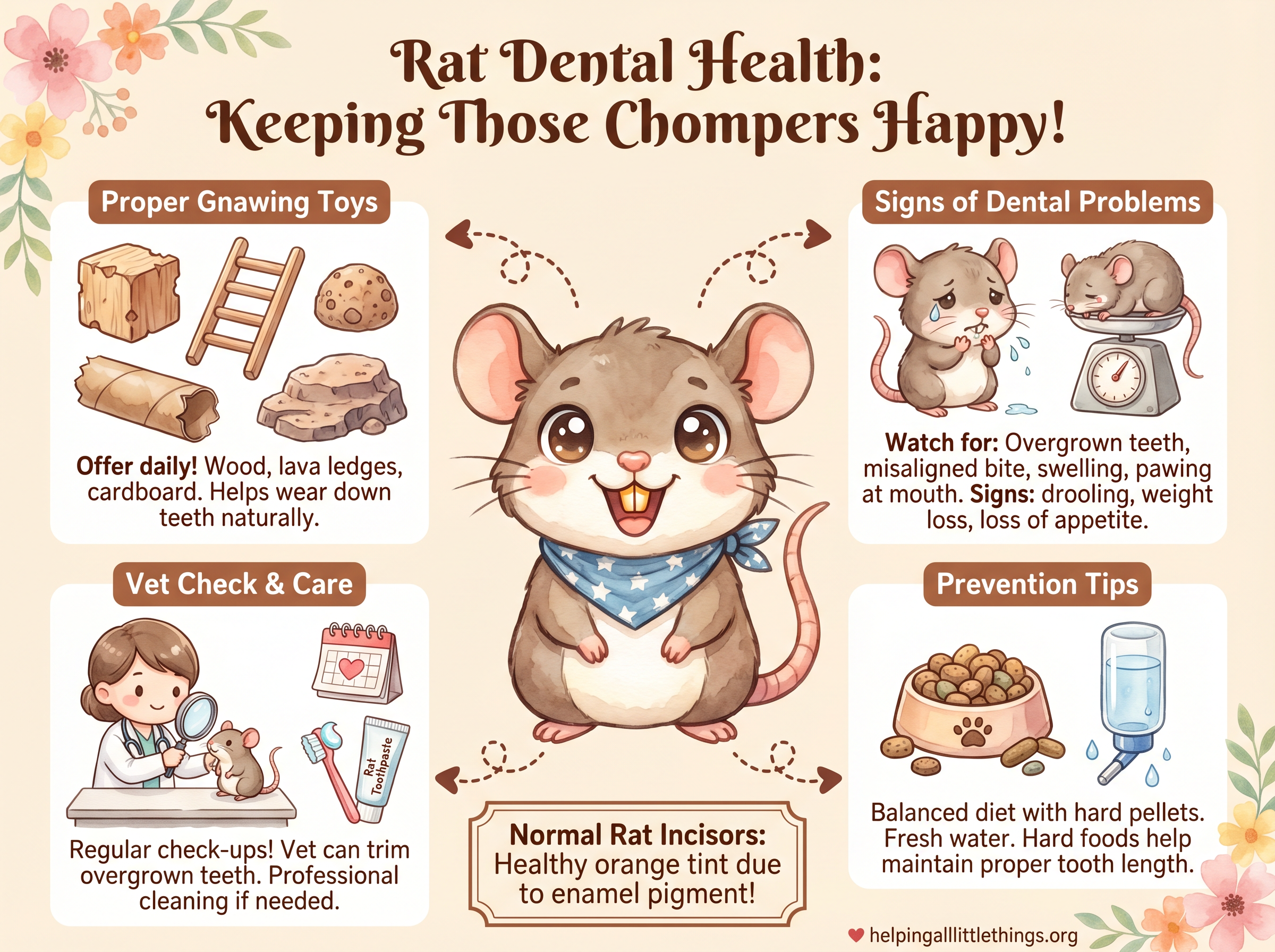

Proper dental health is a cornerstone of good rat care, and it is almost entirely focused on their four incisors (front teeth). Like all rodents, a rat's incisors grow continuously throughout their entire life. This biological imperative requires them to constantly gnaw on a variety of materials to wear their teeth down. When this natural wearing process is disrupted, it can lead to painful and serious health problems.
The Basics of Rat Teeth
A rat's incisors are their most vital tool. They are naturally a yellow-orange color, which is a sign of health, not poor hygiene. In a healthy rat, the upper and lower incisors are perfectly aligned, allowing them to grind against each other with every bite. This action hones them to a sharp, chisel-like edge.
The primary dental problem seen in rats is malocclusion, which is the misalignment of these teeth. If the teeth don't meet correctly, they will not wear down, and they will begin to overgrow.
Causes of Malocclusion
- Genetics: This is a common cause in fancy rats. Some rats are simply born with a misaligned jaw (an overbite or underbite) that makes proper dental wear impossible from the start.
- Trauma: A fall or injury to the face can fracture a tooth or damage the jaw, causing the teeth to grow at an incorrect angle.
- Infection or Tumors: An abscess or tumor in the jaw can push teeth out of alignment.
- Lack of Chewing Materials: While less common in rats than in other rodents (as they will chew on almost anything), a barren environment can contribute to dental problems.
Signs of Dental Problems
Overgrown teeth can be extremely painful. They can prevent a rat from eating and can grow so long that they injure the roof of the mouth, the face, or the eyes. It is critical to spot the signs early.
- Weight Loss / Inability to Eat: This is the most serious sign. The rat may be hungry and interested in food but physically unable to chew it.
- Drooling: A sign of significant oral pain.
- Messy Eating: The rat may drop food or seem to struggle with it.
- Visible Overgrowth: The teeth may be seen protruding from the mouth, often curling.
- Pawing at the Mouth: A clear sign of discomfort.
Prevention: A Gnaw-Friendly Lifestyle
While you can't prevent genetic malocclusion, you can provide an environment that promotes good dental health for all rats.
- Feed a High-Quality Lab Block: A good quality lab block (like Oxbow or Mazuri) provides a hard, dense food source that requires significant gnawing to consume. This is the foundation of a good rat diet.
- Provide a Variety of Chews: A rat's cage should be a treasure trove of chewable items. Great options include:
- Wooden Toys: Blocks and toys made from untreated pine or aspen.
- Cardboard: Rats love to shred and remodel with cardboard from toilet paper rolls and boxes.
- Hard-shelled Nuts: Offering a walnut, almond, or Brazil nut in its shell provides a challenging and rewarding chewing activity.
Treatment for Overgrown Teeth
If your rat's teeth become overgrown, they must be trimmed by a veterinarian.
Under no circumstances should you attempt to trim your rat's teeth at home. Using nail clippers or other tools is extremely dangerous. It can easily shatter the tooth down to the nerve, causing excruciating pain and leading to a severe infection or abscess.
A veterinarian will use a special dental burr to safely file the teeth down to a normal length. If the malocclusion is due to a permanent issue like genetics, this procedure will likely need to be repeated every 3-6 weeks for the rest of the rat's life. In some cases of chronic problems, a vet may recommend extraction of the incisors.