Respiratory Issues in Rats (Mycoplasmosis)
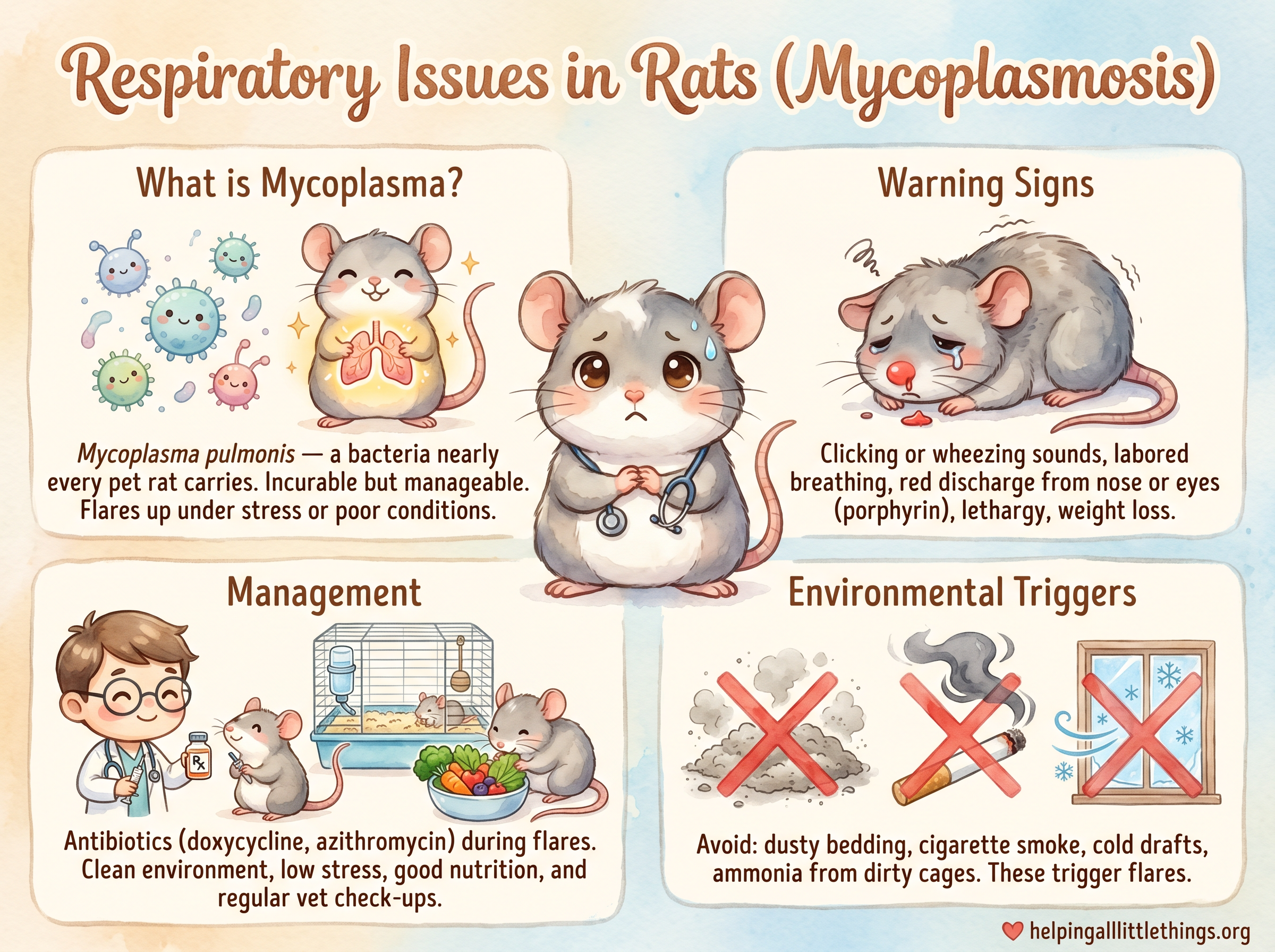

Chronic respiratory disease is the most common and significant health challenge in the pet rat community. The primary culprit is a bacterium called Mycoplasma pulmonis, often simply referred to as "myco." It is so widespread that it is assumed that virtually every pet rat is a carrier from birth. While the infection is incurable, it is manageable. Understanding the nature of this chronic disease is key to providing a good quality of life for your pet rats.
The Nature of Mycoplasma
Mycoplasma pulmonis is a bacterium that colonizes the respiratory tract. What makes it particularly challenging is that it lacks a cell wall, rendering some common antibiotics ineffective. In a healthy, young, unstressed rat, the immune system can effectively suppress the bacteria, showing no outward signs of illness. However, the organism is never truly cleared from the body. It remains dormant, waiting for an opportunity to flare up.
Triggers for a Flare-Up
Any factor that stresses a rat or compromises its respiratory tract can allow the latent mycoplasma infection to become an active, symptomatic disease.
- Poor Air Quality: This is the most significant trigger. High levels of ammonia from urine-soaked bedding are extremely damaging to the delicate lining of the lungs.
- Improper Bedding: Dusty beddings can be inhaled and cause irritation, while aromatic woods like cedar and non-kiln-dried pine release toxic oils that impair lung function.
- Stress: Social stress (like bullying or overcrowding), nutritional deficiencies, or environmental changes can weaken the immune system.
- Secondary Infections: A concurrent infection with another virus or bacteria can give mycoplasma the opportunity to proliferate.
Signs of a Mycoplasma Flare-Up
The disease is progressive, and the signs tend to start subtly and worsen over time.
- Porphyrin Staining: Often the first sign is an excess of a red-brown, blood-like discharge around the nose and eyes. This is a pigment called porphyrin, which is secreted during times of stress or illness.
- Sneezing and Sniffling.
- Audible Breathing: This is the hallmark of the disease. You may hear rattling, wheezing, gurgling, or clicking sounds coming from the rat's chest.
- Labored Breathing: As the disease progresses, you may see the rat's sides heaving with the effort of breathing.
- Lethargy: The rat may be less active and sleep more.
Management: A Lifelong Commitment
It is critical to understand that mycoplasmosis is a chronic condition that is managed, not cured. The goal of treatment is to control the bacterial flare-up, reduce inflammation, and improve the rat's quality of life.
- Veterinary Intervention: A veterinarian experienced with rats is essential. Treatment typically involves a combination of antibiotics, often for long durations (4-6 weeks or longer). Doxycycline and enrofloxacin (Baytril) are a common and effective pair. Bronchodilators or anti-inflammatories may also be used.
- Husbandry is the Best Medicine: The most important part of management is providing an environment that minimizes respiratory irritants.
- Impeccable Cage Hygiene: The cage must be kept spotlessly clean to prevent any ammonia buildup.
- Excellent Ventilation: Use a wire cage with good airflow.
- Safe Bedding: Use a low-dust, non-aromatic bedding like aspen, kiln-dried pine, or paper-based products.
- Low-Stress Environment: Provide a large, enriching cage and stable social groups.
While a diagnosis of mycoplasmosis can be disheartening, many rats live long and happy lives with a dedicated owner who is committed to managing the condition through excellent care and a strong partnership with a partnership with a good vet-savvy veterinarian's good relationship with their veterinarian. a good relationship with their veterinarian. a strong partnership with their veterinarian.