Gastrointestinal (GI) Health in Rats
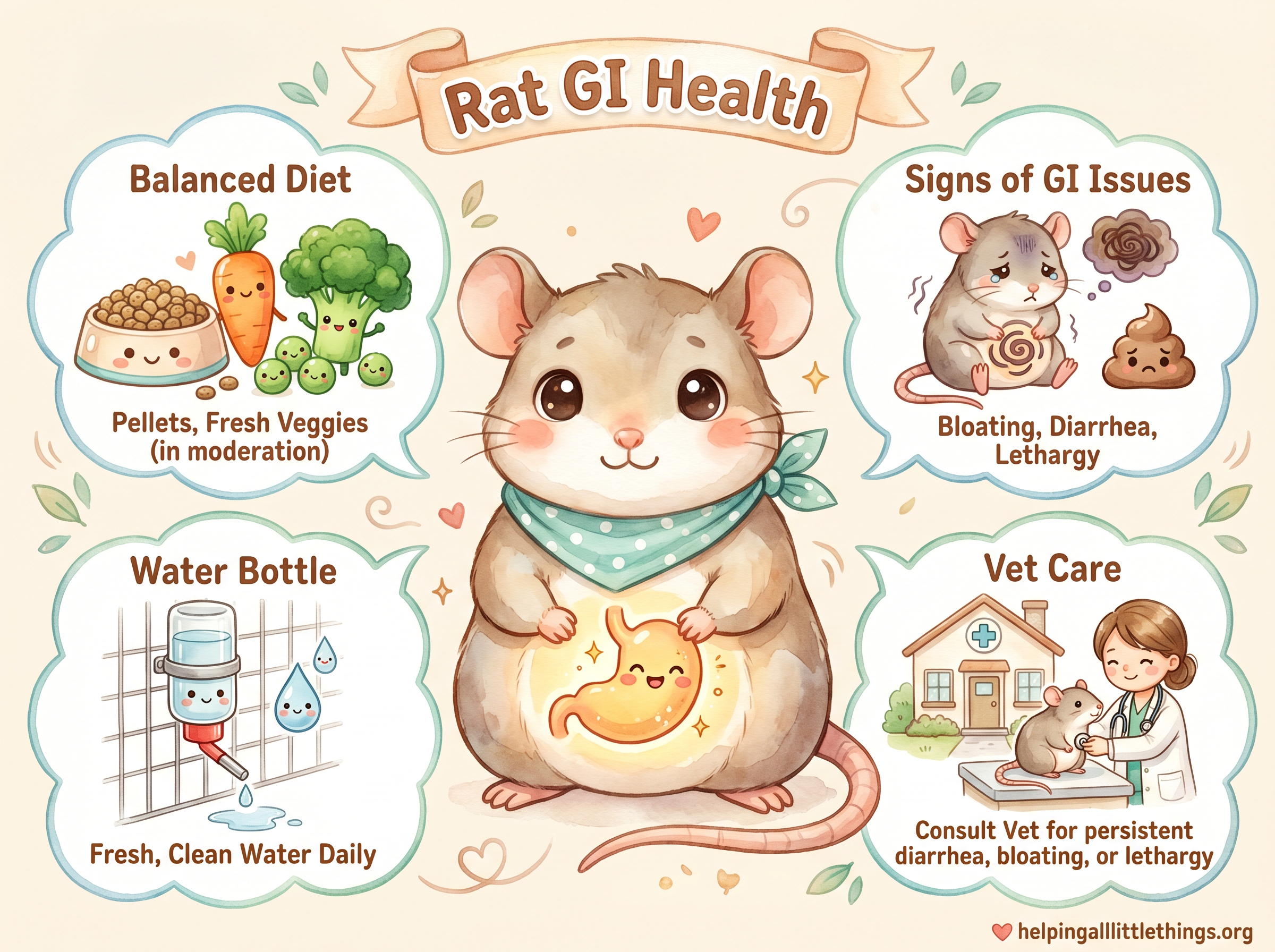

Rats are opportunistic omnivores with a digestive system that is considerably more robust than that of many other small pets. They can handle a varied diet of grains, seeds, proteins, and vegetables. However, their gastrointestinal (GI) tract is not invincible. Diarrhea and other GI issues can occur, and they are often a sign of an underlying problem related to diet, stress, or other illnesses.
The Rat Digestive System
Rats have a relatively simple digestive system, but it is highly efficient. They are monogastric, meaning they have a single-chambered stomach. Unlike rabbits and guinea pigs, they do not have a large cecum for fermenting fiber, though they can digest some plant material. One unique and important feature is that rats cannot vomit. This makes them particularly vulnerable to toxins and spoiled food, as they cannot expel harmful substances they have ingested.
Common GI Problems in Rats
-
Diarrhea:
- Causes: Diarrhea in rats is a symptom, not a disease, and it can have many causes.
- Dietary Indiscretion: This is the most common cause. A sudden change in their lab block or seed mix, or feeding too many watery fruits and vegetables, can lead to loose stools.
- Stress: Rats are sensitive to their environment. Stress from a new cage, the loss of a cagemate, or loud noises can manifest as digestive upset.
- Infectious Agents: Bacterial (like Salmonella) or viral infections can cause diarrhea, although this is less common in well-kept pet rats.
- Secondary to Other Illnesses: A rat that is sick with another condition, such as an advanced respiratory infection, may develop diarrhea due to stress and the effects of antibiotics.
- Signs: Soft, unformed, or watery stools, often with a strong odor. The fur around the anus may be soiled. The rat may also be lethargic.
- Action: If you notice diarrhea, withhold all fresh foods and treats. Ensure the rat has access to its staple dry food and plenty of fresh water. If the diarrhea is severe, lasts more than 24-48 hours, or is accompanied by other signs of illness (lethargy, loss of appetite, respiratory symptoms), a veterinary visit is necessary. Dehydration is a significant concern.
- Causes: Diarrhea in rats is a symptom, not a disease, and it can have many causes.
-
Megacolon:
- Cause: This is a serious, genetic condition most commonly seen in rats with certain color patterns (high white or "blaze"). It is a defect in the nerve cells of the large intestine, which prevents the colon from being able to properly contract and move stool. This causes a massive and eventually fatal backup of feces.
- Signs: Signs usually appear in young rats. They include a bloated abdomen, straining to defecate, and passing only small, thin stools or no stool at all. The rat will fail to thrive and will lose weight.
- Action: There is no cure for megacolon. It is a fatal condition, and humane euthanasia is the kindest option once the rat is no longer able to pass stool.
Prevention of GI Issues
- Feed a Stable, High-Quality Diet: The foundation of a rat's diet should be a high-quality lab block (e.g., Oxbow, Mazuri). This ensures they receive balanced nutrition and can't pick and choose only their favorite bits as they can with a seed mix.
- Introduce New Foods Slowly: Any new vegetables, fruits, or treats should be introduced one at a time in small amounts to see how their system reacts.
- Provide Fresh Water: A constant supply of clean water is essential for good digestion.
- Maintain a Clean Environment: Regular cage cleaning helps to prevent the spread of harmful bacteria.
- Minimize Stress: Provide a large, enriching environment and stable social groups to keep your rats happy and stress-free.
Because rats hide illness well, any significant change in their fecal output or consistency, when combined with behavioral changes, warrants close observation and a potential trip to the vet.