Dental Disease in Guinea Pigs
Dental disease is one of the most common and serious health problems affecting guinea pigs. Unlike humans, a guinea pig's teeth grow continuously throughout their life. This continuous growth can lead to painful and life-threatening complications if their teeth do not wear down properly. Understanding the causes, recognizing the signs, and seeking prompt veterinary care are crucial for managing this condition and ensuring your guinea pig lives a healthy, comfortable life.
Why Dental Health is Different in Guinea Pigs
Guinea pigs have 20 teeth in total: a pair of upper and lower incisors (front teeth) and four pairs of upper and lower cheek teeth (premolars and molars). All of these teeth are "open-rooted," meaning they never stop growing [1]. This constant growth is managed in a healthy guinea pig by the grinding action of chewing on high-fiber foods, primarily hay. When this natural wearing process is disrupted, the teeth can become overgrown, leading to a cascade of health issues.
Causes of Dental Disease
Several factors can contribute to the development of dental disease in guinea pigs:
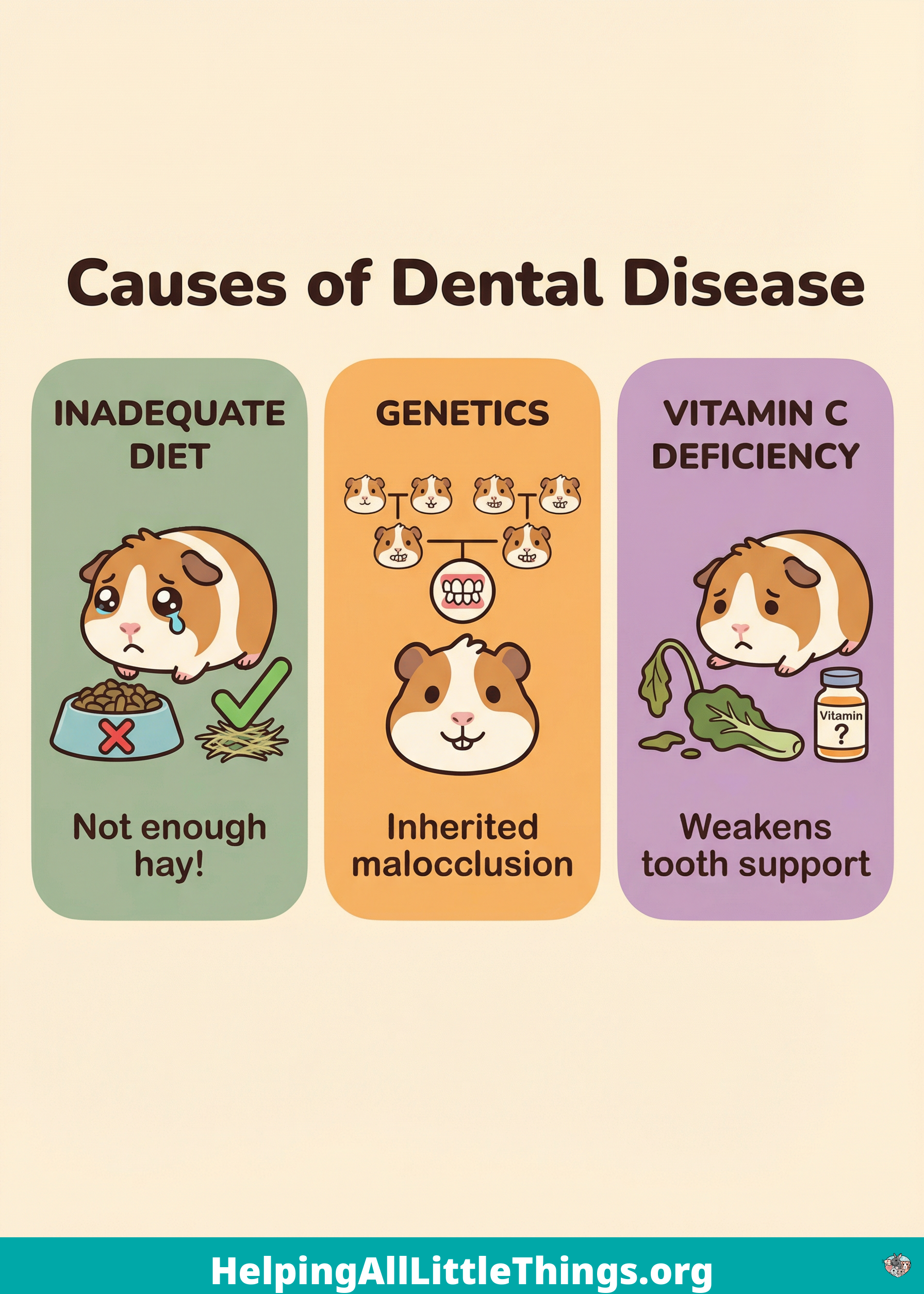

- Inadequate Diet: This is the most common cause. A diet low in fibrous hay and high in pellets or soft foods does not provide enough abrasive material to wear down the teeth properly. Guinea pigs should have unlimited access to high-quality grass hay, such as Timothy or orchard grass [2].
- Genetics: Some guinea pigs are genetically predisposed to malocclusion (misalignment of the teeth), which can become apparent at a young age.
- Vitamin C Deficiency: Guinea pigs cannot produce their own Vitamin C and require it in their diet. A deficiency can lead to weakened ligaments and tissues that support the teeth, contributing to misalignment and improper wear [3].
- Injury or Trauma: A fall or injury to the jaw or face can damage teeth or alter the jaw's alignment, leading to abnormal growth.
- Age: Older guinea pigs are more prone to developing dental issues over time.
Recognizing the Signs of Dental Disease
Guinea pigs are prey animals and will often hide signs of pain or illness until the condition is advanced. Early detection is key, so watch for these subtle signs:
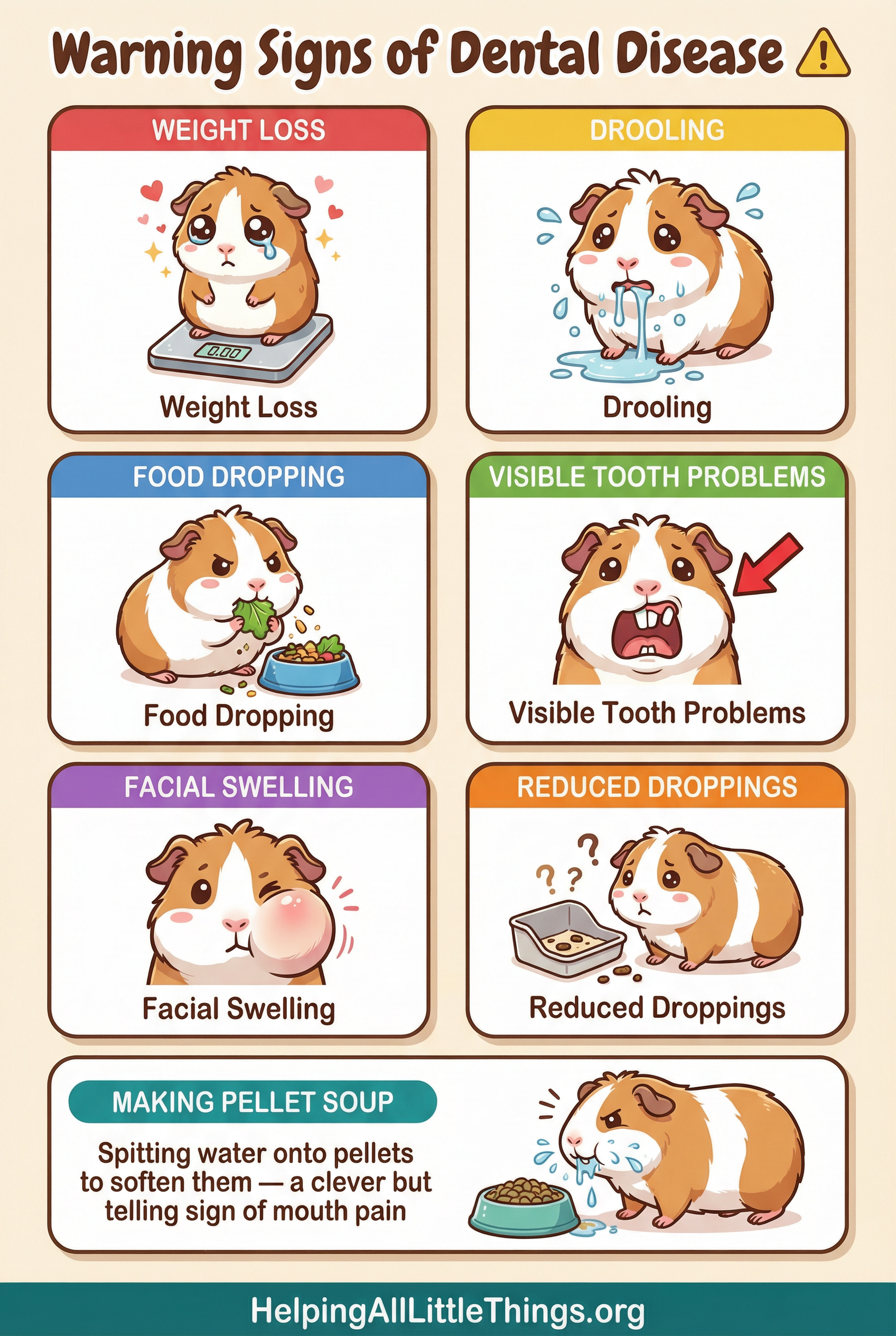

- Changes in Eating Habits: Reluctance to eat, picking at food, or a preference for softer foods.
- Weight Loss: This is a critical indicator of an underlying health problem.
- Drooling (Slobbers): Wet fur around the mouth, chin, and chest.
- Visible Tooth Problems: Overgrown or misaligned incisors are often the most obvious sign.
- Difficulty Chewing: Dropping food, chewing on one side of the mouth, or showing pain when eating.
- Facial Swelling or Abscesses: Lumps or bumps along the jawline can indicate a tooth root abscess.
- Eye or Nasal Discharge: Elongated upper tooth roots can press on tear ducts, causing watery eyes.
- Reduced Fecal Output: A sign of decreased food intake and potential GI stasis.
- Lethargy or Behavioral Changes: Hiding more than usual, irritability, or a reluctance to move.
- Making "Pellet Soup": Some guinea pigs with mouth pain will take a mouthful of water and spit it into their pellet bowl to soften the pellets, making them easier to eat. This is a very specific and telling sign of dental trouble [6].
Diagnosis and Veterinary Care
If you suspect your guinea pig has dental disease, a visit to a veterinarian experienced with exotic pets is essential. A thorough diagnosis involves:
- Oral Examination: While the incisors are easy to see, a full examination of the cheek teeth requires specialized tools and may need to be done under light sedation.
- Radiographs (X-rays) or CT Scans: These imaging techniques are crucial for assessing the tooth roots and jaw bones, which are hidden from view. They can reveal elongated roots, abscesses, and bone damage that are not visible during a physical exam [4].
Treatment for Dental Disease
Treatment depends on the severity of the disease and is focused on correcting the overgrowth and addressing any associated pain or infection:
- Tooth Trimming and Filing: Overgrown incisors and molars must be trimmed and filed down to a normal length and shape. This procedure should only be performed by a veterinarian, often under anesthesia, to ensure it is done safely and correctly. Never use nail clippers to trim teeth, as this can cause fractures and permanent damage [5].
- Tooth Extraction: Severely diseased, loose, or abscessed teeth may need to be surgically extracted.
- Abscess Treatment: This may involve surgically draining the abscess, removing the affected tooth, and a long course of antibiotics.
- Supportive Care: Pain medication, hand-feeding with a critical care formula, and fluid therapy are often necessary to support the guinea pig during recovery.
Prevention and Management
While genetic predispositions cannot be changed, you can take several steps to prevent diet-related dental disease and manage the condition:
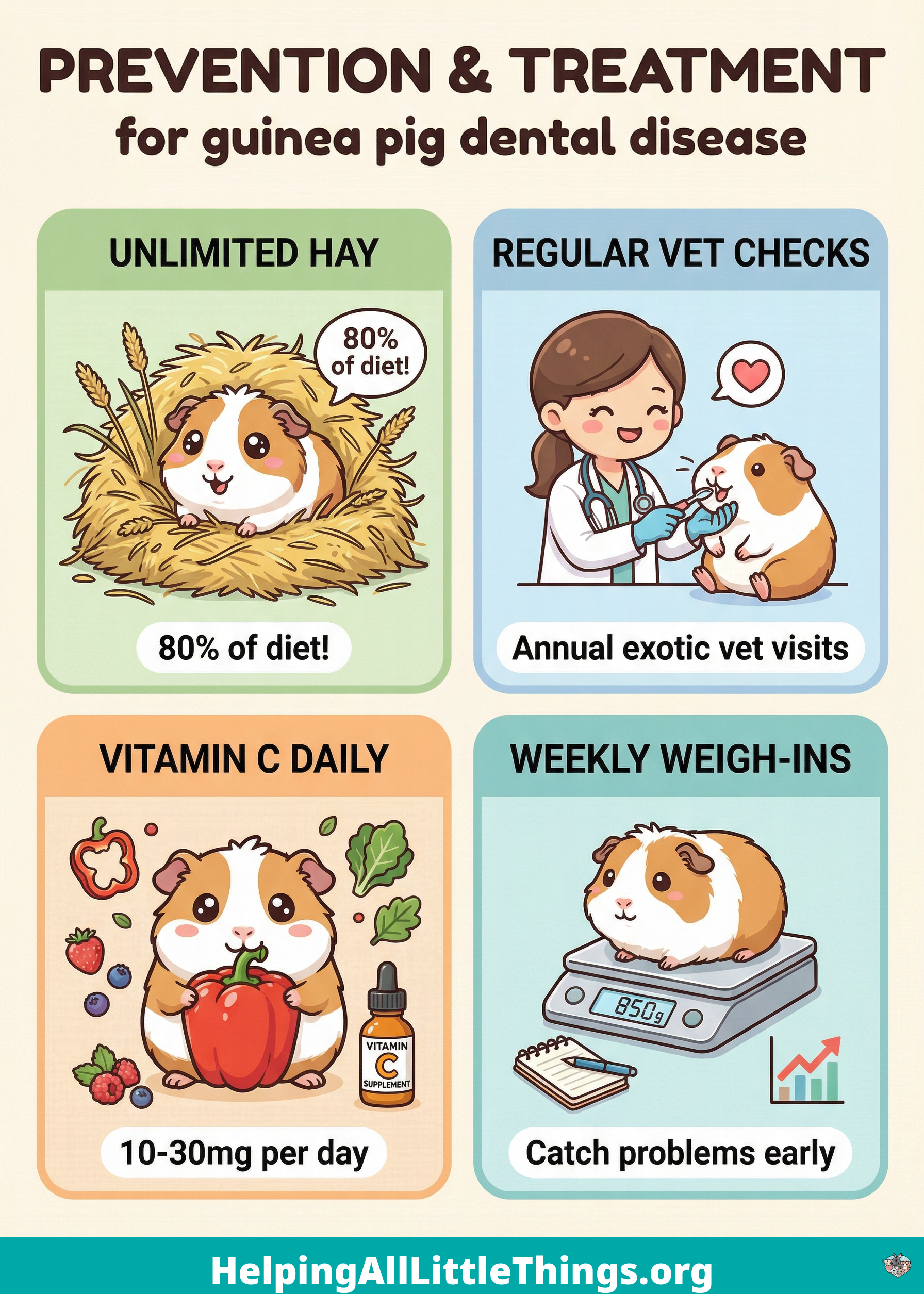

- Provide Unlimited Hay: The cornerstone of prevention is a diet consisting of at least 80% high-quality grass hay. The constant chewing motion is essential for proper tooth wear.
- Feed a Balanced Diet: Supplement hay with a small, measured amount of high-quality guinea pig pellets and a daily portion of fresh vegetables rich in Vitamin C. See our Nutrition Information for Guinea Pigs article for more details.
- Regular Health Checks: Weigh your guinea pig weekly and perform regular home health checks to spot any early signs of illness.
- Routine Veterinary Visits: Annual check-ups with an exotic vet can help catch dental problems before they become severe.
By providing a proper diet and being vigilant about your guinea pig's health, you can significantly reduce the risk of dental disease and ensure your companion enjoys a long and happy life.
References
[1] DeCubellis, J., & Graham, J. (2013). Gastrointestinal Disease in Guinea Pigs and Rabbits. Veterinary Clinics of North America: Exotic Animal Practice, 16(2), 421–435. https://pmc.ncbi.nlm.nih.gov/articles/PMC7128126/
[2] VCA Animal Hospitals. (n.d.). Feeding Guinea Pigs. Retrieved from https://vcahospitals.com/know-your-pet/guinea-pigs-feeding
[3] Merck Veterinary Manual. (2025). Nutritional Problems of Guinea Pigs. Retrieved from https://www.merckvetmanual.com/all-other-pets/guinea-pigs/nutritional-problems-of-guinea-pigs
[4] Wills, A. P. (2016). Diagnosis and treatment of dental disease in guinea pigs. Journal of the American Veterinary Medical Association, 249(9), 1000–1008. https://avmajournals.avma.org/view/journals/javma/249/9/javma.249.9.1000.xml
[5] Minarikova, A., et al. (2016). Dental Disease and Periodontitis in a Guinea Pig (Cavia porcellus). Journal of Exotic Pet Medicine, 25(2), 129-136. https://www.sciencedirect.com/science/article/abs/pii/S1557506316300155
[6] Reddit. (2023). My Guinea pig is making such a mess!. https://www.reddit.com/r/guineapigs/comments/106mek3/my_guinea_pig_is_making_such_a_mess/