Is a Guinea Pig Right for Me and My Family?
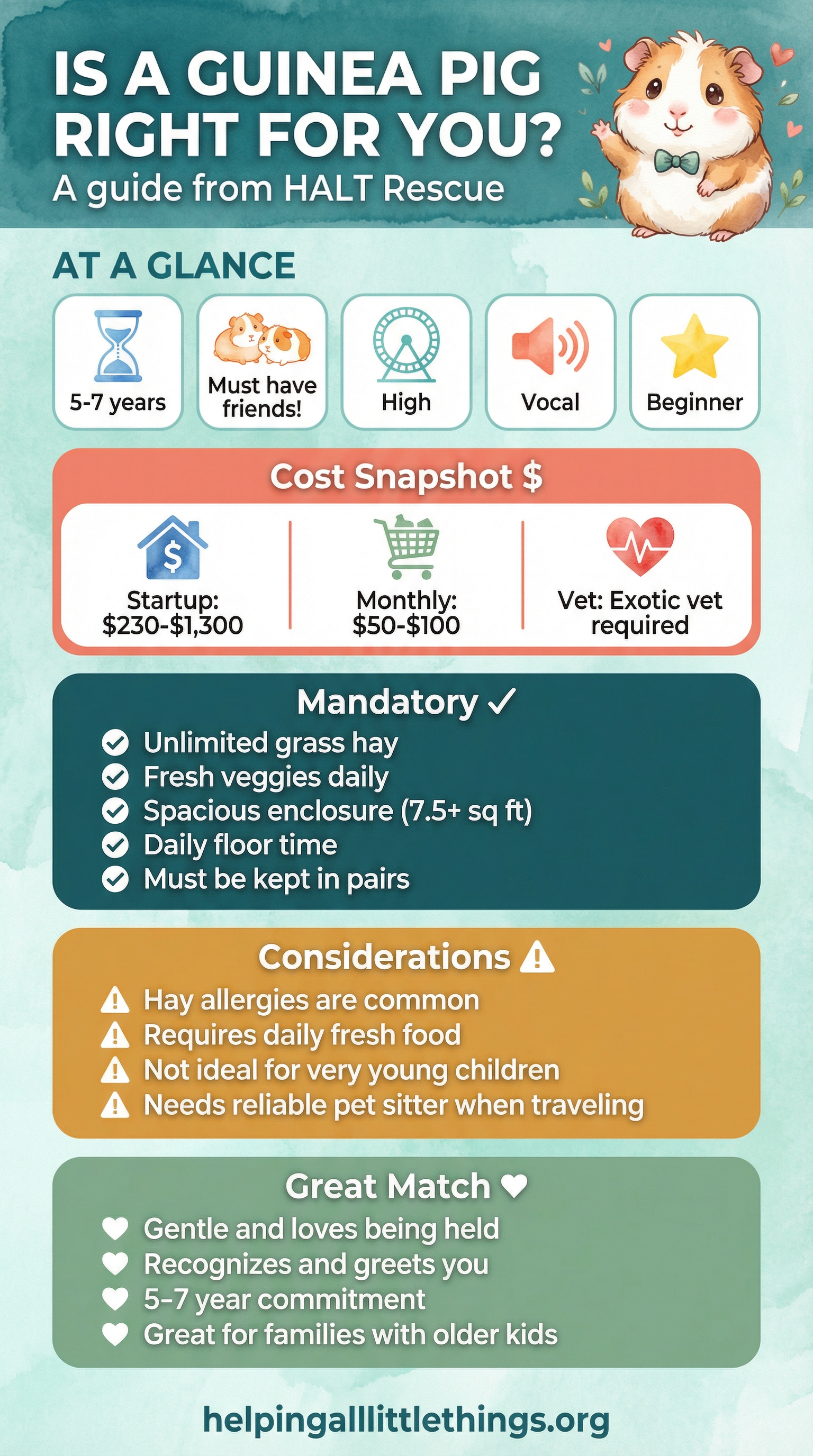

Guinea pigs are gentle, social, and surprisingly communicative little animals — and they are one of the most rewarding small pets you can share your home with. But like any pet, they come with real responsibilities, real costs, and a real commitment. Before you bring home a guinea pig (or two — and it must be two), it's worth taking an honest look at what life with guinea pigs actually involves.
The Basics
Guinea pigs typically live 5 to 7 years, though some reach 8 or more with excellent care. That's a meaningful commitment — longer than many families expect from a "starter pet." They are social animals and must be kept in pairs or small groups; a lone guinea pig is a stressed, unhappy guinea pig. Plan to adopt at least two, ideally same-sex pairs or a neutered male with one or more females.
What They Need Every Day
Guinea pigs are not low-maintenance pets. They require:
- Unlimited grass hay (timothy or orchard grass), which should make up the bulk of their diet
- Fresh leafy greens and vegetables daily, with a focus on vitamin C-rich foods (guinea pigs cannot synthesize their own)
- A spacious enclosure — the minimum recommended size for two guinea pigs is 7.5 square feet of floor space, and bigger is always better
- Daily floor time outside the cage for exercise and enrichment
- Spot cleaning daily and a full cage clean at least once a week
The Cost of Guinea Pig Ownership
| Category | Estimated Cost |
|---|---|
| Startup (cage, supplies, first vet visit, adoption fees) | $230–$1,300 |
| Monthly ongoing (food, bedding, hay, veggies) | $50–$100/month |
| Veterinary care | Exotic vet required; budget for annual checkups and unexpected illness |
Guinea pigs require an exotic or small animal veterinarian — not all general practice vets see them. Finding a vet before you need one in an emergency is essential. Common health issues include respiratory infections, dental disease, bladder stones, and skin conditions, all of which can require veterinary treatment.
Think Twice If...
- You have hay allergies or are sensitive to dander. Guinea pigs require constant access to hay, which can be a significant allergen. Test your family's tolerance before committing.
- No one in the household can commit to daily care. Guinea pigs need fresh food and water every single day, cage spot-cleaning, and regular interaction. They are not a "set it and forget it" pet.
- Your children are very young. Guinea pigs are gentle but fragile, and they can be easily injured by rough handling. They are generally a better fit for children aged 6 and up, with adult supervision.
- You travel frequently. Guinea pigs need daily care and do not do well being left alone for extended periods. You'll need a reliable, knowledgeable pet sitter.
Great Match If...
- You want a gentle, interactive pet that recognizes you, vocalizes when you enter the room, and genuinely enjoys being handled
- Your family is ready for a 5–7 year commitment and understands that these animals are not disposable
- You have the space for a proper enclosure and a safe area for daily floor time
- You are prepared to find and budget for an exotic vet
A Note on "Starter Pets"
Guinea pigs are often marketed as easy starter pets for children, but this framing does them a disservice. They have complex social, dietary, and medical needs. The good news is that when those needs are met, they are incredibly rewarding companions — chatty, curious, and full of personality. They are a wonderful choice for a family that goes in with realistic expectations and genuine commitment.
Thinking about adopting? HALT Rescue specializes in guinea pigs and is happy to help match you with the right animals for your household. Reach out to us anytime.