Urinary and Bladder Issues in Guinea Pigs
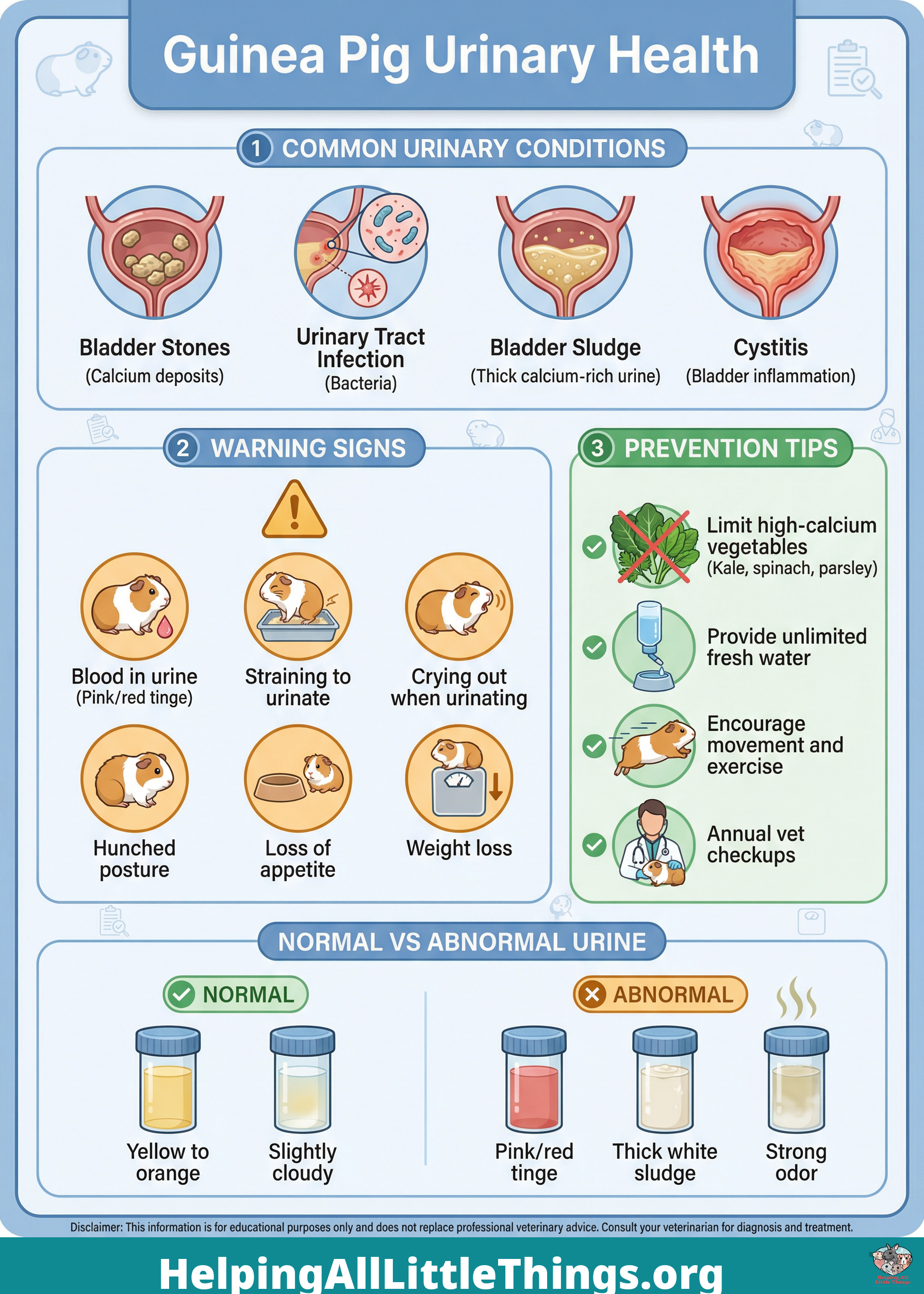

Guinea pigs may be small, but they have complex needs—and that includes their urinary health. Bladder and urinary tract issues are common in guinea pigs and can range from mild to life-threatening. Understanding the signs and causes is key to keeping your pet healthy.
Common Urinary Problems in Guinea Pigs
Several conditions can affect a guinea pig's urinary system. They often have overlapping symptoms, so a veterinary diagnosis is essential.
- Bladder Stones (Uroliths): Guinea pigs are prone to developing hard mineral deposits, usually made of calcium carbonate, in their bladder or urinary tract. These stones can cause pain, blockages, and infections [1].
- Bladder Sludge: This is a thick, gritty accumulation of calcium crystals in the bladder. While not as solid as a stone, sludge can cause irritation, inflammation, and difficulty urinating.
- Cystitis (Urinary Tract Infection - UTI): This is a bacterial infection and inflammation of the bladder wall. UTIs can be very painful and, if left untreated, can travel to the kidneys.
Warning Signs to Watch For
Guinea pigs are prey animals and often hide signs of pain. Therefore, any of the following symptoms should be taken seriously and warrant a vet visit:
- Blood in the Urine (Hematuria): Urine may appear pink, red, or brownish.
- Straining or Crying Out: You may hear your guinea pig squeak or cry while trying to urinate.
- Hunched Posture: A guinea pig in pain will often sit hunched in a corner.
- Frequent Urination: Urinating small amounts more often than usual.
- Wet Bottom: Difficulty urinating can lead to urine soaking the fur around the hindquarters.
- Loss of Appetite and Weight Loss: Pain and illness often cause a guinea pig to stop eating.
A urinary blockage is a life-threatening emergency. If your guinea pig is straining and unable to pass any urine, seek veterinary care immediately.
Diagnosis and Treatment
A veterinarian will use several methods to diagnose urinary issues:
- Physical Exam: The vet will palpate (feel) the abdomen to check for a distended bladder or large stones.
- Urinalysis: A urine sample will be tested for blood, bacteria, and crystals.
- X-rays or Ultrasound: Imaging is the best way to confirm the presence, size, and location of bladder stones or sludge [2].
Treatment depends on the diagnosis:
- UTIs: A course of guinea pig-safe antibiotics is prescribed.
- Bladder Sludge: Treatment may involve a bladder flush under anesthesia, along with dietary changes and medication to manage pain and inflammation.
- Bladder Stones: Surgical removal is typically required for bladder stones, as they are too large to be passed naturally. This is a major surgery but is often successful.
Prevention: The Key to Urinary Health
While some guinea pigs are genetically predisposed to urinary issues, you can take several steps to minimize the risk:
- Diet is Crucial:
- Limit High-Calcium Foods: While calcium is essential, too much can contribute to stone formation. Feed high-calcium greens like kale, spinach, and parsley in moderation. They should be a small part of a varied diet.
- Provide Low-Calcium Hay: Timothy hay should be the staple of your guinea pig's diet. Alfalfa hay is very high in calcium and should only be given to pregnant or young (under 6 months) guinea pigs.
- Encourage Water Intake:
- Provide fresh, clean water daily from multiple sources (e.g., a water bottle and a ceramic bowl).
- Ensure water bottles are working correctly and are cleaned regularly.
- Promote Exercise:
- An active guinea pig is a healthy guinea pig. Regular floor time encourages urination, which helps flush the bladder.
- Keep the Cage Clean:
- A clean, dry cage prevents bacteria from building up and reduces the risk of UTIs.
By paying close attention to your guinea pig's diet, hydration, and behavior, you can help prevent these painful conditions and ensure your pet lives a long, comfortable life.
References
[1] VCA Animal Hospitals. (n.d.). Bladder Stones in Guinea Pigs. Retrieved from https://vcahospitals.com/know-your-pet/bladder-stones-in-guinea-pigs
[2] Hawkins, M. G., & Bishop, C. R. (2012). Urolithiasis in guinea pigs. Journal of Exotic Pet Medicine, 21(1), 68-75.