Essential Supplies for Guinea Pigs: A Helping All Little Things Guide
Bringing home a guinea pig (or better yet—a pair!) is an exciting and joyful experience. To set your new friends up for a happy, healthy life, it’s important to have the right supplies ready from day one. This guide covers the essentials every guinea pig owner needs.
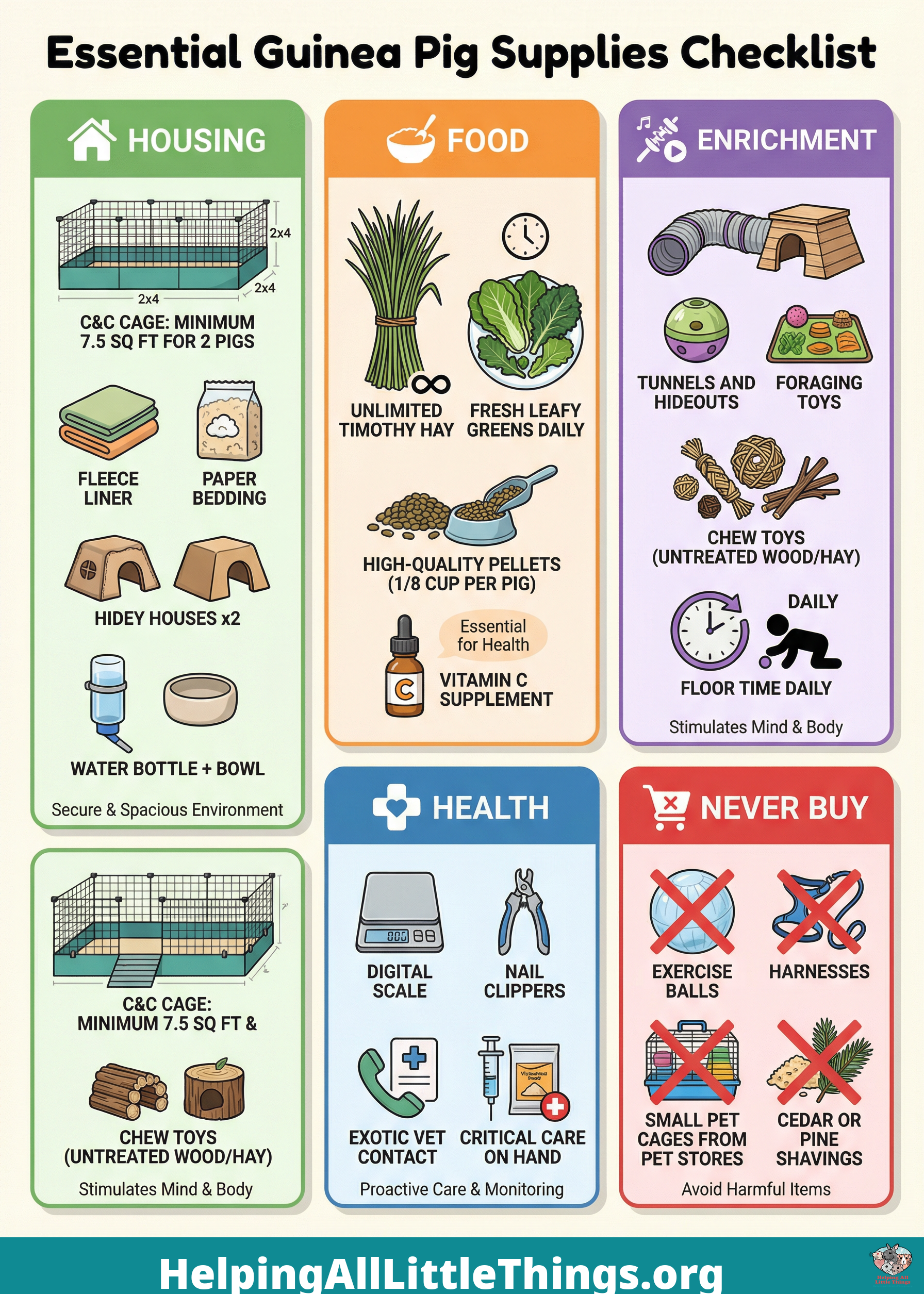

1. Housing: A Safe and Spacious Home
Your guinea pigs will spend a lot of time in their cage, so it needs to be a safe and enriching environment.
- The Cage: The most important supply is a large cage. Ignore the small, multi-level cages sold in most pet stores. Guinea pigs need a large, flat running space.
- Minimum Size: 7.5 square feet for two guinea pigs (e.g., a 2x3 grid C&C cage). 10.5 square feet (a 2x4 grid C&C cage) is even better.
- Recommended Type: C&C (Cubes and Coroplast) cages are the gold standard. They are modular, easy to clean, and provide the space guinea pigs need.
- Bedding: The cage floor must be covered with a soft, absorbent material.
- Fleece Liners: A popular, reusable option. They consist of an absorbent layer (like U-Haul pads) topped with fleece, which wicks moisture away.
- Paper Bedding: Kiln-dried paper bedding (like Carefresh or Oxbow's Pure Comfort) is a good disposable option. It must be deep enough (2-3 inches) to be absorbent.
- AVOID: Cedar and pine shavings are toxic to guinea pigs and can cause respiratory problems [1].
- Hideys: Guinea pigs are prey animals and need places to feel secure. Provide at least one hidey per guinea pig. Tunnels, fleece forests, and wooden houses are all great options.
- Water Bottle and Food Bowl: Provide a glass water bottle and a heavy ceramic food bowl that can't be tipped over.
2. Food: The Foundation of Good Health
A guinea pig's diet is simple but specific.
- Unlimited Hay: This is the most important part of their diet. Provide unlimited access to fresh timothy hay or other grass hays (like orchard grass). Hay is essential for their digestion and for wearing down their constantly growing teeth.
- Fresh Leafy Greens: Offer about one cup of fresh leafy greens per guinea pig per day. Good choices include romaine lettuce, green leaf lettuce, and cilantro.
- High-Quality Pellets: Choose a plain, timothy hay-based pellet. Avoid mixes with seeds, nuts, and colored bits. Adult guinea pigs only need about 1/8 cup of pellets per day.
- Vitamin C: Guinea pigs cannot produce their own Vitamin C, so they must get it from their diet. Many high-quality pellets are fortified with Vitamin C. You can also offer small pieces of bell pepper or a Vitamin C supplement [2].
For more detailed information, see our article on Nutrition Information for Guinea Pigs.
3. Health and Grooming
Routine home care is part of being a responsible owner.
- Nail Clippers: You will need to trim your guinea pig's nails every few weeks.
- Styptic Powder: Keep this on hand to stop bleeding in case you accidentally clip a nail too short.
- Digital Kitchen Scale: Weigh your guinea pigs weekly. Weight loss is often the first sign of illness.
- Exotic Vet: Find a veterinarian who is experienced with exotic pets before you need one. Have their contact information readily available.
For more on this, see our guide to Home Health Care for Your Guinea Pig.
4. Enrichment: A Happy Pig is a Busy Pig
Enrichment keeps your guinea pigs mentally stimulated and prevents boredom.
- Chew Toys: Provide safe items for chewing, such as untreated apple wood sticks, hay-based toys, or cardboard tubes stuffed with hay.
- Tunnels: Guinea pigs love to run through tunnels.
- Floor Time: Daily supervised time outside the cage in a safe, guinea pig-proofed area is essential for exercise and mental stimulation.
By investing in these essential supplies, you are making a commitment to your guinea pigs' long-term health and happiness.
References
[1] RSPCA. (n.d.). A healthy diet for guinea pigs. Retrieved from https://www.rspca.org.uk/adviceandwelfare/pets/rodents/guineapigs/diet
[2] VCA Animal Hospitals. (n.d.). Feeding Guinea Pigs. Retrieved from https://vcahospitals.com/know-your-pet/guinea-pigs-feeding