Home Health Care for Your Guinea Pig: A Helping All Little Things Guide

Guinea pigs are hardy little creatures, but they rely on attentive caregivers to keep them healthy and comfortable. Performing regular home health checks is one of the most important things you can do as a guinea pig owner. It allows you to spot potential problems early, manage routine care, and know when it's time to call the vet.
Print one for each of your guinea pigs and fill it out every week. Tracking changes over time is the single best way to catch illness early.
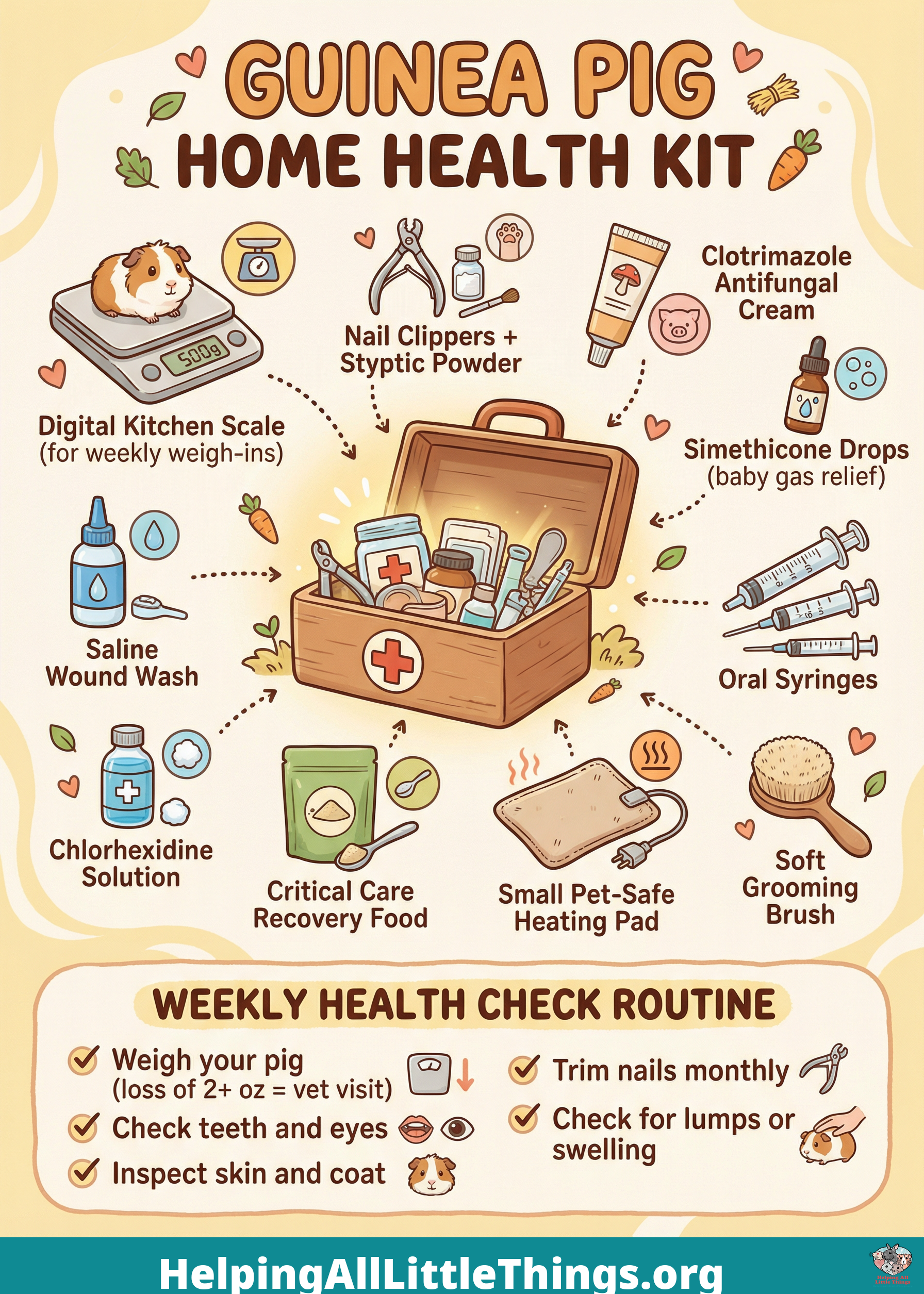

The Weekly Health Check: A Head-to-Toe Routine
Set aside time once a week to give your guinea pig a gentle, thorough check-up. Make it a positive experience with gentle handling and a few healthy treats.
-
Weigh-In:
- Why: Weight loss is the earliest and most reliable sign of illness in a guinea pig.
- How: Use a digital kitchen scale to weigh your pig in grams. Keep a log of their weight.
- Red Flag: A loss of 50-100 grams (about 2-3 ounces) in a week is a sign that something is wrong and requires a vet visit [1].
-
Eyes:
- What to Look For: Eyes should be clear, bright, and free of discharge. A milky white secretion seen occasionally is normal grooming fluid, not a sign of infection.
- Red Flag: Cloudiness, redness, swelling, or colored discharge.
-
Nose:
- What to Look For: The nose should be clean and dry.
- Red Flag: Any crustiness or discharge.
-
Teeth:
- What to Look For: Gently pull back the lips to check the incisors (front teeth). They should be whitish, properly aligned, and not overgrown.
- Red Flag: Broken, misaligned, or overgrown teeth. Drooling can be a sign of molar problems.
-
Skin and Coat:
- What to Look For: Part the fur and look at the skin. It should be clean and free of flakes, sores, or redness. The coat should be full and healthy.
- Red Flag: Dandruff, bald patches, excessive scratching, or visible parasites like mites or lice.
-
Feet:
- What to Look For: Check the bottoms of the feet. They should be smooth and free of redness, swelling, or scabs.
- Red Flag: Swelling, scabs, or raw spots are signs of bumblefoot (pododermatitis).
-
Body Check:
- What to Look For: Gently feel your guinea pig’s body for any lumps, bumps, or swelling. Check the neck area for any lumps, which could be a sign of a swollen lymph node (a condition called Cervical Lymphadenitis).
-
Rear End:
- What to Look For: The rear end should be clean and dry. For male guinea pigs, it's important to occasionally check and clean the perineal sac to prevent impaction.
- Red Flag: A soiled, wet, or smelly rear end can indicate diarrhea, a urinary issue, or mobility problems.
Routine Care Tasks
Nail Trimming
- How Often: Every 3-4 weeks.
- How to Do It: Use small animal nail clippers. In a well-lit area, identify the quick (the pink part of the nail with the blood supply) and trim just the tip of the nail, avoiding the quick. If you do accidentally cut the quick, use styptic powder to stop the bleeding.
Grease Gland Cleaning
- What It Is: Guinea pigs have a grease gland on their lower back, where a tail would be. It can become greasy and impacted, especially in males.
- How to Clean It: If it looks greasy, you can gently rub a small amount of coconut oil into the area to loosen the grease, then wash it with a gentle, guinea pig-safe shampoo.
Know When to Call the Vet
Home care is for monitoring and routine maintenance, not for diagnosing or treating serious illness. Always contact an exotic pet veterinarian if you notice:
- Loss of appetite or refusal to eat.
- No poop being produced.
- Lethargy, hiding, or a lack of energy.
- Breathing problems, wheezing, or coughing.
- Blood in the urine.
- Significant weight loss.
- Any of the red flags noted in the health check.
By being a proactive and observant caregiver, you become your guinea pig’s strongest advocate and their best defense against illness.
References
[1] VCA Animal Hospitals. (n.d.). Owning a Guinea Pig. Retrieved from https://vcahospitals.com/know-your-pet/owning-a-guinea-pig