Nutrition Information for Guinea Pigs
A balanced and appropriate diet is the single most important factor in maintaining the health and well-being of your guinea pig. Unlike many other small pets, guinea pigs have specific and unique dietary needs, including a daily requirement for Vitamin C. Providing the right foods in the right proportions is essential for their dental health, digestive function, and overall longevity.
The Guinea Pig Food Pyramid
A healthy guinea pig diet can be visualized as a pyramid, with the most important foods forming the base and occasional treats at the very top.
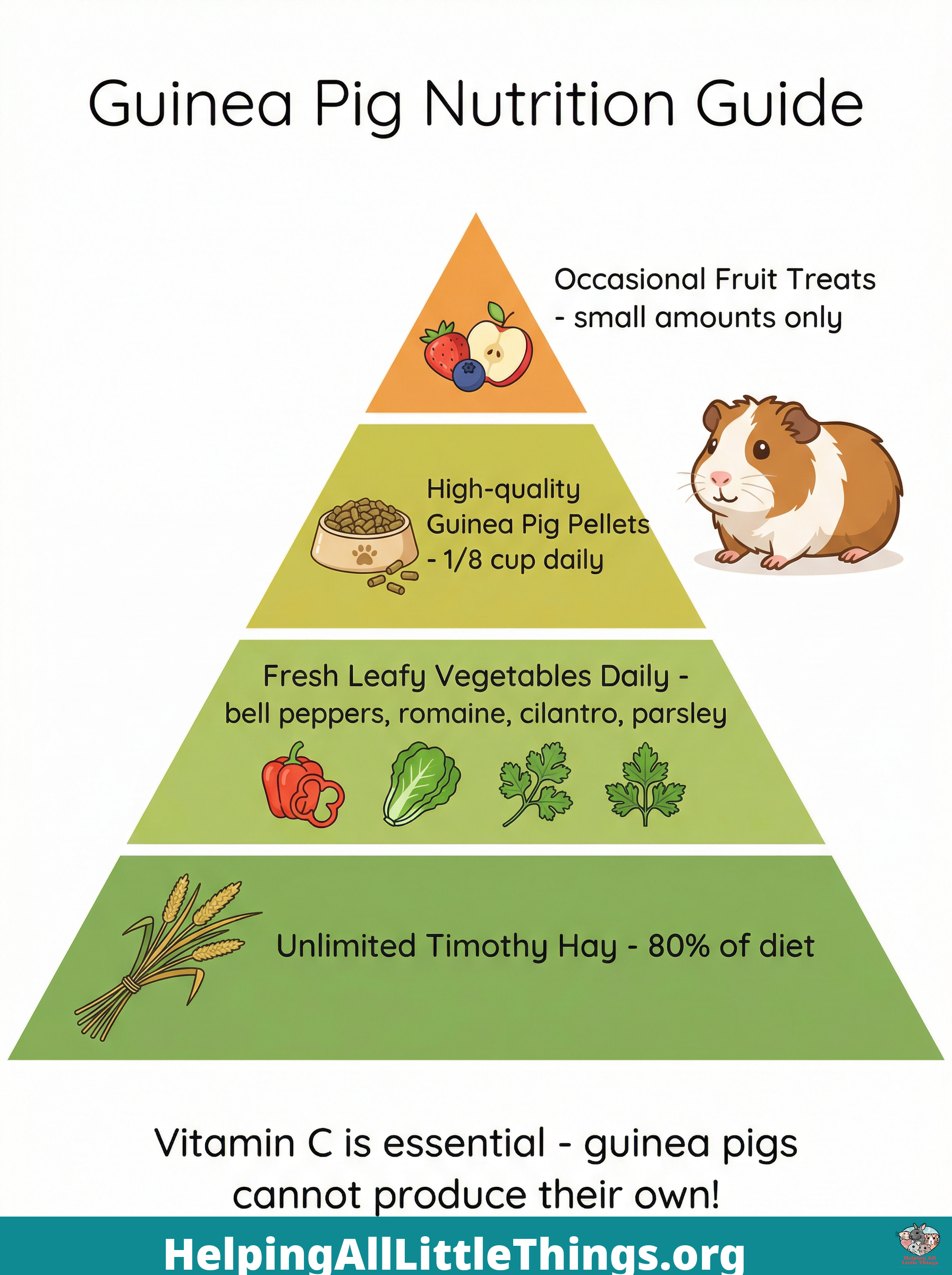

1. Unlimited Grass Hay (80% of Diet)
The foundation of every guinea pig's diet is an unlimited supply of high-quality grass hay. This is not just bedding; it is their most critical food source.
- Why it's essential: The high fiber content in hay is vital for two main reasons: it promotes healthy digestion and gut motility, preventing dangerous conditions like GI stasis, and the abrasive texture helps to continuously wear down their ever-growing teeth, preventing dental disease [1].
- Types of Hay: Timothy hay and orchard grass are the most recommended types for adult guinea pigs due to their balanced calcium levels. Alfalfa hay is higher in calcium and protein and should only be fed to pregnant, nursing, or young guinea pigs under six months of age [2].
- How to feed: Hay should be available 24/7 in a clean, dry hay rack or pile.
2. Fresh Vegetables (10-15% of Diet)
Fresh, leafy greens and vegetables are a crucial part of the daily diet, providing essential vitamins and minerals, especially Vitamin C.
- Daily Requirement: Offer about one cup of fresh vegetables per guinea pig per day.
- High in Vitamin C: Good daily choices include bell peppers (especially red and yellow), parsley, cilantro, and romaine lettuce.
- Variety is Key: Introduce a variety of vegetables to ensure a broad range of nutrients. Other good options include carrot tops, beet greens, endive, and small amounts of broccoli and cauliflower.
- Foods to Limit: Feed carrots and fruits in moderation due to their high sugar content. Iceberg lettuce has very little nutritional value and should be avoided [3].
3. High-Quality Pellets (5% of Diet)
Commercial pellets should be a small supplement to the diet, not the main course.
- What to look for: Choose a high-quality, timothy-based pellet that is specifically formulated for guinea pigs. Avoid mixes that contain seeds, nuts, corn, or colorful pieces, as these can be unhealthy and pose a choking hazard.
- Portion Control: An adult guinea pig only needs about 1/8 cup of pellets per day. Overfeeding pellets can lead to obesity and discourage hay consumption.
- Vitamin C Fortified: Ensure the pellets are fortified with Vitamin C and check the expiration date. Vitamin C degrades over time, so use pellets within 90 days of the manufacture date [2].
4. Occasional Treats
Treats should be given sparingly.
- Healthy Options: Small pieces of fruit like apple, pear, or a few blueberries make excellent occasional treats.
- Avoid: Never give your guinea pig sugary commercial treats, yogurt drops, or seed sticks. For a comprehensive list of unsafe foods, see our article on Dangerous Treats and Toys for Guinea Pigs.
The Critical Need for Vitamin C
Like humans, guinea pigs are unable to synthesize their own Vitamin C, so they must obtain it from their diet. A deficiency can lead to scurvy, a serious and painful condition.
- Daily Requirement: A healthy adult guinea pig needs 10-30 mg of Vitamin C per day [4].
- Signs of Deficiency: Early signs include a rough coat, lethargy, reluctance to move, swollen joints, and poor wound healing.
- Sources: The best sources are fresh vegetables high in Vitamin C. While many pellets are fortified, the vitamin's potency diminishes over time. It is not recommended to add vitamin drops to water, as the vitamin degrades quickly and can discourage water consumption. Direct supplementation with a liquid or tablet is a more reliable method if recommended by your veterinarian.
Water
Fresh, clean water must be available at all times. Use a sipper bottle and check it daily to ensure it is clean and the spout is not clogged. Water bowls are not ideal as they can easily become contaminated with food and bedding.
By adhering to these nutritional guidelines, you can provide your guinea pig with the foundation for a long, healthy, and happy life.
References
[1] DeCubellis, J., & Graham, J. (2013). Gastrointestinal Disease in Guinea Pigs and Rabbits. Veterinary Clinics of North America: Exotic Animal Practice, 16(2), 421–435. https://pmc.ncbi.nlm.nih.gov/articles/PMC7128126/
[2] VCA Animal Hospitals. (n.d.). Feeding Guinea Pigs. Retrieved from https://vcahospitals.com/know-your-pet/guinea-pigs-feeding
[3] RSPCA. (n.d.). What to feed a guinea pig. Retrieved from https://www.rspca.org.uk/adviceandwelfare/pets/rodents/guineapigs/diet
[4] PetMD. (2023). Vitamin C Deficiency in Guinea Pigs. Retrieved from https://www.petmd.com/exotic/conditions/cardiovascular/c_ex_gp_vitamin_c_deficiency