Dangerous Treats and Toys for Guinea Pigs
As a loving guinea pig owner, it’s natural to want to spoil your pet with tasty treats and fun toys. However, it is critically important to know that many common foods and pet store items can be dangerous, and even fatal, for guinea pigs. Their digestive systems are sensitive, and their specific dental structure makes them prone to choking or injury from improper items.
Foods to Never Give Your Guinea Pig
Many human foods and even some vegetables are toxic or unhealthy for guinea pigs. Always err on the side of caution: if you are not sure if a food is safe, do not feed it. Here is a list of foods you should never give your guinea pig:
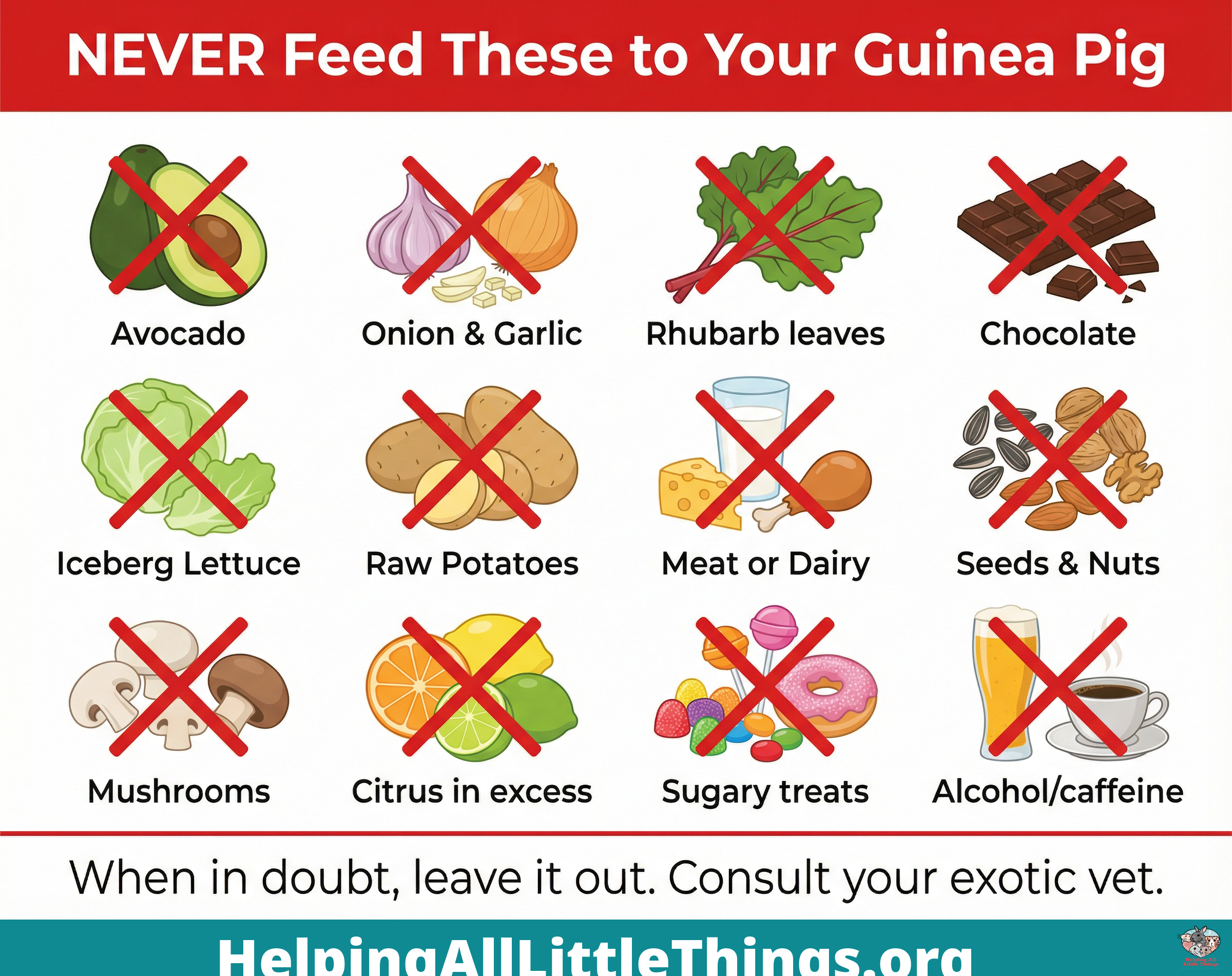

- Meat and Dairy: As herbivores, guinea pigs cannot digest animal products. This includes all meat, eggs, cheese, and milk.
- Chocolate, Coffee, and Caffeine: These are highly toxic to most pets, including guinea pigs.
- Onions, Garlic, and Chives: All members of the allium family are poisonous to guinea pigs.
- Avocado: This fruit is high in fat and contains persin, a fungicidal toxin that can be dangerous to guinea pigs.
- Rhubarb: The leaves and stalks contain high levels of oxalic acid, which is poisonous.
- Potatoes: Raw potatoes, especially the skins and any green parts, are toxic.
- Iceberg Lettuce: While not toxic, it has a very high water content and almost no nutritional value, and can cause diarrhea.
- Seeds and Nuts: These are a major choking hazard and are too high in fat.
- Mushrooms: Many varieties of mushrooms are toxic.
- Sugary or Processed Foods: Any food high in sugar, salt, or artificial ingredients (including most human snack foods) is unhealthy and can disrupt their delicate digestive system.
For a complete guide to a healthy diet, see our article on Nutrition Information for Guinea Pigs.
Unsafe Toys and Chews
Many toys marketed for small animals are not safe for guinea pigs. It is crucial to choose toys that cannot be ingested or cause injury.
Toys to Avoid:
- Plastic Toys: Small plastic parts can be chewed off and swallowed, leading to internal blockages or choking.
- Toys with Small or Glued-On Parts: Any toy with small, attached pieces (like plastic eyes on a stuffed animal) poses a choking risk.
- Leashes and Harnesses: A guinea pig’s spine is very delicate and can be easily injured by the pressure from a leash or harness. They should never be “walked.”
- Exercise Balls and Wheels: These are extremely dangerous for guinea pigs. Their anatomy is not suited for the arching of the back required to use a wheel or ball, and it can cause serious spinal injury. They also prevent the guinea pig from accessing food, water, and their own cecotropes (a necessary part of their digestion).
- Cedar or Pine Wood: The aromatic oils in these woods can cause respiratory problems. Choose safer woods like apple or willow.
- Commercial Treat Sticks (Seed Sticks): These are often held together with honey or other sugary binders and contain seeds and nuts, making them both unhealthy and a choking hazard.
Safe Alternatives for Enrichment:
Guinea pigs need enrichment to prevent boredom. Safe and enjoyable options include:
- Cardboard Tubes: Toilet paper or paper towel rolls are great for chewing and hiding in. Cut a slit down the side to prevent your guinea pig from getting stuck.
- Paper Bags: A large paper bag with the handles cut off makes a fun crinkly tunnel.
- Tunnels: Wide tunnels made of fabric or safe wood are excellent for encouraging activity.
- Chew Toys: Untreated wood blocks (apple, willow), hay-based chew toys, and willow balls are all safe options.
- Foraging Toys: Hiding their daily portion of vegetables around their enclosure encourages natural foraging behavior.
By providing a safe environment with appropriate food and toys, you can ensure your guinea pig stays healthy, happy, and entertained.
References
[1] Oxbow Animal Health. (2023). Foods Guinea Pigs Should Never Eat. Retrieved from https://oxbowanimalhealth.com/blog/foods-guinea-pigs-should-never-eat/
[2] The Humane Society of the United States. (n.d.). Guinea pig feeding. Retrieved from https://www.humanesociety.org/resources/guinea-pig-feeding