The Ideal Guinea Pig Habitat
Creating a safe, spacious, and enriching environment is one of the most important responsibilities of a guinea pig owner. The right habitat directly impacts their physical health and mental well-being. Many cages sold in pet stores are unfortunately too small and do not meet the minimum space requirements for these active animals. Understanding the key components of an ideal habitat will help you provide the best possible home for your cavy.
Space: Bigger is Always Better
Guinea pigs need ample, uninterrupted floor space to run, explore, and exhibit natural behaviors. The minimum size recommendations are just that—a minimum. Providing more space is always encouraged.
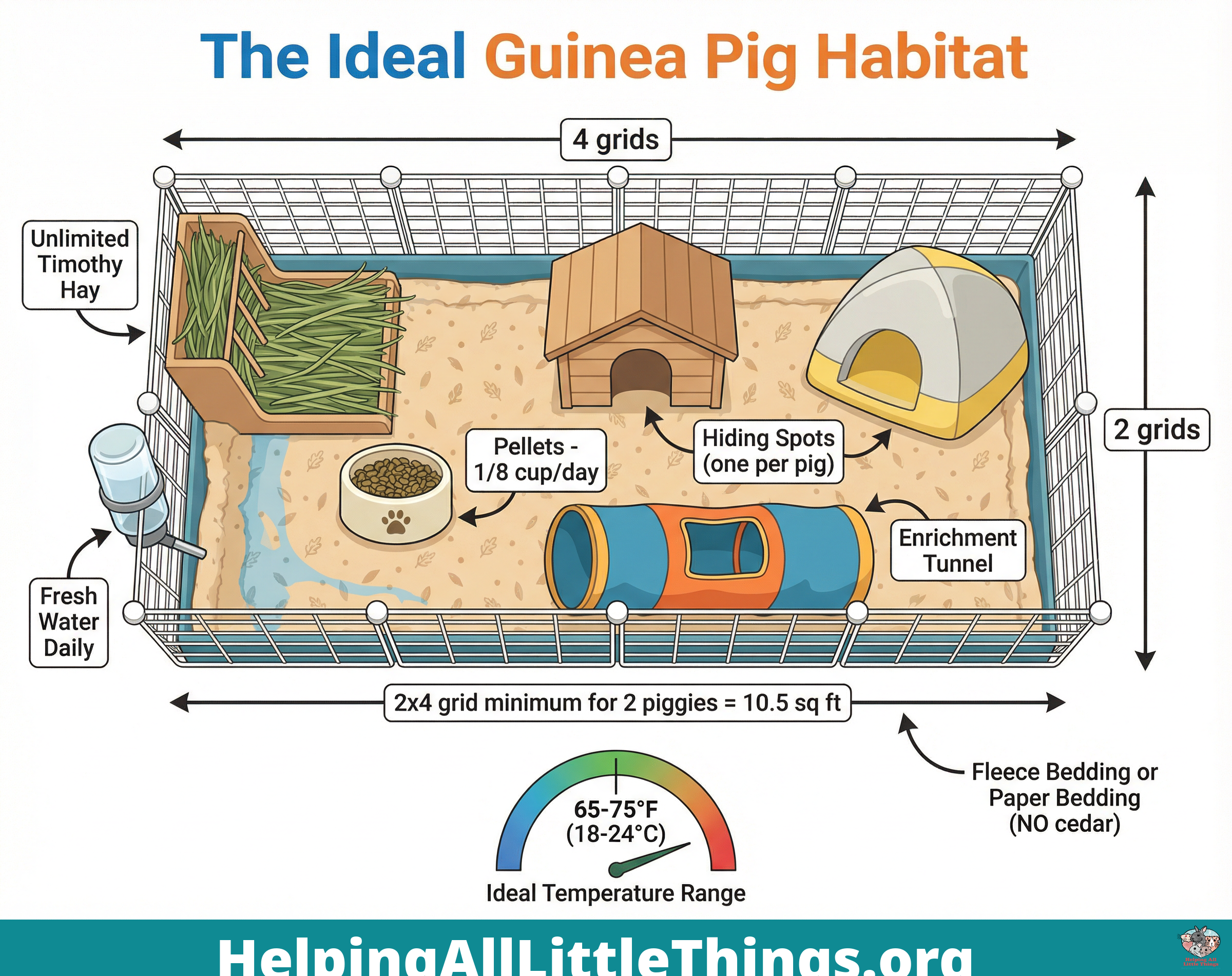
- Minimum Size: According to the Humane Society of the United States, the minimum cage size for a single guinea pig is 7.5 square feet, but since guinea pigs are highly social and should always be kept in pairs or groups, a more realistic minimum is 10.5 square feet for two guinea pigs [1]. This is equivalent to a 2x4 grid C&C cage.
- Why Space Matters: Adequate space helps prevent boredom, reduces the likelihood of squabbles between cage mates, and encourages exercise, which is crucial for preventing obesity and other health problems.

Cage Type: C&C Cages are the Gold Standard
C&C (Cubes and Coroplast) cages are widely recommended by guinea pig rescues and experts as the ideal form of housing. They consist of wire storage grids that form the walls and a corrugated plastic (Coroplast) liner that forms the base.
- Advantages: C&C cages are customizable, easy to clean, provide excellent ventilation, and are often more affordable and spacious than traditional pet store cages.
- Safety: The grid openings should be small enough (no more than 1.5 inches) to prevent a guinea pig from getting its head stuck. Do not use grids with wire shelving, as their feet can get trapped.
Essential Habitat Components
Every guinea pig habitat should include these key elements:
-
Bedding: The flooring of the cage must be soft to protect a guinea pig’s delicate feet.
- Recommended: Fleece liners or paper-based bedding are excellent choices. Fleece is reusable and soft, while paper bedding is highly absorbent.
- Avoid: Never use cedar or pine shavings. The aromatic oils (phenols) in these woods are toxic and can cause severe respiratory problems [2].
-
Hiding Spots: As prey animals, guinea pigs have a strong natural instinct to seek cover.
- Requirement: Provide at least one hiding spot (like a wooden hut, fabric hidey, or tunnel) for each guinea pig in the enclosure to ensure they all have a safe space to retreat to.
-
Food and Water Stations:
- Hay Rack: A dedicated hay rack or a large, clean pile of hay should be accessible at all times.
- Food Bowl: Use a heavy, ceramic bowl that cannot be easily tipped over for their daily portion of pellets.
- Water Bottle: A sipper bottle is the best way to provide fresh, clean water. Check it daily to ensure it is working correctly and the water is fresh.
-
Enrichment: To keep your guinea pigs mentally stimulated, provide safe toys and items to explore.
- Safe Toys: Tunnels, cardboard tubes (with a slit cut lengthwise), and chew toys made from untreated apple wood or willow are great options. For more ideas, see our article on Dangerous Treats and Toys for Guinea Pigs.
Location and Temperature
The placement of the cage is just as important as its contents.
- Temperature: Guinea pigs are sensitive to temperature extremes and can easily suffer from heatstroke. The ideal temperature range is between 65-75°F (18-24°C) [3]. Keep the cage indoors, away from direct sunlight, heaters, and drafts.
- Social Environment: Place the cage in a relatively quiet but social part of the house where they can interact with the family but are not overwhelmed by constant noise or activity.
By providing a spacious, well-equipped, and properly located habitat, you are setting the foundation for a healthy and happy life for your guinea pigs.
References
[1] The Humane Society of the United States. (n.d.). Guinea pig housing. Retrieved from https://www.humanesociety.org/resources/guinea-pig-housing
[2] VCA Animal Hospitals. (n.d.). Providing a Home for a Guinea Pig. Retrieved from https://vcahospitals.com/know-your-pet/guinea-pigs-providing-a-home
[3] Merck Veterinary Manual. (2025). Description and Physical Characteristics of Guinea Pigs. Retrieved from https://www.merckvetmanual.com/all-other-pets/guinea-pigs/description-and-physical-characteristics-of-guinea-pigs