Parasites in Guinea Pigs
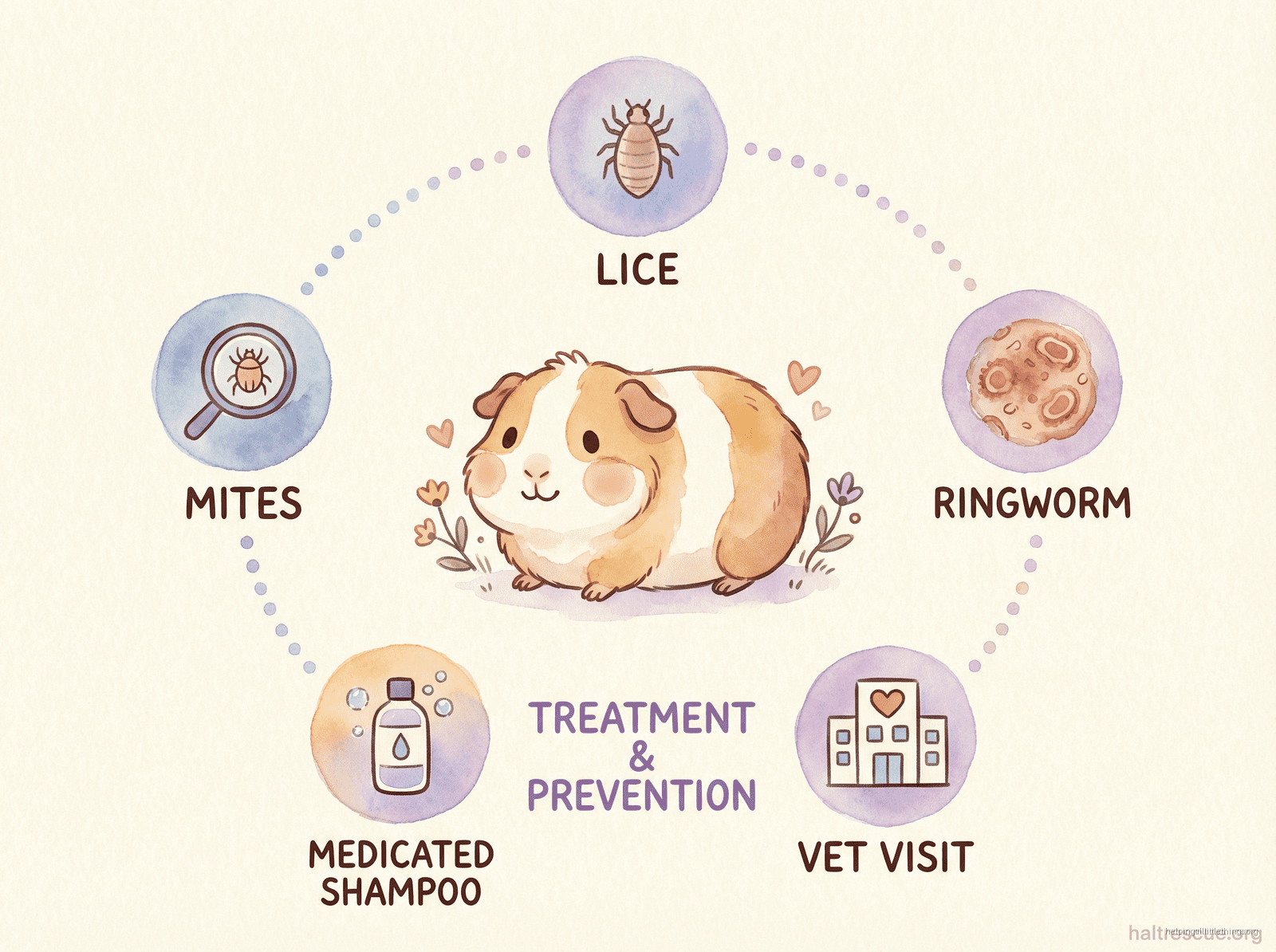

Parasitic infections are a common and serious problem for guinea pigs. Both external parasites (mites and lice) and fungal infections can cause intense discomfort, pain, and secondary health issues. It is vital for owners to recognize the signs of these infestations and seek veterinary treatment promptly.
External Parasites
-
Mites (Trixacarus caviae):
- Cause: This is arguably the most serious and painful parasitic condition for a guinea pig. Trixacarus caviae is a type of sarcoptic mange mite that burrows into the skin. Many guinea pigs are asymptomatic carriers, and the infestation can become active during times of stress, illness, or pregnancy.
- Signs: The signs are severe. The guinea pig will be intensely itchy (pruritic), scratching frantically, and may even have seizure-like fits from the intensity of the itch. You will see hair loss, flaky skin, and crusty or bloody sores, typically starting on the back and shoulders and spreading.
- Action: This is a medical emergency. The condition is extremely painful. A veterinarian will diagnose the mites (sometimes a skin scrape is needed, but often the clinical signs are enough) and provide treatment with an anti-parasitic medication like ivermectin or selamectin. Pain medication may also be needed.
-
Lice (Gliricola porcelli):
- Cause: Guinea pig lice are species-specific, meaning you cannot get them from your guinea pig. They are small, slender, light-colored insects that can be seen moving through the fur, especially around the face and ears.
- Signs: While some guinea pigs may be itchy, many show no signs at all. In heavy infestations, you can see the lice and their eggs ("nits") attached to the hair shafts.
- Action: A vet can prescribe a safe and effective treatment, usually the same medications used for mites.
Fungal Infections
Ringworm (Trichophyton mentagrophytes):
Despite the name, ringworm is a fungus, not a worm. It is very common, especially in young guinea pigs.
- Cause: The fungus thrives in warm, damp environments.
- Signs: It typically causes circular patches of hair loss with red, flaky, or crusty skin. It most often starts on the face, nose, and ears and can spread.
- Action: Ringworm is contagious to other guinea pigs and to humans. It requires a veterinary diagnosis. Treatment usually involves an oral anti-fungal medication, and sometimes medicated shampoos. Thoroughly cleaning the cage and environment is crucial.
Internal Parasites
Internal parasites like worms are very uncommon in guinea pigs and are not a routine concern for most pet owners.
Prevention
- Quarantine: This is the most important preventative step. New guinea pigs should be quarantined for at least 30 days and checked by a vet for any signs of parasites before being introduced to a resident herd.
- Good Husbandry: A clean, dry cage and a high-quality diet with adequate Vitamin C help to keep the immune system strong and reduce the risk of flare-ups.
- Reputable Sources: Obtain your guinea pig from a reputable breeder or rescue that practices good hygiene and parasite control.
- Avoid Stress: A calm, stable environment helps to prevent the activation of dormant mite infestations.
Never use over-the-counter parasite treatments, especially those intended for dogs or cats. Many of these products are toxic to guinea pigs. Always consult with a knowledgeable exotics veterinarian for diagnosis and treatment.