Respiratory Infections in Chinchillas
Chinchillas are generally hardy pets, but they are susceptible to respiratory infections, which can progress rapidly and become life-threatening if not treated promptly. Their delicate respiratory systems are sensitive to environmental conditions, and poor husbandry is a leading contributing factor. Understanding the warning signs and how to prevent respiratory disease is essential for every chinchilla owner.
Causes of Respiratory Infections
Respiratory infections in chinchillas can be caused by bacteria, viruses, or environmental factors — and often a combination of these.
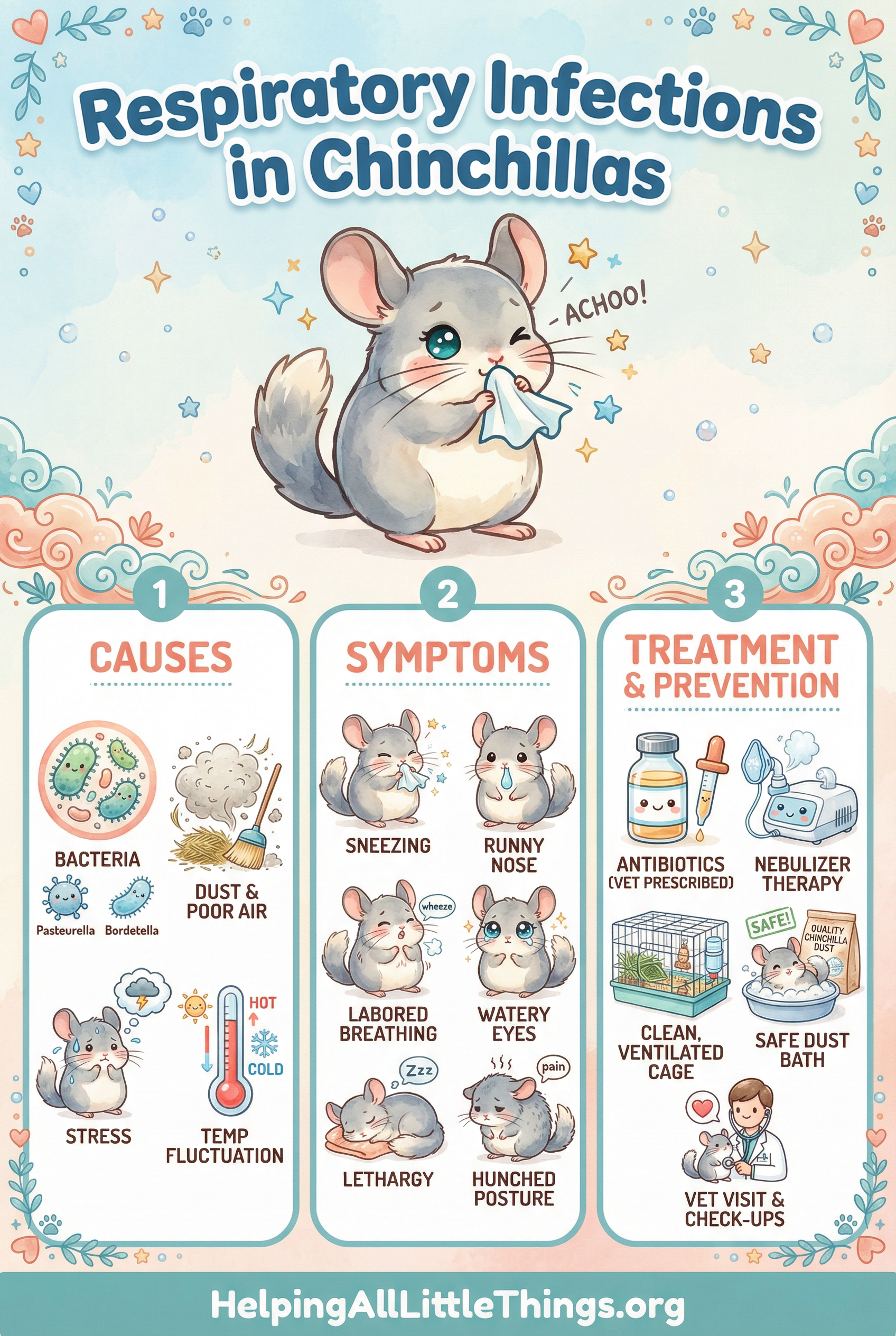
Bacterial infections are the most common cause. Bordetella bronchiseptica and Pasteurella multocida are frequently implicated in chinchilla respiratory disease. These bacteria can spread through direct contact with infected animals, contaminated bedding, or shared water sources.1
Poor ventilation is a major environmental risk factor. Inadequate air circulation allows ammonia from urine, dust, and bacterial aerosols to build up in the enclosure, directly irritating the respiratory tract and predisposing chinchillas to infection.
High humidity creates conditions favorable to bacterial and fungal growth. Chinchillas thrive in low-humidity environments (30–50% relative humidity), and persistently damp conditions significantly increase infection risk.2
Dust bath quality matters. Chinchillas require regular dust baths to maintain coat health, but excessive bathing frequency, poor-quality dust, or dust baths given in enclosed spaces can cause fine particles to accumulate in the lungs.
Stress suppresses the immune system. Environmental stressors — sudden changes, overcrowding, improper handling, or a poor diet — make chinchillas more susceptible to opportunistic infections.
Temperature fluctuations and drafts are also significant risk factors. Chinchillas are sensitive to sudden temperature changes, and exposure to cold drafts can compromise their immune defenses.

Warning Signs
Respiratory infections can progress from mild to severe quickly. Watch for:
- Sneezing — occasional sneezing is normal; frequent or persistent sneezing is not
- Nasal discharge — any discharge from the nose, particularly if cloudy or colored
- Labored or rapid breathing — visible effort to breathe, or a breathing rate that seems elevated
- Wheezing or clicking sounds when breathing
- Lethargy and reduced activity
- Reduced appetite and weight loss
- Hunched posture and fluffed fur — signs of general illness in chinchillas
Respiratory infections in chinchillas can deteriorate very quickly. A chinchilla that is breathing with effort, making audible sounds when breathing, or has blue-tinged gums or extremities is in a respiratory emergency — seek veterinary care immediately.
Diagnosis
A veterinarian will assess your chinchilla through:
- Physical examination including auscultation of the lungs
- Radiographs (X-rays) to assess the extent of lung involvement
- Nasal or throat swabs for bacterial culture and sensitivity testing, which guides antibiotic choice
- Blood tests to assess the severity of infection and overall health
Treatment
Treatment depends on the severity and cause of the infection:
| Treatment | Details |
|---|---|
| Antibiotics | Prescribed based on culture results; commonly enrofloxacin, trimethoprim-sulfa, or azithromycin |
| Nebulization | Saline or antibiotic nebulization helps deliver medication directly to the airways |
| Supportive care | Syringe feeding if appetite is reduced; ensure hydration |
| Environmental correction | Improve ventilation, reduce humidity, remove dust bath temporarily |
| Oxygen therapy | In severe cases, administered in clinic |
Never administer antibiotics without veterinary guidance — inappropriate antibiotic use can disrupt gut flora and cause fatal enteritis in chinchillas.1
Prevention
Good environmental management is the most effective prevention:
- Maintain good ventilation — wire mesh cages are far superior to enclosed tanks
- Keep humidity below 50% — use a dehumidifier if needed
- Avoid drafts — position the enclosure away from windows, air conditioning vents, and exterior doors
- Use high-quality chinchilla dust and limit dust baths to 2–3 times per week; always give dust baths in a well-ventilated area
- Quarantine new chinchillas for at least 4 weeks before introducing them to resident animals
- Reduce stressors — provide a consistent routine, appropriate enrichment, and avoid overhandling
- Schedule annual vet check-ups to catch early signs of respiratory disease
If you notice your chinchilla sneezing more than usual after a dust bath, try switching to a different brand of dust or reducing the frequency of baths. Some chinchillas are more sensitive to certain dust formulations than others.
For more on setting up a healthy chinchilla environment, see our article on The Ideal Chinchilla Habitat.