Common Health Issues in Chinchillas
Chinchillas are generally hardy animals, but like all pets, they are susceptible to specific health problems. Many of these issues are directly related to their unique anatomy and husbandry needs. Understanding these common ailments is key to prevention and early intervention.
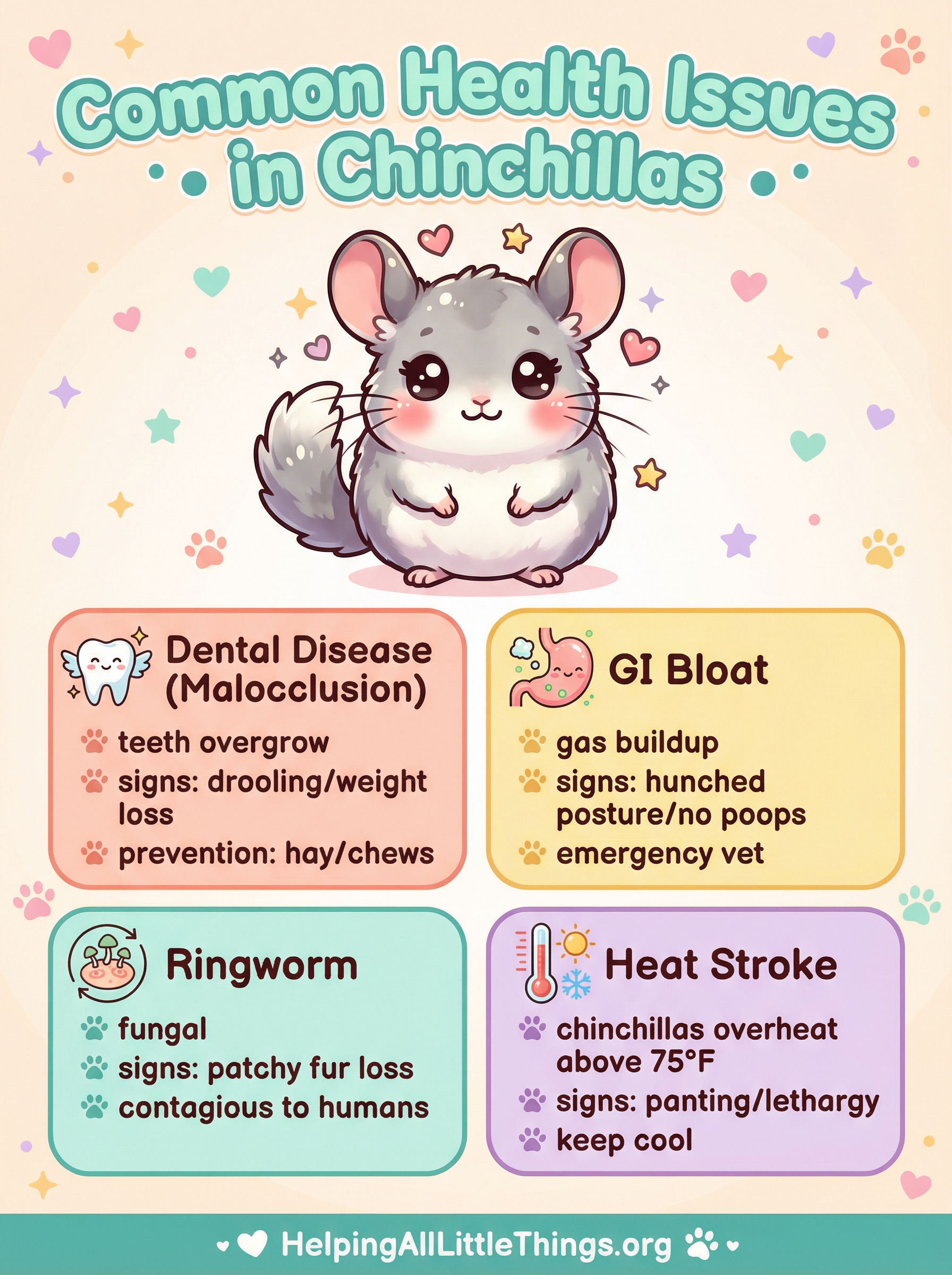
1. Dental Disease (Malocclusion)
This is arguably the most common and serious health problem in chinchillas. Their teeth grow continuously throughout their lives. A diet lacking in sufficient hay can lead to overgrown and misaligned teeth (malocclusion).
- Signs: Drooling (slobbers), weight loss, decreased appetite, pawing at the mouth, overgrown incisors.
- Prevention: The cornerstone of prevention is providing unlimited access to high-quality grass hay (like timothy or orchard grass). The abrasive nature of hay naturally wears down their teeth. Chew toys also help, but they are not a substitute for hay [1].
- More Info: Dental Health in Chinchillas
2. Gastrointestinal Issues (Bloat)
Bloat is a life-threatening emergency where the stomach fills with gas, putting pressure on the heart and lungs. It can be caused by sudden dietary changes, stress, or eating inappropriate foods.
- Signs: Swollen, hard abdomen; lethargy; loss of appetite; stretching out or pressing their stomach to the floor.
- Prevention: Avoid sudden changes in diet. Introduce new foods gradually. Do not feed gas-producing vegetables (like broccoli or cabbage) or excessive sugary treats. Ensure constant access to fresh hay to keep the gut moving.
- More Info: GI Health in Chinchillas
3. Ringworm
Despite its name, ringworm is a fungal infection of the skin, not a worm. It is common in young chinchillas and can be transmitted to humans.
- Signs: Patches of hair loss, often around the nose, eyes, and feet. The skin may be flaky or crusty.
- Prevention: Maintain a clean, dry environment. Quarantine new animals before introducing them to existing pets. Good hygiene is essential.
4. Heat Stroke
Chinchillas have dense fur and cannot sweat, making them extremely susceptible to overheating. Temperatures above 75°F (24°C) can be dangerous.
- Signs: Lethargy, panting, bright red ears, lying stretched out.
- Prevention: Keep their cage in a cool, climate-controlled room, away from direct sunlight. Provide a marble or granite slab for them to lie on to cool down. Never place their cage in a garage or un-air-conditioned space.
5. Respiratory Infections
Poor ventilation, dusty bedding, or a damp environment can lead to upper respiratory infections.
- Signs: Nasal discharge, sneezing, watery eyes, difficulty breathing.
- Prevention: Use dust-free bedding (like fleece or aspen shavings). Ensure their cage has good airflow and is kept clean and dry.
- More Info: Respiratory Issues in Chinchillas
Early detection is critical for a positive outcome with any of these conditions. A vigilant owner who knows what is normal for their pet is the first line of defense in keeping their chinchilla healthy and happy.
References
[1] VCA Animal Hospitals. (n.d.). Chinchillas - Common Problems. Retrieved from https://vcahospitals.com/know-your-pet/chinchillas-common-problems
[2] Merck Veterinary Manual. (n.d.). Disorders and Diseases of Chinchillas. Retrieved from https://www.merckvetmanual.com/all-other-pets/chinchillas/disorders-and-diseases-of-chinchillas