Diabetes in Chinchillas
Diabetes mellitus is relatively uncommon in chinchillas compared to some other small mammals, but when it does occur it poses significant health challenges. Chinchillas have a physiology that makes them sensitive to high-sugar diets, and dietary mismanagement is considered a primary contributing factor. Early recognition and appropriate management can significantly improve quality of life.
Understanding Diabetes in Chinchillas
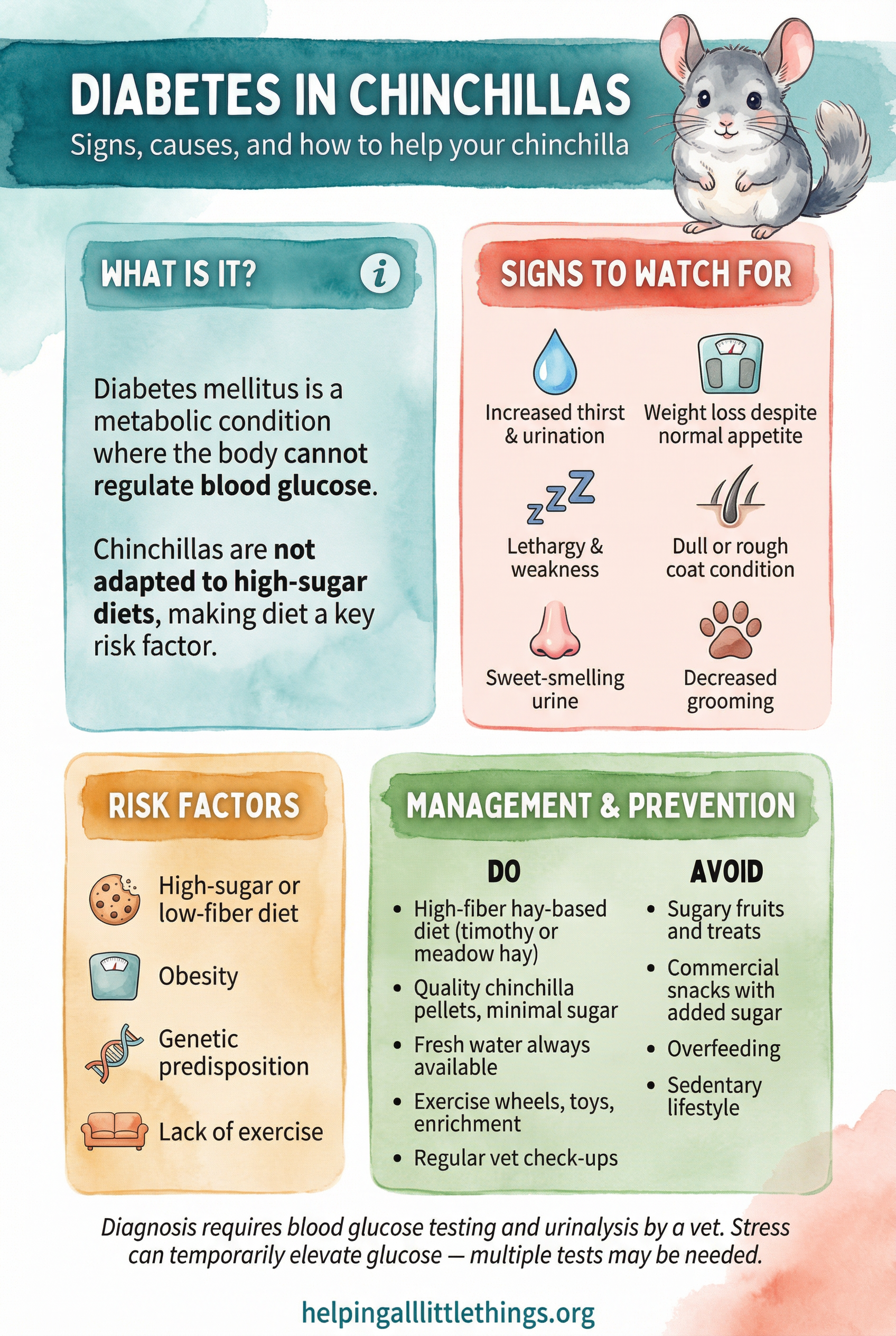
Diabetes mellitus is a metabolic condition in which the body cannot effectively regulate blood glucose levels. This occurs either because the pancreas produces insufficient insulin, or because the body's cells become resistant to insulin's effects. Without adequate insulin function, glucose accumulates in the bloodstream rather than being taken up by cells for energy, leading to a cascade of health complications.1
Chinchillas, like degus, have a physiology that is poorly adapted to high-carbohydrate, high-sugar diets. Their natural diet in the wild consists of sparse, fibrous vegetation with very little sugar content. Captive chinchillas fed inappropriate diets — particularly those high in seeds, nuts, dried fruit, or sugary treats — are at elevated risk of developing insulin resistance and diabetes.2

Causes and Risk Factors
The primary risk factors for diabetes in chinchillas include:
Inappropriate diet is the most significant modifiable risk factor. Diets high in simple sugars and refined carbohydrates — including commercial treats, raisins, dried fruit, seeds, and nuts — repeatedly spike blood glucose levels and can eventually overwhelm the insulin response.2
Obesity is closely linked to diabetes in chinchillas. Excess body fat contributes to insulin resistance, and overweight chinchillas are at substantially higher risk. Obesity itself is most commonly caused by a high-calorie diet and insufficient exercise.1
Genetic predisposition may play a role in some individuals, as has been documented in related species such as degus, which are highly prone to diabetes.2
Age is also a factor — older chinchillas are more likely to develop metabolic conditions including diabetes.
Symptoms
Diabetes in chinchillas can be subtle in its early stages. Common signs include:
- Polydipsia — excessive thirst; noticeably increased water consumption
- Polyuria — frequent urination; wet or soiled bedding
- Weight loss despite a normal or increased appetite
- Lethargy and reduced activity levels
- Cataracts — cloudiness of one or both eyes, which can develop as a complication of chronically elevated blood glucose
- Poor coat condition
Cataracts in a chinchilla that is also drinking and urinating excessively are a strong indicator of diabetes. Seek veterinary attention promptly.
Diagnosis
Diagnosis is made by a veterinarian through:
- Blood glucose measurement — a fasting blood glucose above the normal range is suggestive of diabetes
- Urinalysis — glucose in the urine (glucosuria) is a key indicator
- Complete blood panel to assess overall health and rule out other conditions
Note that stress can temporarily elevate blood glucose in chinchillas, so results must be interpreted in the context of the full clinical picture.1
Management
There is no cure for diabetes in chinchillas, but the condition can often be managed effectively with dietary and lifestyle changes:
| Intervention | Details |
|---|---|
| Diet correction | Eliminate all sugary treats, seeds, nuts, and dried fruit immediately |
| Hay-based diet | Ensure unlimited grass hay (timothy, orchard) forms the bulk of the diet |
| Pellet restriction | Limit to a small daily portion of plain, low-sugar pellets |
| Weight management | Encourage exercise; provide a large enclosure with a wheel |
| Monitoring | Regular vet check-ups with blood glucose monitoring |
| Insulin therapy | In severe cases, veterinary-prescribed insulin may be required3 |
Switching a chinchilla to a hay-based diet can be challenging if they have been accustomed to treats. Transition gradually over 2–3 weeks, reducing treats slowly while increasing hay availability. Never withhold food abruptly.
Prevention
The best prevention is a species-appropriate diet from the start:
- Feed unlimited grass hay as the dietary foundation
- Offer only a small daily portion of plain, high-quality chinchilla pellets
- Never feed raisins, dried fruit, seeds, nuts, yogurt drops, or other sugary treats
- Provide a large enclosure with a solid-surface exercise wheel to encourage activity
- Maintain a healthy body weight — you should be able to feel but not see the ribs
For detailed guidance on what to feed your chinchilla, see our article on Chinchilla Nutrition and Diet.