Is a Chinchilla Right for Me and My Family?
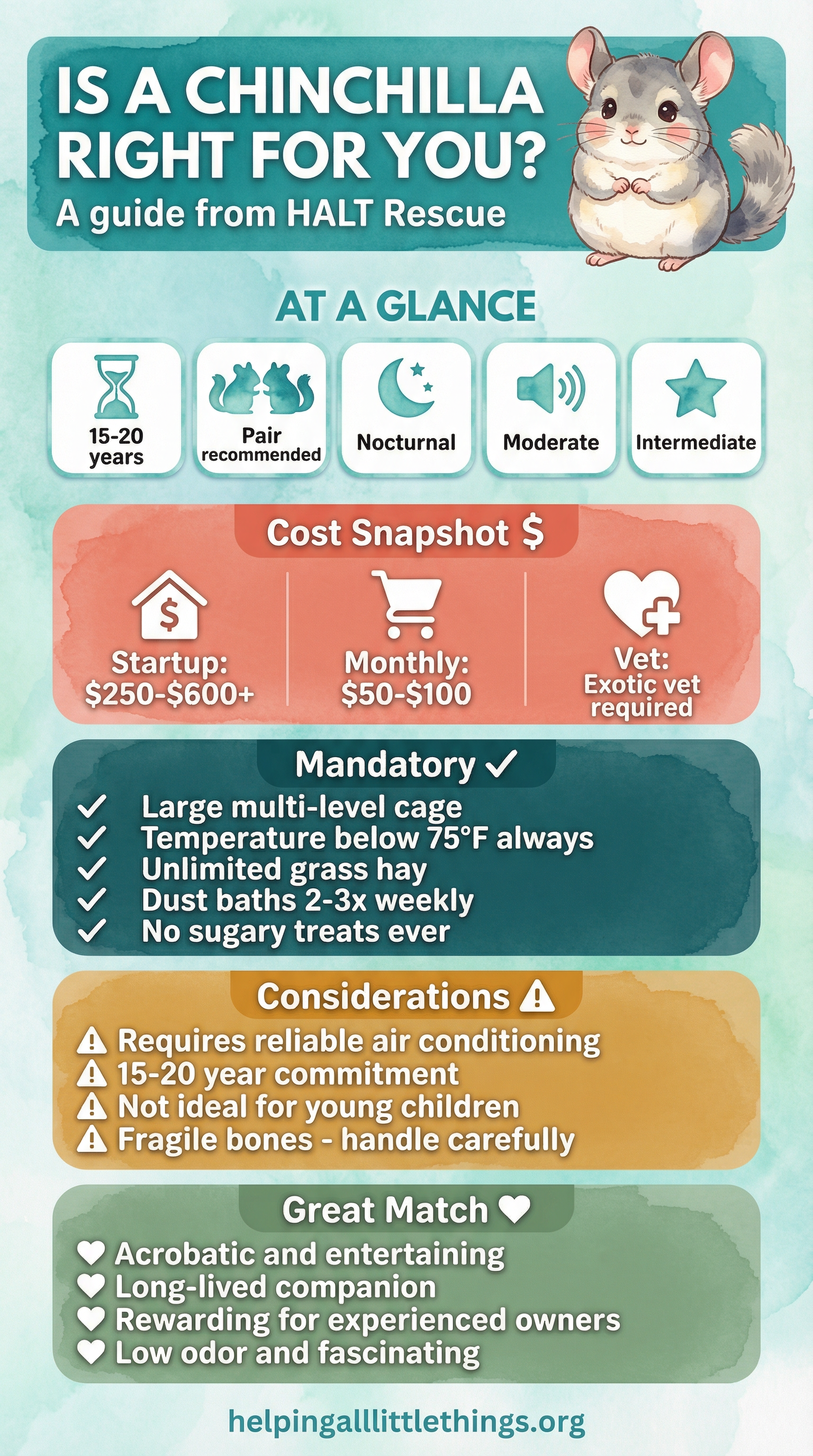

Chinchillas are extraordinary animals — soft as velvet, agile as acrobats, and capable of living 20 years or more with excellent care. That extraordinary lifespan is also the most important thing to understand before adopting one. A chinchilla is not a short-term commitment. It is a decades-long relationship that may outlast marriages, careers, and children leaving home.
The Basics
Chinchillas are native to the Andes mountains of South America, where temperatures are cool and the air is dry. This origin shapes their most critical care requirement: they cannot tolerate heat. Temperatures above 75°F (24°C) can cause fatal heatstroke, and they must be kept in a climate-controlled environment year-round. Air conditioning is not optional in most of the United States.
Chinchillas are social animals and generally do best with a bonded companion. They are primarily nocturnal or crepuscular, meaning they are most active in the evening and overnight.
What They Need Every Day
- A large, multi-level cage — minimum 3×2×2 feet, with solid shelves (wire flooring injures their feet)
- Temperature control — must remain below 75°F at all times; ideally 60–70°F
- Unlimited grass hay and a measured amount of quality chinchilla pellets
- Dust baths 2–3 times per week using chinchilla-specific dust — water baths are harmful and can cause fungal infections
- No sugary treats, ever — chinchillas have very low insulin potency and are highly prone to diabetes; even occasional raisins or fruit can contribute to metabolic disease over time
- Enrichment — chew toys, wooden ledges, and hiding spots
The Cost of Chinchilla Ownership
| Category | Estimated Cost |
|---|---|
| Startup (cage, dust bath, supplies, adoption fee) | $250–$600+ |
| Monthly ongoing (hay, pellets, dust, bedding) | $50–$100/month |
| Veterinary care | Exotic vet required; dental disease and GI issues are common |
The ongoing cost of air conditioning in warm climates is a real consideration that is often overlooked. Chinchillas also require an exotic vet, and dental disease — which can be expensive to diagnose and manage — is one of the most common health issues in the species.
Think Twice If...
- You live in a warm climate without reliable air conditioning. This is a hard stop. Heatstroke is fatal and can occur quickly.
- You are not prepared for a 15–20 year commitment. A chinchilla adopted today may still be with you in your 40s, 50s, or beyond. Make sure every adult in the household understands and accepts this.
- You have young children. Chinchillas have a highly flexible rib cage connected to a very small sternum primarily by cartilage. A child who squeezes or grabs a chinchilla around the midsection can cause fatal internal injuries — including lung damage and spinal cord compression — without breaking any bones and without any obvious external sign of injury. They are also extremely fast and easily dropped.
- You want a daytime pet. Chinchillas are most active in the evening and overnight. Waking them during the day is stressful for the animal.
Great Match If...
- You can provide a reliably cool, climate-controlled environment
- You are an experienced small pet owner who understands exotic animal care
- You want a long-lived companion and are genuinely prepared for that commitment
- You enjoy watching active, curious, acrobatic animals and appreciate a pet that interacts on its own terms
Chinchillas and Children
Chinchillas are not recommended as pets for young children, and this is not a matter of preference — it is a matter of anatomy. Unlike many small animals, a chinchilla's rib cage is not rigidly attached to a large bony sternum. The sternal connections are primarily cartilaginous, making the rib cage highly compressible. A child who grabs a chinchilla with both hands around the midsection — the natural instinct when trying to hold a fast, squirming animal — can compress the rib cage enough to damage the lungs or compress the spinal cord. The injury may not be immediately obvious, and the chinchilla may not show distress until it is too late.1
Additionally, chinchillas are fast, skittish, and prone to panic. Drops from even a modest height can cause fractures or fatal injuries.
If a chinchilla lives in a household with children:
- All handling must be supervised by an adult at all times
- Children should only hold the chinchilla while seated on the floor
- Children must be taught the correct two-handed, full-body support technique before any contact
- Grabbing, squeezing, or chasing must be strictly prohibited
Older teenagers and adults who approach chinchillas with patience and consistency can develop wonderful bonds with them — but this takes time and a genuine understanding of the animal's needs.
Questions about chinchilla ownership? Reach out to us — we're happy to help.