Heat Stroke in Chinchillas
Chinchillas are native to the cool, arid highlands of the Andes Mountains in South America, where temperatures rarely exceed 60°F (15°C). Their exceptionally dense fur — one of the thickest of any land mammal — provides excellent insulation against cold but makes it extremely difficult for them to dissipate heat. This makes chinchillas highly vulnerable to heat stroke, which can be fatal within minutes if not recognized and treated immediately.
Heat stroke is a life-threatening emergency. If you suspect your chinchilla is overheating, begin first aid immediately and contact an exotic vet without delay.
Why Chinchillas Are So Vulnerable
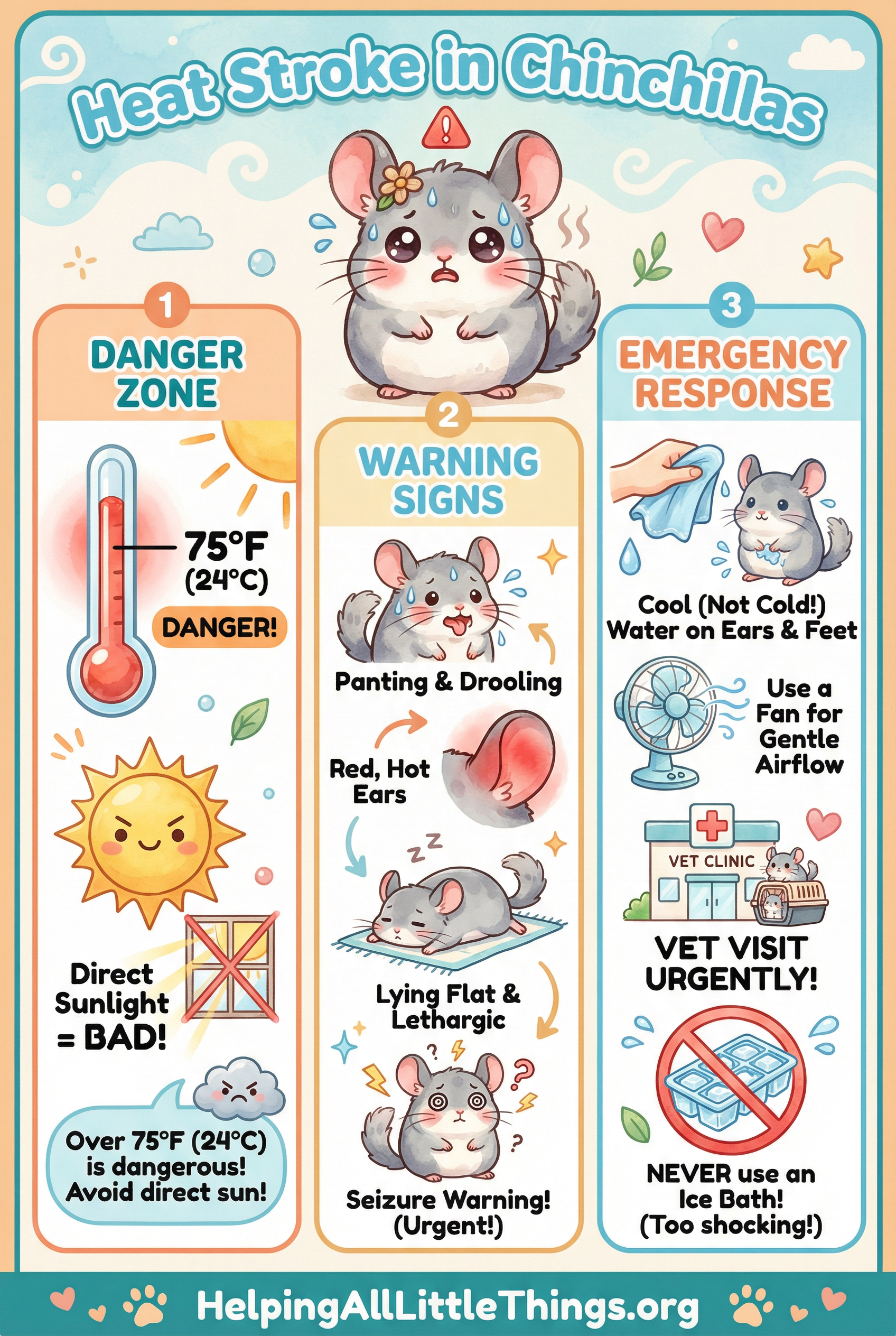
Chinchillas have very few sweat glands and cannot pant effectively to cool themselves. They rely almost entirely on heat exchange through their large, thin-skinned ears to regulate body temperature. When the ambient temperature rises above 75°F (24°C), this mechanism becomes insufficient, and body temperature can rise rapidly to dangerous levels.1
Additional risk factors include:
- High humidity, which impairs evaporative cooling through the ears
- Direct sunlight falling on the enclosure
- Poor ventilation — stuffy, enclosed spaces trap heat
- Obesity — excess body fat insulates the body and impairs thermoregulation
- Stress — a stressed chinchilla generates more body heat
Warning Signs of Heat Stroke
Heat stroke in chinchillas can progress from mild distress to collapse within minutes. Recognize these signs immediately:
| Stage | Signs |
|---|---|
| Early | Rapid breathing, panting, drooling, restlessness |
| Moderate | Red or hot ears, lying flat, lethargy, glazed eyes |
| Severe | Seizures, loss of consciousness, unresponsiveness |

Emergency First Aid
If you suspect heat stroke, act immediately:
- Move the chinchilla to the coolest room in your home immediately
- Apply cool (not cold) water to the ears and feet — these are the primary heat exchange surfaces
- Use a fan to create gentle airflow around the chinchilla
- Offer fresh cool water — do not force the chinchilla to drink
- Contact your vet immediately — even if the chinchilla appears to recover, internal damage may have occurred
Never use ice, ice water, or cold baths. Sudden extreme cooling causes the blood vessels in the skin to constrict, trapping heat inside the body and potentially causing fatal shock. Cool slowly and gently.
Veterinary treatment may include IV or subcutaneous fluids, corticosteroids to reduce inflammation, and monitoring for organ damage.2
Safe Temperature Guidelines
| Temperature | Status |
|---|---|
| 50–68°F (10–20°C) | Ideal range |
| 68–75°F (20–24°C) | Acceptable; monitor closely |
| Above 75°F (24°C) | Dangerous; take action to cool the environment |
| Above 80°F (27°C) | Emergency risk; immediate intervention required |
Prevention
Preventing heat stroke is far easier than treating it:
- Keep the enclosure below 75°F (24°C) at all times, especially in summer
- Never place the cage in direct sunlight, near a radiator, or in a car
- Use air conditioning in hot weather — fans alone may not be sufficient in high temperatures
- Provide granite or marble tiles in the enclosure for the chinchilla to lie on to cool down
- Ensure good ventilation — wire mesh cages are far better than enclosed plastic tanks
- Avoid handling chinchillas during the hottest part of the day in summer
Freeze a ceramic tile or a small water bottle wrapped in a cloth and place it in the enclosure during hot weather. Chinchillas will naturally seek out cool surfaces to regulate their temperature.
For more information on setting up a safe chinchilla environment, see our article on The Ideal Chinchilla Habitat.