Degu Nutrition
Proper nutrition is the most critical aspect of degu care. Degus have a unique sensitivity to sugar and are highly prone to developing diabetes if fed an improper diet. Their digestive system is designed for a high-fiber, low-sugar diet.
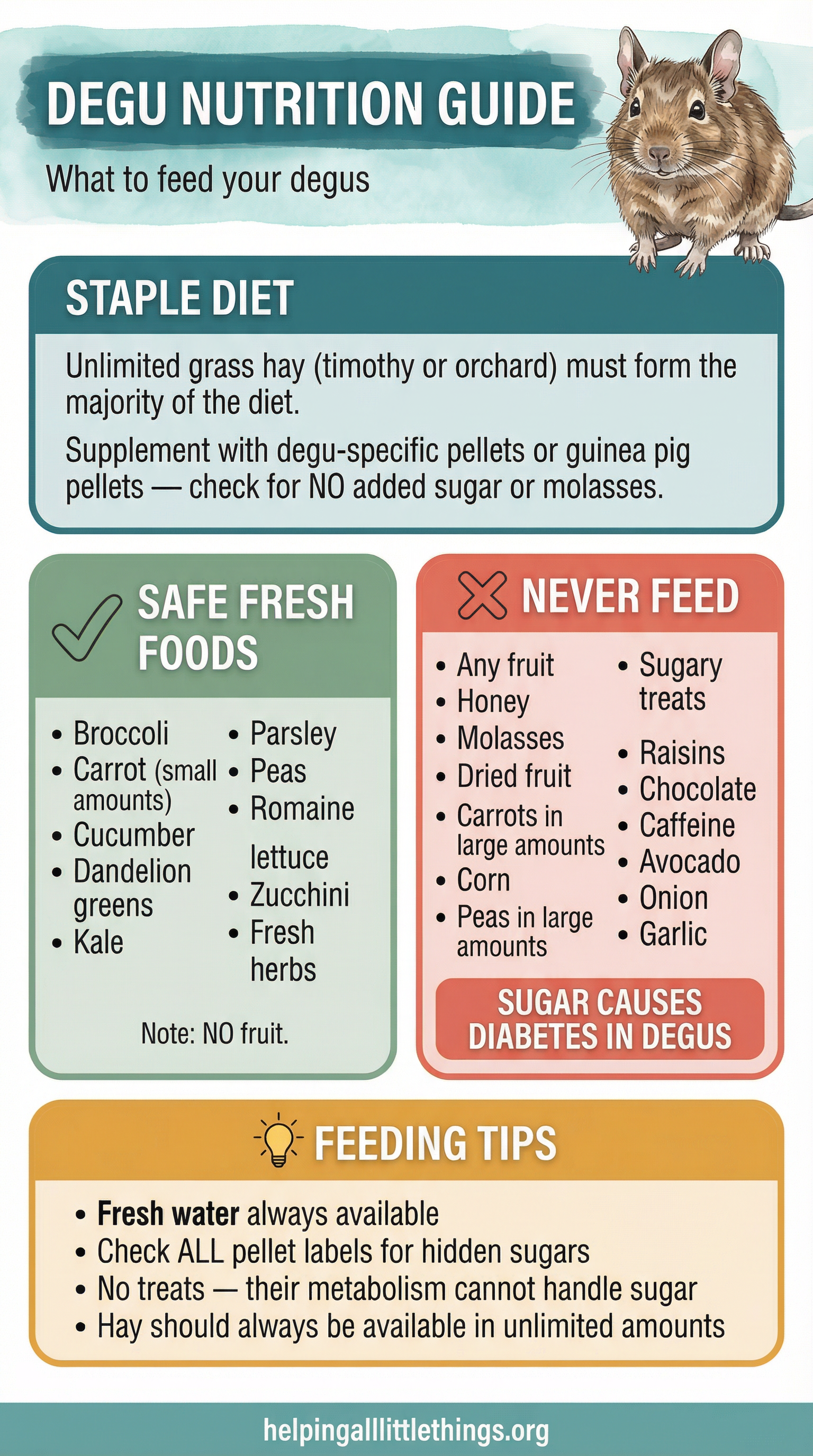
Share this infographic:

The Three Pillars of a Degu Diet
- Hay (Unlimited): The absolute cornerstone of their diet. High-quality grass hay (like Timothy or Orchard grass) should be available at all times. It is essential for dental health (wearing down their constantly growing teeth) and digestive function.
- Pellets (Limited): A high-quality degu-specific or chinchilla pellet should be provided. Avoid any pellets that contain molasses, fruit, or other sugary ingredients. Feed approximately 1-2 tablespoons per degu per day.
- Fresh Water: Clean, fresh water must always be available from a sipper bottle.
Safe Fresh Foods & Treats
Treats should be given very sparingly. A good rule is no more than a thumbnail-sized portion a few times a week.
| Category | Safe Foods (in very small amounts) |
|---|---|
| Vegetables | Bell pepper, Broccoli, Green beans, Dandelion greens (pesticide-free) |
| Herbs | Parsley, Cilantro, Basil |
| Treats | Rolled oats, Sunflower seeds (one or two as a special treat) |
Foods to Avoid: The Danger List
This is not a suggestion, it is a rule. Feeding your degu sugary foods can lead to cataracts, diabetes, and a shortened lifespan.
- ALL FRUITS: Grapes, apples, bananas, raisins, etc. are too high in sugar.
- Sugary Vegetables: Carrots, corn, sweet potatoes.
- Nuts and Seeds: Most are too high in fat (sunflower/pumpkin seeds are an occasional treat only).
- Yogurt Drops & Commercial Treats: These are dangerously high in sugar.
- Bread, Crackers, or any processed human food.
- Chocolate, caffeine, or alcohol.
When in doubt, do not feed it to your degu. Stick to hay, pellets, and the occasional leafy green.