Diabetes in Degus
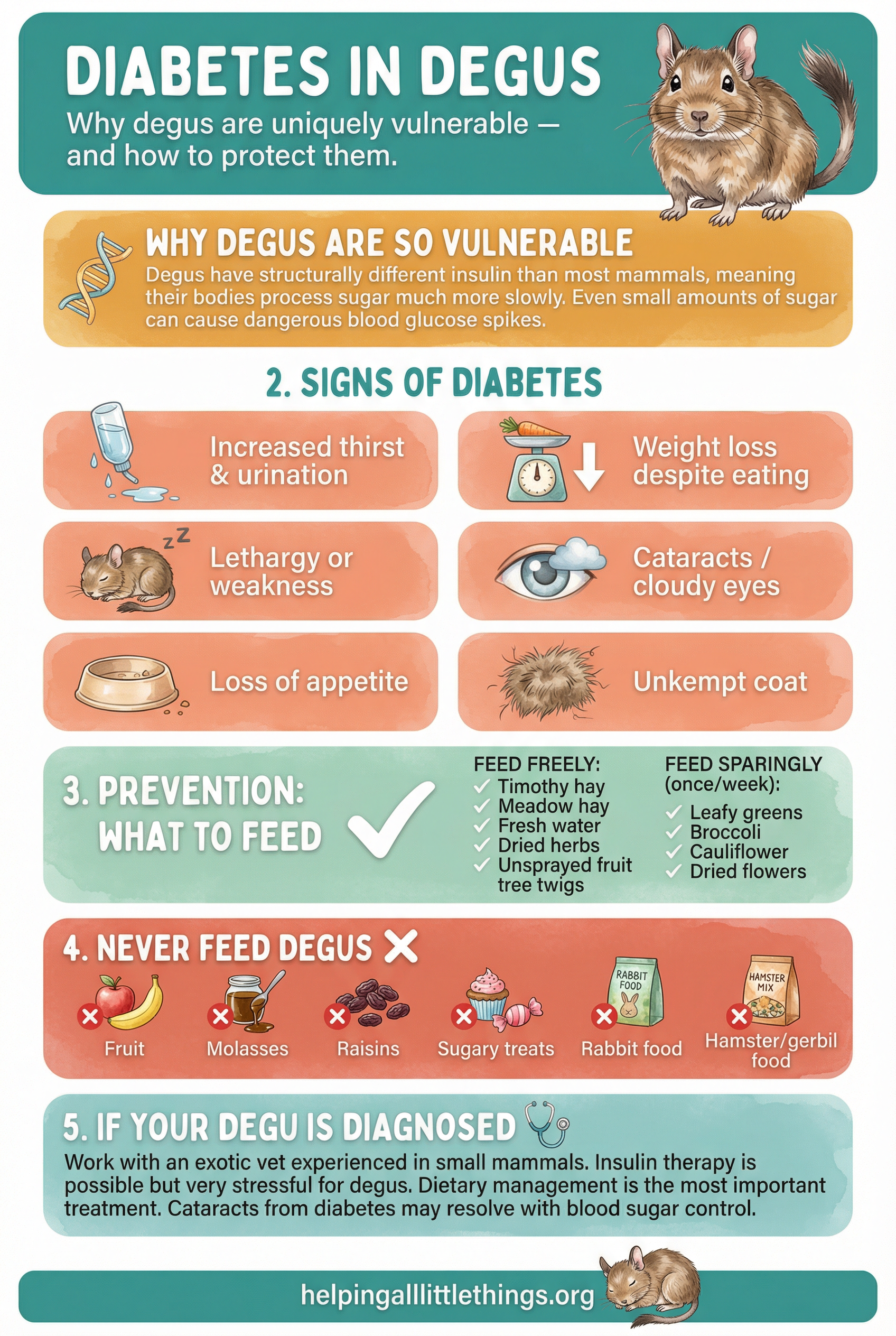

Diabetes mellitus is one of the most significant health concerns for pet degus. Unlike many other small mammals, degus have a structural difference in their insulin that makes them exceptionally sensitive to dietary sugar — even small amounts can cause dangerous blood glucose spikes. Understanding this vulnerability is essential for every degu owner.
Why Degus Are Uniquely Vulnerable
Diabetes mellitus is a metabolic condition in which the body cannot effectively regulate blood glucose levels. In most mammals, insulin acts quickly to bring blood sugar back to normal after a meal. In degus, insulin and glucagon — the hormones that regulate blood sugar — have a different molecular structure than in other mammals, meaning they work more slowly and less efficiently.1
In the wild, degus are native to the arid scrublands and mountains of Chile, where their natural diet consists almost entirely of dry grasses, roots, bark, cactus, and seeds — foods that are very low in sugar and high in fibre. Their bodies simply did not evolve to handle the sugar loads that are common in many commercial small animal foods and treats.2
Causes and Risk Factors
Inappropriate diet is the most significant and modifiable risk factor. Diets containing fruit, molasses, raisins, sugary treats, or commercial mixes with added sugar cause repeated blood glucose spikes that the degu's insulin system cannot adequately manage. Over time, this leads to chronically elevated blood glucose and eventually diabetes.2
Commercial feeds are a common hidden source of sugar. Many hamster, gerbil, and rabbit foods contain molasses or other sweeteners and are completely unsuitable for degus. Even some products marketed for degus may contain inappropriate ingredients — always check labels carefully.3
Obesity compounds the risk. Excess body fat contributes to insulin resistance, and overweight degus are at substantially higher risk of developing diabetes. Obesity in degus is most often caused by high-calorie diets and insufficient exercise.
Genetic predisposition is also a factor. Degus are so prone to diabetes that they are actually used as a research model for studying the condition in humans.1
Symptoms
Diabetes in degus can develop gradually. Watch for:
- Polydipsia — excessive thirst; noticeably increased water consumption
- Polyuria — frequent or increased urination; wet or soiled bedding
- Weight loss despite a normal or increased appetite
- Lethargy and reduced activity levels
- Cataracts — cloudiness of one or both eyes; this is a hallmark sign of diabetes in degus and can develop relatively quickly
- Loss of appetite in more advanced cases
- Unkempt coat or reduced grooming
Cataracts in a degu — especially alongside increased thirst and urination — are a strong indicator of diabetes. Seek veterinary attention promptly. In some cases, cataracts may partially resolve if blood sugar is brought under control early.
Diagnosis
Diagnosis is made by a veterinarian experienced with exotic small mammals through:
- Blood glucose measurement — a fasting blood glucose above the normal range is suggestive of diabetes
- Urinalysis — the presence of glucose in the urine (glucosuria) is a key indicator
- Complete blood panel to assess overall health and rule out other conditions
Note that stress can temporarily elevate blood glucose in degus, so a single elevated reading must be interpreted alongside the full clinical picture.1
Management
There is no cure for diabetes in degus, but the condition can often be managed with dietary changes and veterinary support:
| Intervention | Details |
|---|---|
| Diet correction | Eliminate all sugary foods, fruit, molasses, and inappropriate commercial feeds immediately |
| Hay-based diet | Ensure unlimited grass hay (timothy, meadow) forms the bulk of the diet |
| Appropriate pellets | Limit to a small daily portion of plain, sugar-free degu-specific pellets |
| Weight management | Encourage exercise; provide a large enclosure with a solid-surface wheel |
| Monitoring | Regular vet check-ups with blood glucose monitoring |
| Insulin therapy | Possible in some cases, but insulin injections are very stressful for degus and may not be effective due to their atypical insulin structure1 |
Dietary management is the most impactful treatment for diabetic degus. Switching to a hay-based diet can be challenging if a degu has been accustomed to sugary foods — transition gradually over 2–3 weeks, reducing treats slowly while increasing hay availability. Never withhold food abruptly.
Prevention
The best prevention is a species-appropriate diet from the very beginning:
- Feed unlimited grass hay (timothy or meadow) as the dietary foundation
- Offer a small daily portion of plain, sugar-free degu pellets — check the ingredient list for molasses, fructose, or any sweeteners
- Never feed fruit, raisins, molasses, sugary treats, rabbit food, hamster food, or gerbil food
- Provide a large enclosure with a solid-surface exercise wheel to encourage activity
- Maintain a healthy body weight — you should be able to feel but not see the ribs
Degus can enjoy a variety of safe vegetables and herbs in moderation. See our guide on Degu Diet and Nutrition for a full list of safe and unsafe foods.