Is a Degu Right for Me and My Family?
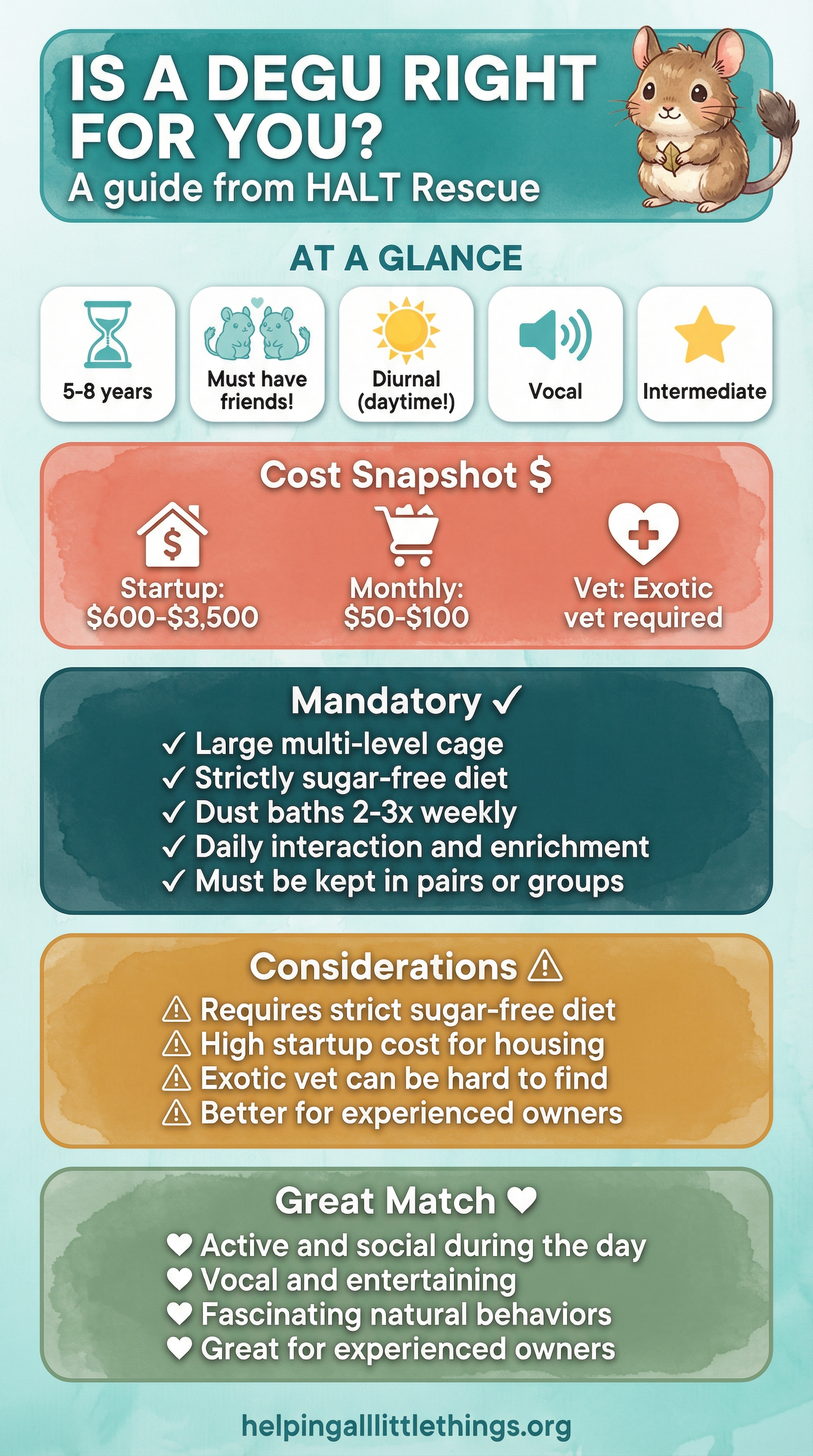

Degus are social, intelligent, and endlessly entertaining little animals — but they are also one of the more demanding small pets in terms of housing, diet, and specialized knowledge. They are not widely kept in the United States, which means finding an experienced exotic vet can be challenging, and misinformation about their care is common. If you are considering a degu, doing thorough research before adopting is essential.
The Basics
Degus typically live 5 to 8 years with good care. They are native to Chile, where they live in large social groups and are active during the day — making them one of the few small rodents that are naturally diurnal (daytime-active), which many owners appreciate.
Degus are highly social and must be kept in pairs or small groups. A lone degu will become stressed, depressed, and prone to behavioral problems. Plan to adopt at least two, ideally same-sex pairs or small groups.
Their Most Critical Need: A Sugar-Free Diet
Degus have a unique metabolic sensitivity to sugar that makes them extraordinarily prone to diabetes. Even small amounts of fruit, honey, molasses, or sugary treats can trigger cataracts and diabetes in degus. Their diet must consist of:
- Unlimited grass hay (timothy or orchard grass)
- Quality degu-specific or chinchilla pellets (check that they contain no molasses or added sugars)
- Fresh leafy greens in moderation
- Absolutely no fruit, sweet vegetables, or sugary treats
This is not a flexible guideline — it is a hard rule. If anyone in your household (including children) is likely to slip the degus a treat, degus may not be the right pet.
What They Need Every Day
- A large, multi-level cage with solid shelves and plenty of enrichment
- Dust baths 2–3 times per week (same as chinchillas)
- Daily interaction and enrichment — degus are intelligent and need mental stimulation
- Strictly sugar-free diet (see above)
- Regular cage cleaning — spot clean daily, full clean weekly
The Cost of Degu Ownership
| Category | Estimated Cost |
|---|---|
| Startup (cage, dust bath, supplies, adoption fee) | $600–$3,500 |
| Monthly ongoing (hay, pellets, dust, bedding) | $50–$100/month |
| Veterinary care | Exotic vet required; diabetes and dental disease are common |
The startup cost range is wide because appropriate housing for degus can be expensive — they need a large, well-ventilated multi-level enclosure. The high end of the range reflects premium setups. Finding an exotic vet who is experienced with degus specifically can be difficult in some areas.
Think Twice If...
- You cannot maintain a strict sugar-free diet. This is the single most important consideration. Degus that receive sugar develop cataracts and diabetes, often within months.
- You are a first-time small pet owner. Degus are better suited to owners with some experience keeping exotic small animals.
- Finding an exotic vet is difficult in your area. Degus are not commonly kept, and not all exotic vets have experience with them.
- The startup cost is a stretch. Proper housing for degus is not cheap, and cutting corners on enclosure size significantly impacts their welfare.
Great Match If...
- You want an active, social, entertaining pet that is awake during the day
- You can commit to a strict sugar-free diet and educate everyone in the household
- You enjoy watching natural social behaviors — degus are vocal, curious, and fun to observe
- You have experience with exotic small animals and are prepared for specialized care
Questions about degu ownership? Reach out to us — we're happy to help.