Degu Habitat
Degus are active, agile, and curious animals that need a large and stimulating environment to thrive. Their habitat must be chew-proof and designed to accommodate their love of climbing, running, and burrowing.
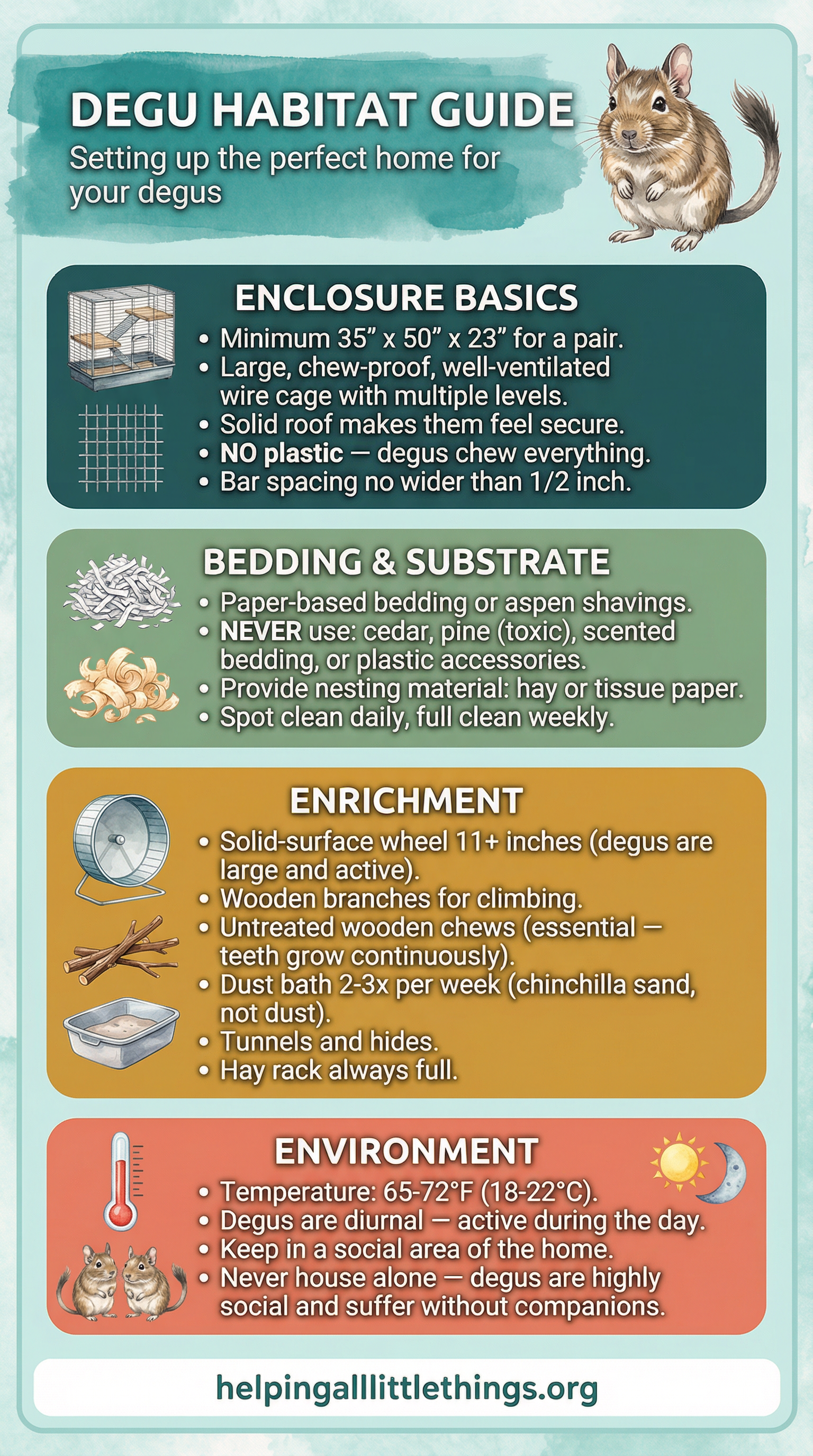
Share this infographic:

Enclosure
A small cage is not suitable for degus. They need a large, multi-level wire cage.
- Size: A minimum of 24" x 18" x 24" for a pair, but much larger is highly recommended. A tall, multi-level cage like a Critter Nation is an excellent choice.
- Material: The cage must be metal. Degus are avid chewers and will destroy a plastic base in no time.
- Bar Spacing: Bar spacing should be no more than 1/2 inch to prevent escapes.
- Shelves: The cage should have multiple solid shelves or ledges. Wire mesh shelves should be covered with fleece or wood to prevent foot injuries (bumblefoot).
Bedding and Substrate
- Safe Bedding: Use paper-based bedding or aspen shavings in the base of the cage.
- Unsafe Bedding: NEVER use cedar or pine shavings due to their toxic oils. Avoid scented bedding.
- Nesting: Provide hay and tissue paper for them to build nests.
Enrichment: A Degu's Playground
Bored degus can become destructive and stressed. A rich environment is essential.
- Wheel: A solid-surface 12-inch wheel is a necessity. A wheel that is too small will cause back problems. The wheel must be metal or a very hard, chew-proof plastic.
- Dust Bath: Provide a dust bath with chinchilla sand (not dust) 2-3 times per week for 15-20 minutes. This is crucial for their coat health.
- Chews: Degus' teeth grow continuously. Provide a constant supply of safe woods (apple, willow), cardboard, and other chew toys.
- Climbing: Ledges, branches, and ropes will be well-used.
- Hides: Multiple hiding spots will make them feel secure.
Environment
- Temperature: Keep the room at a stable temperature between 65-72°F (18-22°C).
- Location: Degus are diurnal (active during the day), so place their cage in a social part of the house where they can interact with the family, but away from direct sunlight and drafts.