Degu Basic Care
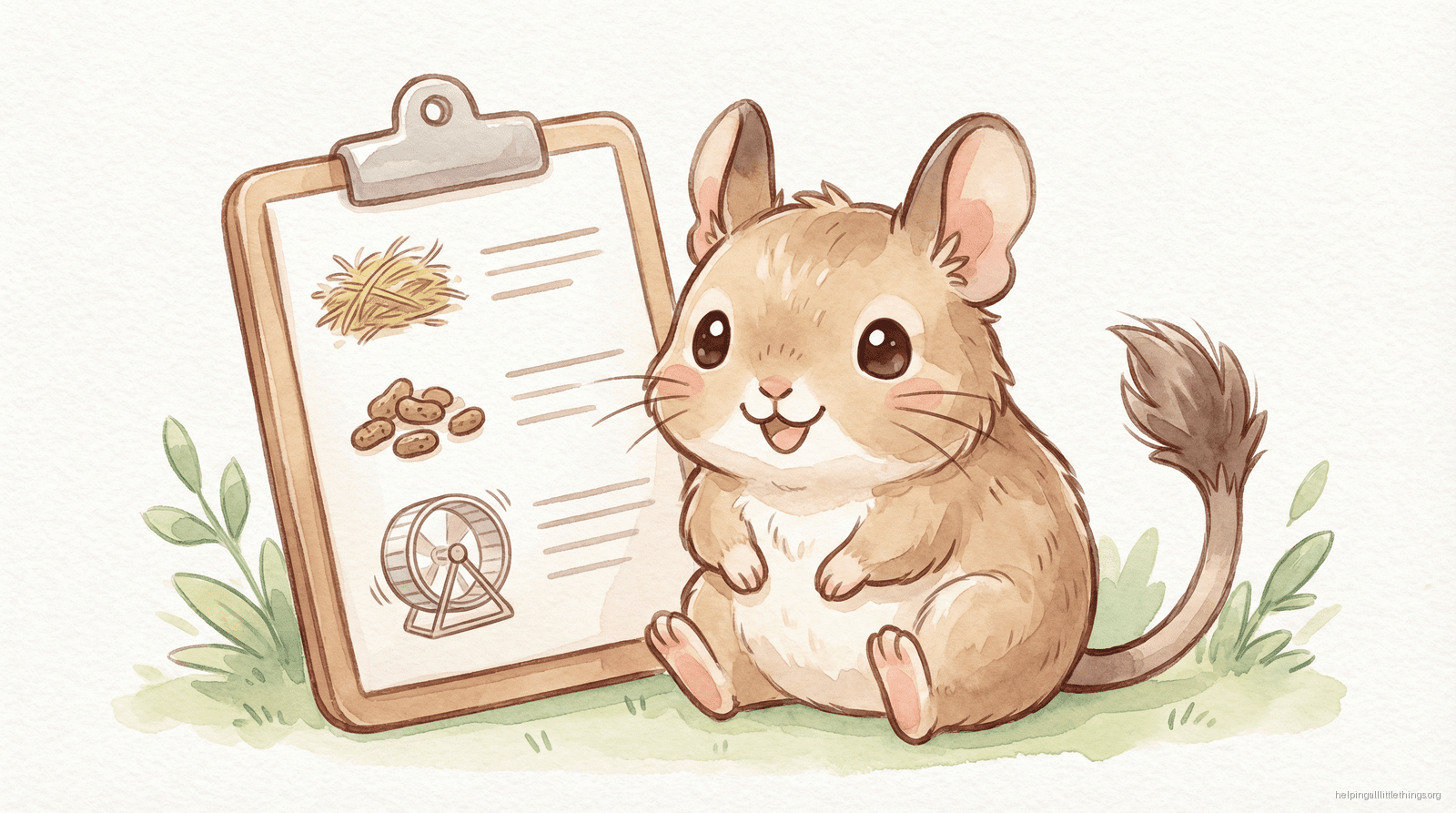
Share this infographic:

Degus are intelligent, social, and diurnal (active during the day) rodents that can make fascinating pets. They require specific care, particularly regarding their diet and social needs, to live a healthy life. This guide covers the essential care routines for degus.
Daily Care
- Food and Water: Provide fresh, high-quality degu pellets and an unlimited supply of hay (timothy or orchard grass) daily. Check their water bottle to ensure it is full and working.
- Health Check: Observe your degus for any signs of illness. Look for changes in activity, appetite, or droppings. Check for overgrown teeth, cloudy eyes (a sign of cataracts/diabetes), or foot sores.
- Spot Cleaning: Remove any soiled bedding or old food.
Weekly Care
- Enrichment: Rotate their toys, provide new branches for climbing, and offer new cardboard items to chew. This prevents boredom and keeps their minds active.
- Dust Bath: Provide a dust bath with chinchilla sand (not dust) for 15-20 minutes, 2-3 times per week. This is essential for keeping their coats clean and healthy. Remove the bath after use to prevent overuse and mess.
- Full Cage Clean: A full cage cleaning should be done weekly. Degus can be messy, and a clean environment is crucial for their health.
- Move your degus to a secure temporary carrier.
- Discard all old bedding.
- Wash the cage, shelves, and accessories with a pet-safe cleaner.
- Refill with fresh bedding and return all items to the cage.
Handling Your Degus
Degus are curious and can become quite tame with regular, gentle interaction.
- Taming: Start by offering treats (like a rolled oat) from your hand. Let them approach you. Degus are very food-motivated.
- Handling: Once comfortable, gently scoop them up. Never grab them from above or by the tail. A degu’s tail can easily break or deglove (the skin and fur strip off), which is a serious and painful injury.
- Interaction: Since degus are active during the day, you can interact with them frequently. They will often learn to recognize their owners and come to the cage door for attention.
Social Needs
Degus are one of the most social small animals. They must not be kept alone.
- Group Size: Degus should be kept in same-sex pairs or small groups. A lone degu will become stressed, depressed, and may develop behavioral problems.
- Introductions: Introducing new degus must be done carefully and slowly, using a split-cage method over several weeks.