Hedgehog Nutrition
Hedgehogs are insectivores, meaning their natural diet consists primarily of insects. In captivity, their diet is based on a high-quality, low-fat cat food, supplemented with insects and other treats. Proper nutrition is key to preventing obesity, a common and serious health problem in pet hedgehogs.
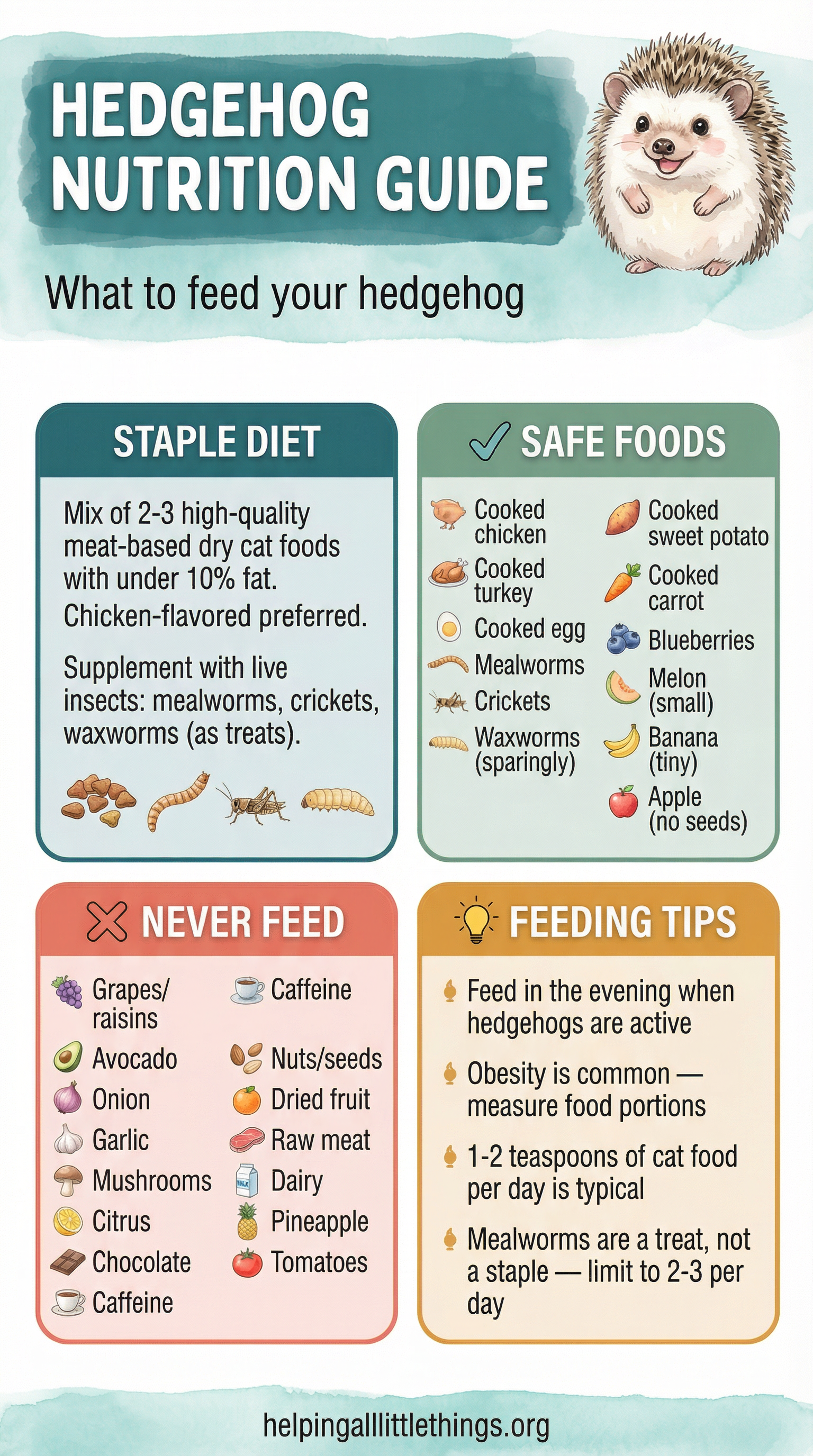

Staple Diet: Cat Food
The most common and recommended base diet for a pet hedgehog is a dry cat food with the following specifications:
- Protein: 30-35%
- Fat: 10-15% (a low-fat formula is crucial)
- Fiber: High in fiber is a plus.
Look for a high-quality brand where a meat source (like chicken) is the first ingredient. Feed approximately 1-2 tablespoons per day, typically in the evening when they wake up.
Insects: A Necessary Treat
Insects are a vital part of a hedgehog's diet and provide important nutrients and enrichment.
- Safe Insects: Mealworms, dubia roaches, crickets, and waxworms are all good options.
- Frequency: Offer a few insects 3-5 times per week.
- Source: Only feed insects from a pet store or reputable online breeder. Never feed wild-caught insects, as they can carry parasites.
Other Safe Treats
Offer these in very small, pea-sized amounts occasionally.
- Cooked, unseasoned meat (chicken, turkey)
- Cooked, unseasoned egg
- Small amounts of fruits and vegetables like apple, banana, berries, green beans, or peas.
Foods to Avoid
Many foods are dangerous or unhealthy for hedgehogs.
- Nuts and Seeds: Too high in fat.
- Grapes and Raisins: Toxic.
- Avocado: Toxic.
- Onion and Garlic.
- Dairy: Hedgehogs are lactose intolerant.
- Chocolate, caffeine, or alcohol.
- Hard, large pieces of food that could be a choking hazard.
Water
Fresh, clean water should always be available in a shallow, heavy bowl. Sipper bottles are not recommended for hedgehogs as they can be difficult for them to use and can chip their teeth.