Hamster Nutrition
Providing a proper diet is fundamental to your hamster's health. Hamsters are omnivores and require a balanced diet of pellets, supplemented with small amounts of fresh foods. Understanding what to feed—and what to avoid—is key to preventing obesity and other health issues.
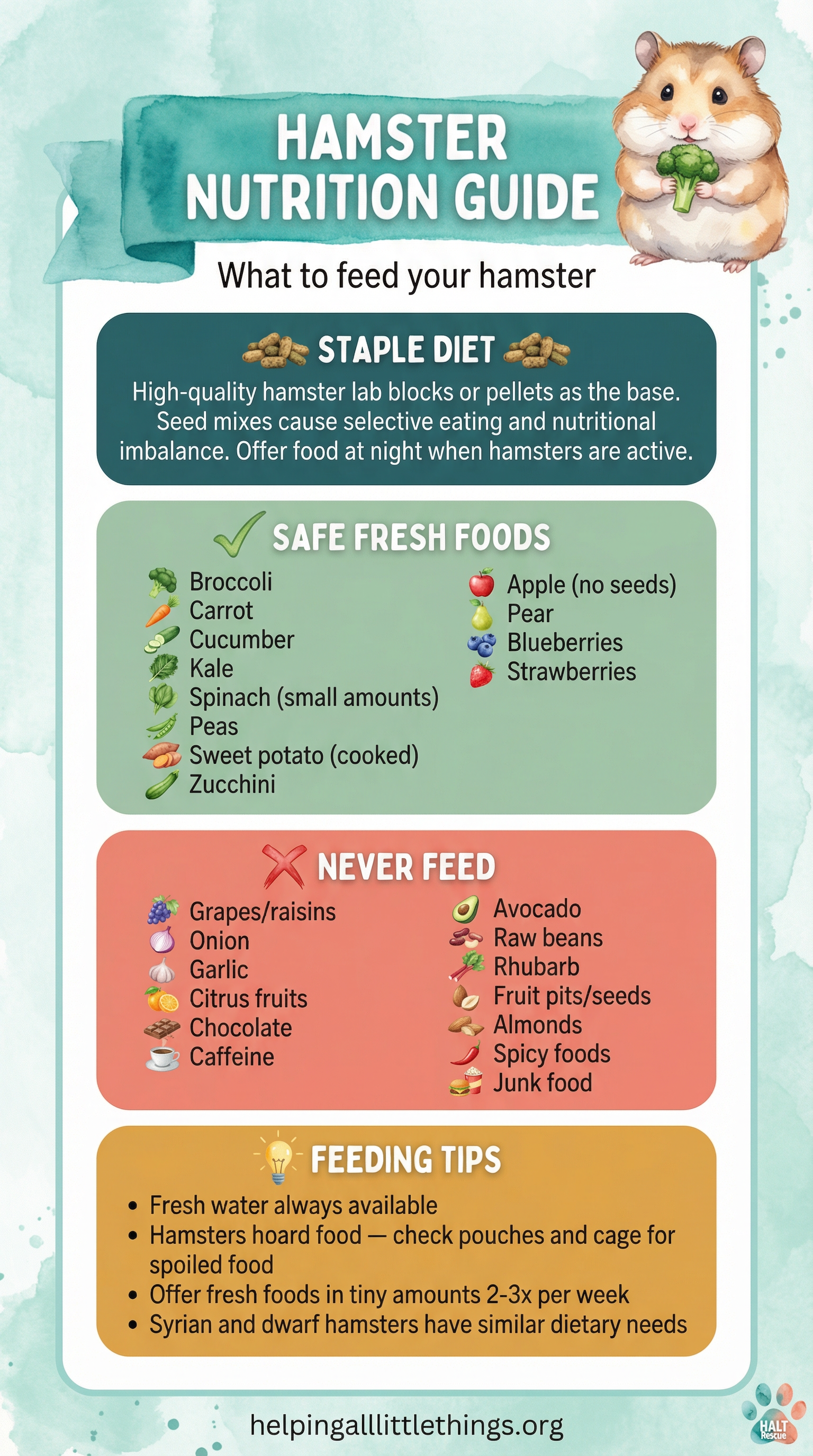
Share this infographic:

Staple Diet: Pellets are Best
The core of your hamster's diet should be a high-quality commercial hamster food.
- Recommended: A pelleted or lab block formula is the ideal choice. This prevents selective feeding, where a hamster picks out tasty, high-fat seeds and leaves the nutritious pellets behind.
- Not Recommended: Loose seed mixes are a common cause of nutritional deficiencies and obesity in hamsters. If you must feed a mix, ensure your hamster is eating the entire mix and not just their favorite parts.
Feed your hamster approximately 1-2 tablespoons of pellets per day, preferably in the evening when they are most active.
Safe Fresh Foods
Offer fresh foods in very small quantities (a thumbnail-sized piece) 2-3 times per week.
| Category | Safe Foods (in small amounts) |
|---|---|
| Vegetables | Broccoli, Carrot, Cucumber, Kale, Spinach, Peas, Sweet Potato (cooked) |
| Fruits | Apple (no seeds), Pear, Blueberries, Strawberries |
| Protein | Cooked plain chicken, scrambled or boiled egg, mealworms |
Foods to Avoid
Many common foods are dangerous for hamsters. Never feed them:
- Grapes or Raisins
- Onion or Garlic
- Citrus Fruits
- Chocolate or Caffeine
- Avocado
- Raw Beans or Potatoes
- Rhubarb
- Almonds
- Any junk food, sugary, or salty snacks
Water and Hoarding
- Water: Fresh, clean water must always be available from a sipper bottle.
- Hoarding: Hamsters are famous for stuffing their cheek pouches and hiding food all over their cage. It's important to do regular spot checks to find and remove any hidden fresh food before it spoils and it spoils.