Ferret Nutrition
Understanding a ferret's diet is simple: they are obligate carnivores. This means their bodies are designed to digest and thrive on animal-based protein and fat exclusively. They cannot digest fiber, and carbohydrates (including sugars and grains) can lead to serious health problems.
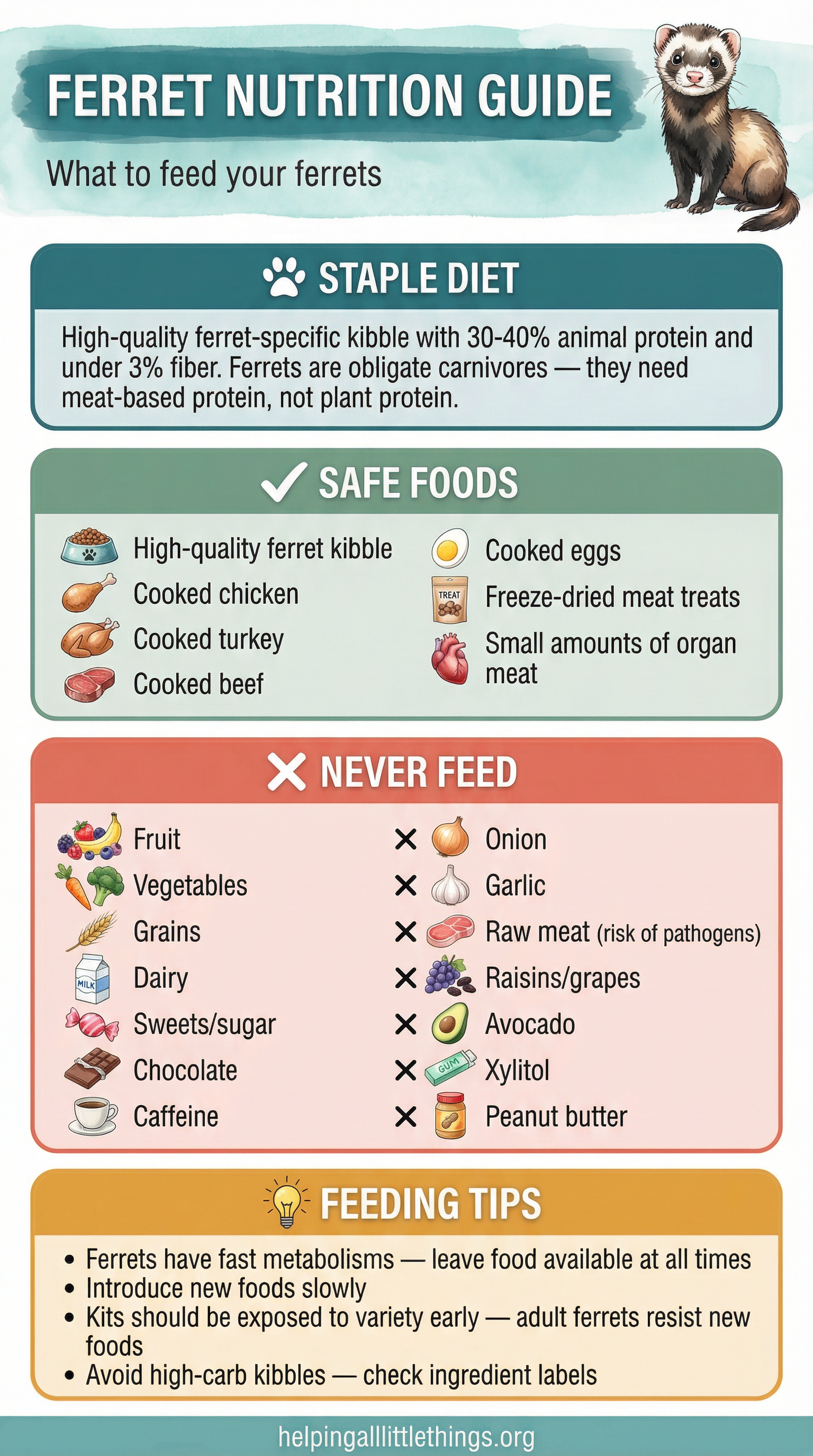

Staple Diet: High-Quality Kibble
The most common and convenient way to feed a ferret is with a high-quality commercial kibble.
- Protein: Look for a food with 30-40% animal-based protein. The first few ingredients should be meat (e.g., chicken, lamb).
- Fat: The fat content should be between 18-30%.
- Fiber: Fiber should be very low, under 3%.
- Avoid: Do not feed cat or dog food. Avoid any ferret foods that contain high levels of corn, peas, or other plant proteins.
Ferrets have a very fast metabolism and should have access to their food and fresh water at all times.
Alternative Diets
Some owners choose to feed a raw or whole prey diet. This can be very healthy but requires extensive research to ensure it is properly balanced. Consult with an experienced ferret vet before attempting a raw diet.
Safe Treats
Treats should be given sparingly and should also be meat-based.
- Cooked scraps of meat (plain chicken, turkey)
- Meat-based baby food
- Freeze-dried meat treats (100% meat, no additives)
- A small amount of salmon oil (good for their coat)
Foods to Avoid
Feeding a ferret the wrong foods can be very dangerous.
- NO Fruits or Vegetables: Ferrets cannot digest plant matter. It offers no nutritional value and can cause blockages.
- NO Grains or Sugars: This includes bread, cereal, and most commercial pet treats (like yogurt drops).
- NO Dairy: Ferrets are lactose intolerant.
- NO Chocolate, Caffeine, or Xylitol: These are toxic.
- NO Cooked Bones: These can splinter and cause internal damage.
Stick to meat, and your ferret will be healthy and happy.