Is a Ferret Right for Me and My Family?
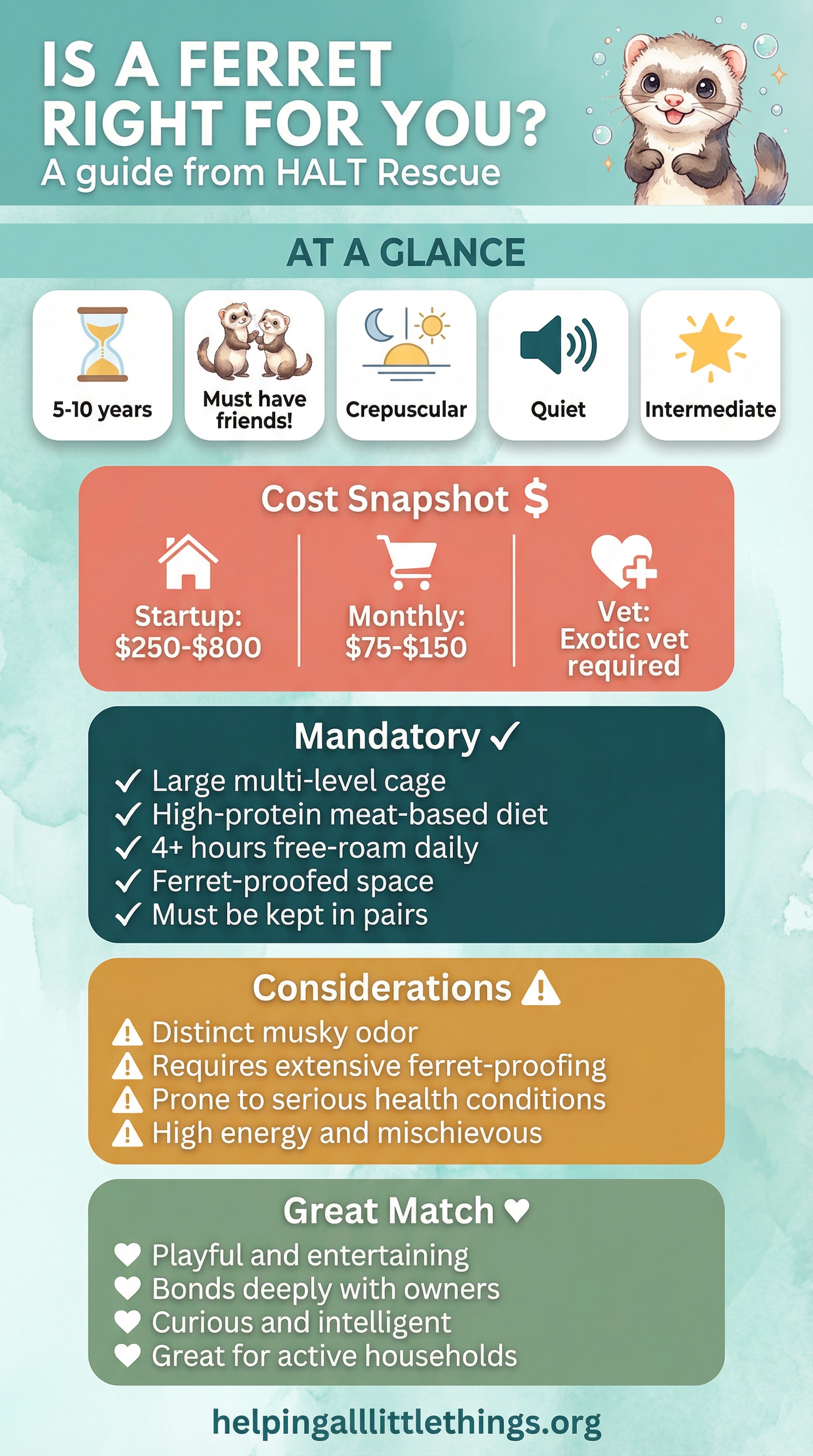

Ferrets are playful, mischievous, and deeply entertaining companions — often described as "cats in a slinky body." They are also one of the more demanding small pets, with significant time requirements, specialized dietary needs, and a health profile that can lead to substantial veterinary costs as they age. For the right owner, ferrets are an absolute joy. For an unprepared one, they can be overwhelming.
The Basics
Ferrets typically live 5 to 8 years, though many develop serious health conditions in their later years. They are obligate carnivores and require a high-protein, low-carbohydrate diet — no fruit, no grains, no sugary treats.
Ferrets are social animals and generally do best with at least one companion. A group of ferrets (called a "business") is often happier and more active than a solitary ferret. They are crepuscular — most active at dawn and dusk — but adapt reasonably well to their owner's schedule.
What They Need Every Day
- A large, multi-level cage with solid flooring and plenty of hammocks and hiding spots
- 4 or more hours of supervised free-roam time outside the cage daily — ferrets need significant exercise and exploration time
- Ferret-proofing of any area they access — ferrets will find and exploit every gap, hole, and cabinet
- High-protein, low-carb diet — quality ferret kibble or a raw diet; no fruit, no vegetables, no sugary treats
- Annual vaccines — ferrets require distemper and rabies vaccinations
- Daily interaction — ferrets that are not regularly handled become difficult to manage
The Cost of Ferret Ownership
| Category | Estimated Cost |
|---|---|
| Startup (cage, supplies, first vet visit, adoption fee) | $250–$800 |
| Monthly ongoing (food, litter, supplies) | $75–$150/month |
| Veterinary care | Exotic vet required; adrenal disease, insulinoma, and lymphoma are common and costly |
Ferret veterinary costs deserve special attention. Adrenal disease, insulinoma (pancreatic tumors), and lymphoma are extremely common in ferrets over 3–4 years of age, particularly in the United States where most ferrets are spayed/neutered at a very young age. Treatment for these conditions can run into the hundreds or thousands of dollars. Pet insurance for ferrets is available and worth considering.
Think Twice If...
- You are not prepared for significant vet costs. Ferrets over 4 years old frequently develop serious health conditions. This is not a rare exception — it is the norm for the species in the US.
- You cannot provide 4+ hours of daily free-roam time. A ferret kept in a cage all day is an unhappy, unhealthy ferret.
- You are sensitive to odor. Ferrets have a natural musky scent that persists even after descenting. Regular cage cleaning helps, but the scent does not disappear entirely.
- You have very young children or small animals in the home. Ferrets are predators by nature and should be supervised around small children and other small pets.
Great Match If...
- You want a highly interactive, playful companion that will keep you entertained
- You can provide daily supervised playtime and have the space for a large cage
- You are financially prepared for potential health costs as your ferret ages
- You enjoy an energetic, curious pet with a big personality
A Note on Ferret Legality
Ferrets are illegal to keep as pets in California and Hawaii, and some municipalities have additional restrictions. Always check your local laws before adopting.
Questions about ferret ownership? Reach out to us — we're happy to help.