Ferret Habitat
Ferrets are intelligent, playful, and incredibly curious. Their habitat needs to be a safe and secure home base, but it is not where they should spend all their time. A ferret's cage is for sleeping, eating, and safety, while their real life is lived outside the cage during their daily free-roam time.
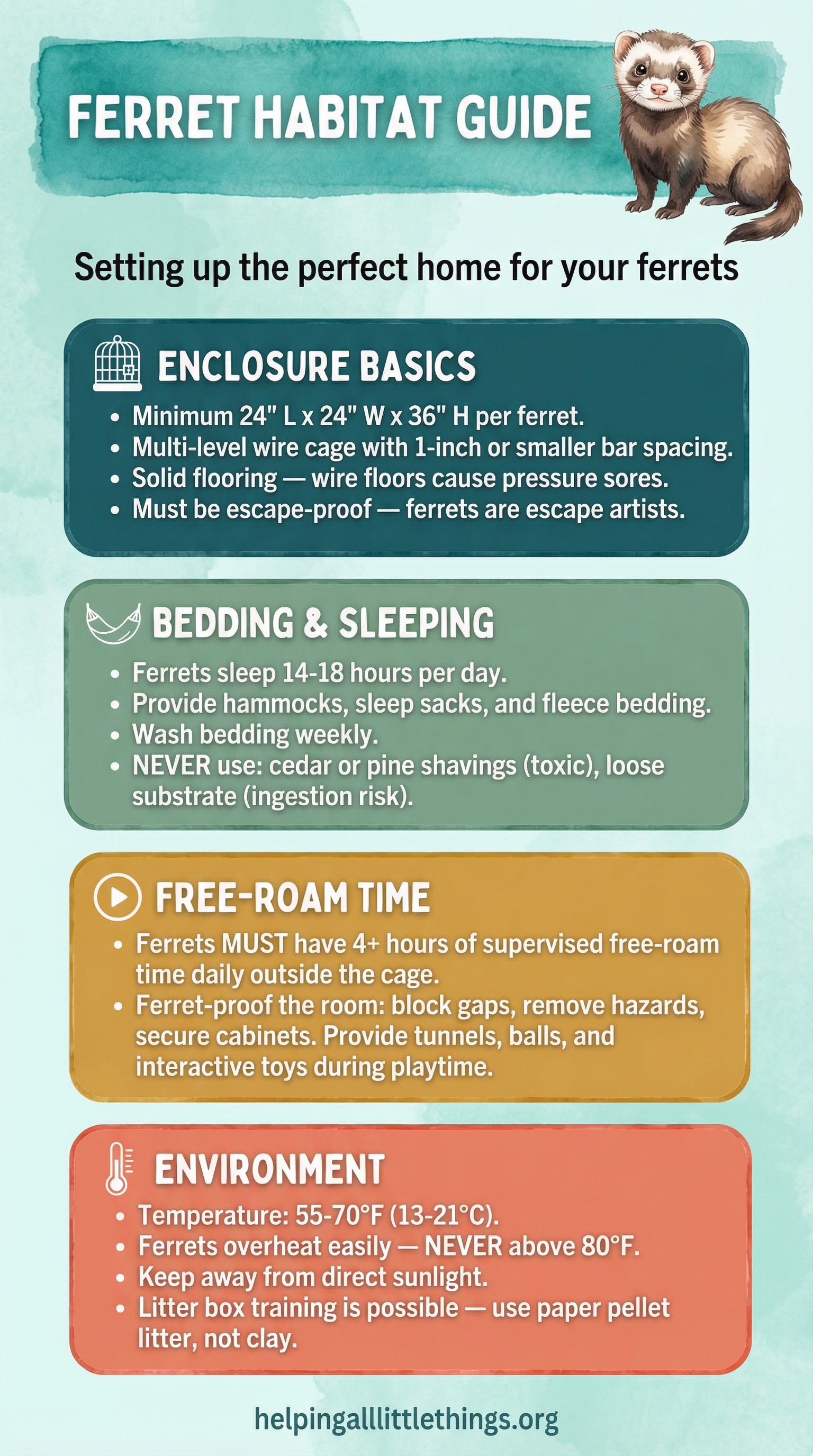
Share this infographic:

Enclosure
A multi-level wire cage is the standard for ferret housing.
- Size: The cage should be as large as you can accommodate. For a single ferret, a cage around 36"L x 24"W x 36"H is a good starting point. More space is always better, especially for multiple ferrets.
- Bar Spacing: Bar spacing should be no more than 1" x 2". Ferrets are notorious escape artists and can squeeze through surprisingly small gaps.
- Flooring: The cage should have solid floors or ramps. Wire mesh flooring can cause pressure sores on their feet (bumblefoot).
- Security: The cage door must have a secure, ferret-proof latch.
Bedding and Sleeping Areas
Ferrets sleep deeply for 18-20 hours a day and love to be cozy.
- Must-Haves: Provide plenty of hammocks, sleep sacks, and soft fleece blankets. They love to burrow and snuggle in soft materials.
- Avoid: Do not use wood shavings (like cedar or pine) or loose substrate in the main cage area. These can cause respiratory issues and are not suitable for ferrets.
Litter Box
Ferrets can be litter trained.
- Type: Use a high-backed litter box to prevent them from backing up over the edge.
- Litter: Use a paper-based pellet litter (like Yesterday's News) or wood stove pellets. NEVER use clumping clay or silica litter, as these can cause respiratory and digestive problems.
- Placement: Ferrets like to back into corners to do their business. Place the litter box in a corner, away from their food and sleeping areas.
Free-Roam Environment
The most important part of a ferret's habitat is the ferret-proofed room where they get their 4+ hours of daily playtime. This area should be free of hazards and full of enrichment.
- Ferret-Proofing: Block all holes, check under appliances, and remove anything they could chew and ingest (like rubber, foam, or small plastic items).
- Enrichment: Provide tunnels, dig boxes (filled with rice or dirt), balls, and sturdy toys to keep them entertained.