Essential Supplies for Your Rabbit Companion
Bringing a rabbit into your home is a long-term commitment, and providing the right supplies is the first step to ensuring a happy, healthy life for your new friend. Rabbits have specific needs that differ greatly from other common household pets. This guide will walk you through the essential supplies you'll need to create a safe and enriching environment for your rabbit.
1. A Spacious and Safe Enclosure
Your rabbit's enclosure is their safe space. It should be large enough for them to hop around, stretch out fully, and stand on their hind legs without touching the top. A multi-level enclosure can provide extra space and enrichment.
- Cage Type: A wire cage with a solid floor or ramps is ideal. Avoid cages with wire bottoms, as they can cause painful sores on your rabbit's feet, a condition known as pododermatitis [1].
- Size: The bigger, the better. A good rule of thumb is at least 4 feet by 2 feet for a single rabbit, but more space is always encouraged.
2. Comfortable and Absorbent Bedding
Soft, absorbent bedding is crucial for your rabbit's comfort and hygiene.
- Safe Options: Use dust-free materials like aspen shavings, recycled paper products, or soft straw [1].
- Materials to Avoid: Never use pine or cedar shavings, as their aromatic oils can be toxic to rabbits and cause respiratory problems [1].
3. A Dedicated Litter Box
Rabbits can be litter-trained, which makes cleaning their enclosure much easier. Place a litter box in the corner your rabbit naturally chooses as their toilet.
- Litter Type: Use a paper-based, non-clumping litter. Avoid clay or clumping cat litters, which can cause intestinal blockages if ingested.
- Hay Placement: Placing a hay rack or a pile of fresh hay in the litter box will encourage your rabbit to use it, as they love to eat and toilet at the same time.
4. Unlimited, High-Quality Hay
Hay is the most important part of your rabbit's diet and should be available at all times.
- Hay Type: For adult rabbits, offer unlimited amounts of grass hays like Timothy, orchard, or brome hay. These are high in fiber and help maintain digestive and dental health [2].
- Alfalfa Hay: Alfalfa hay is too rich in protein and calcium for adult rabbits and should only be given to growing bunnies under six months of age [2].
5. Balanced Pellets and Fresh Greens
While hay is the staple, pellets and fresh greens provide essential vitamins and minerals.
- Pellets: Choose a high-quality, high-fiber timothy-based pellet. Adult rabbits only need a small amount—about 1/8 to 1/4 cup per 5 lbs of body weight daily [2]. Overfeeding pellets can lead to obesity and soft stools.
- Fresh Greens: Offer a variety of leafy green vegetables daily. Introduce new greens slowly to avoid upsetting your rabbit's delicate digestive system [2].
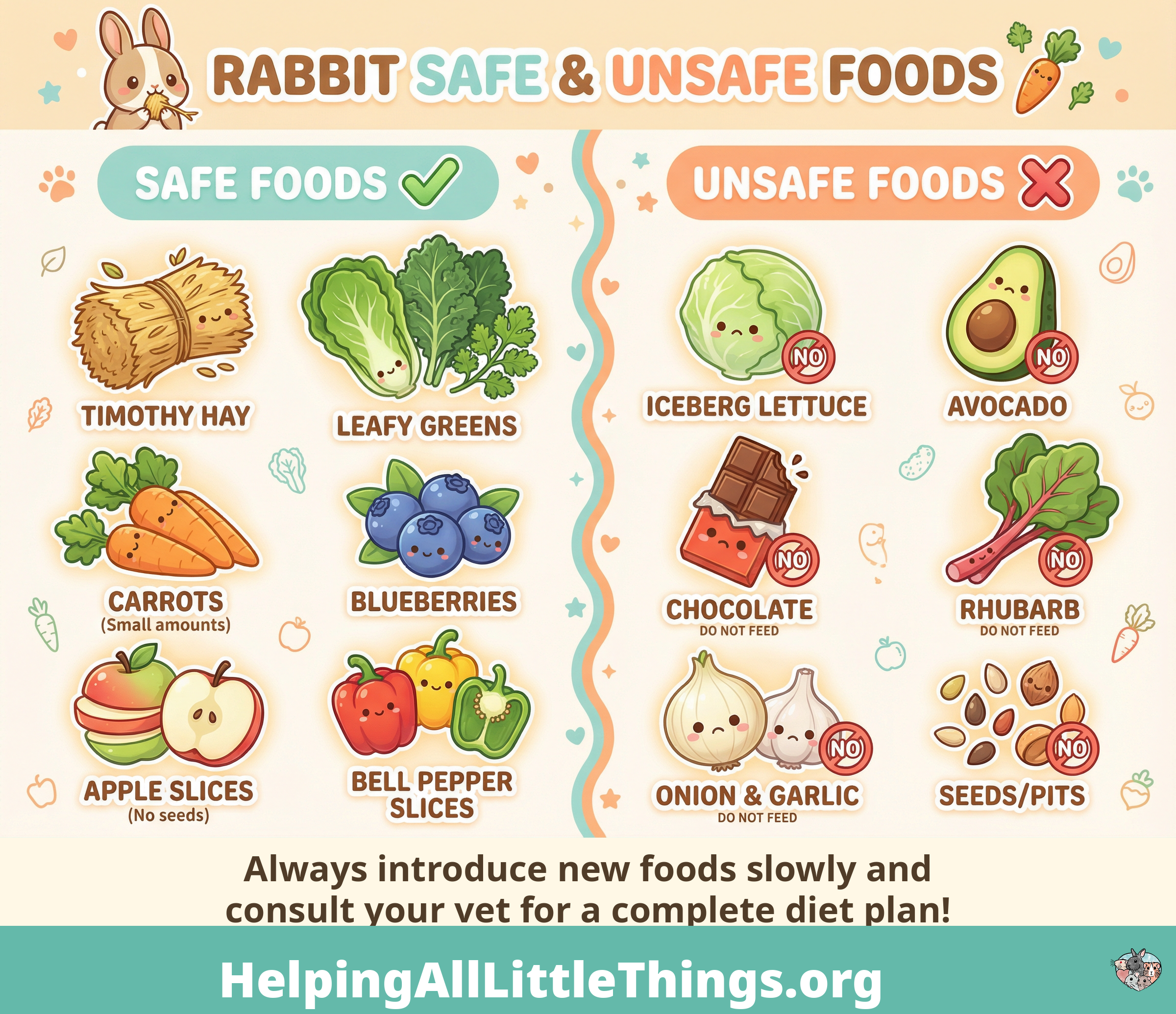

Safe greens for rabbits include: romaine lettuce, kale, cilantro, parsley, basil, and bok choy. Avoid: iceberg lettuce, spinach (in large amounts), and any plant from the onion family. Introduce new greens one at a time and watch for soft stools.
6. Constant Access to Fresh Water
Your rabbit must have access to fresh, clean water at all times. A heavy ceramic bowl that can't be tipped over is often preferred to a sipper bottle, as it encourages more natural drinking behavior and is easier to clean.
7. Grooming and Health Supplies
Regular grooming is essential for your rabbit's health.
- Brush: A soft-bristled brush or grooming glove is needed to remove loose fur, especially during shedding seasons, to prevent hairballs.
- Nail Clippers: Your rabbit's nails will need to be trimmed every 1-2 months. Use clippers designed for cats or small animals [2].
- Styptic Powder: Keep styptic powder on hand to stop bleeding in case you accidentally cut the quick of the nail.
8. Enrichment and Chew Toys
Rabbits are intelligent and curious animals that need mental stimulation.
- Chew Toys: Because their teeth grow continuously, rabbits need safe items to chew on. Offer untreated wood blocks, cardboard tubes, and toys made from natural materials like willow or apple wood [2].
- Tunnels and Hides: Tunnels and cardboard boxes provide fun places for your rabbit to play and hide, mimicking their natural burrowing instincts.
Rabbit-proofing basics: cover or conceal electrical cords, block access to houseplants (many are toxic), protect carpet edges and baseboards, and ensure there are no gaps your rabbit could get stuck in. Supervise free-roam time until you are confident the space is safe.
9. A Rabbit-Savvy Veterinarian
Before you even bring your rabbit home, find a veterinarian who is experienced in treating exotic pets. Rabbits have unique health needs, and a rabbit-savvy vet is an essential partner in your rabbit's care. Annual health checkups are crucial for early detection of potential problems [2].
References
[1] Routine Health Care of Rabbits — Merck Veterinary Manual, 2024
[2] Spotlight: Bunny care basics — VCA Animal Hospitals, Unknown
[3] Essential House Rabbit Supplies — House Rabbit Society, Unknown