Basic Care for Pet Rabbits
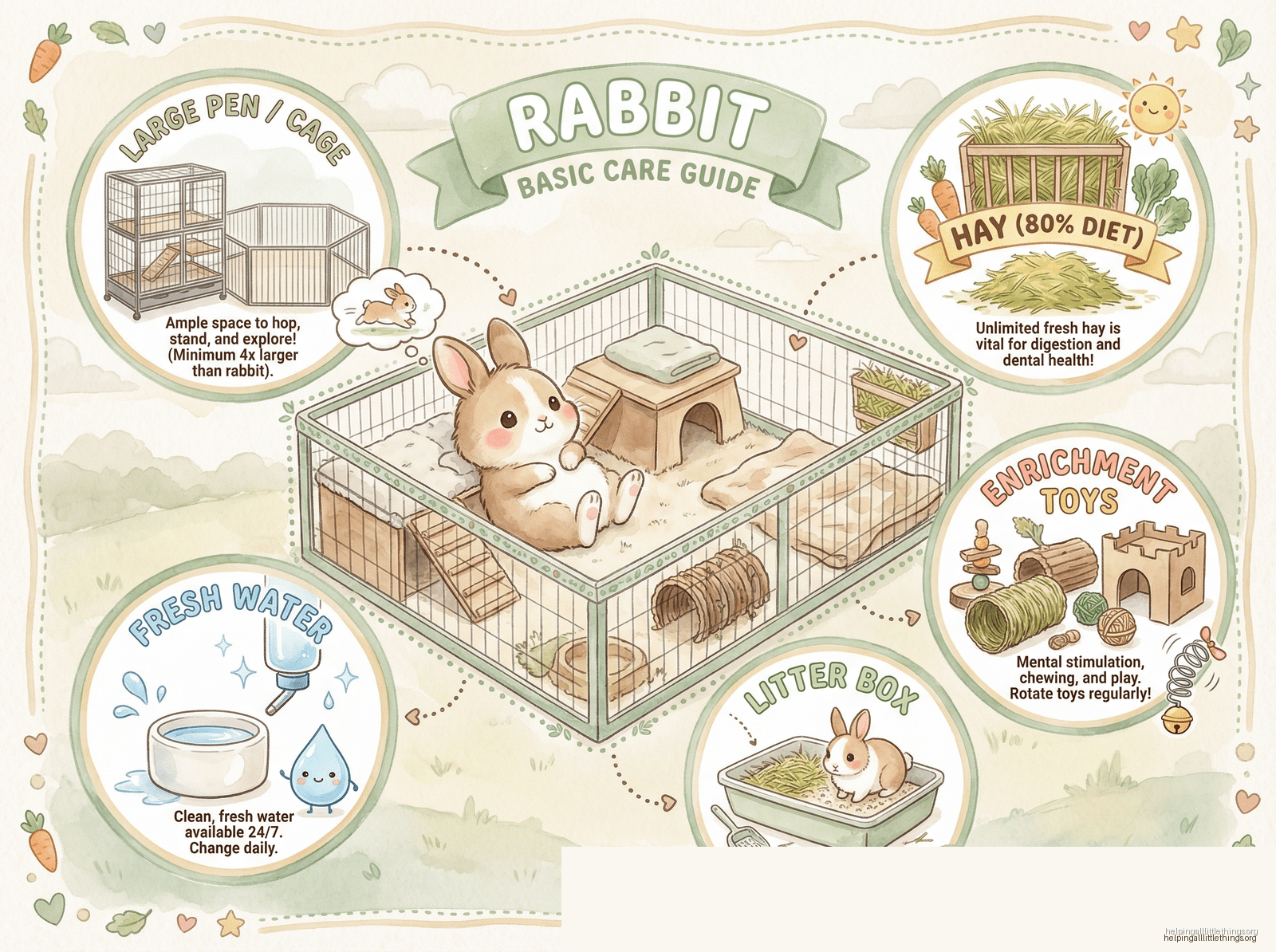

Rabbits are intelligent, social, and complex animals that can make wonderful companion pets. Providing them with the proper care is essential for a long, happy, and healthy life. This guide covers the four cornerstones of basic rabbit care: diet, housing, enrichment, and health.
1. Diet: The Key to Health
A rabbit's diet is the most critical aspect of their care. Their digestive systems are designed for a high-fiber, low-calorie diet.
- Hay is #1: At least 80% of a rabbit's diet should be unlimited, high-quality grass hay, such as Timothy, Orchard, or Meadow hay. Hay is vital for dental and digestive health. [1]
- Fresh Greens: About 10-15% of the diet should be a variety of fresh, leafy greens. Introduce new greens slowly. Good options include romaine lettuce, cilantro, parsley, and dandelion greens.
- Pellets: A small, measured amount of high-fiber, plain pellets (about 5% of the diet) can provide essential vitamins and minerals. Avoid pellet mixes with seeds, nuts, or colorful pieces. [2]
- Treats: Treats like small pieces of fruit (e.g., apple, banana) should be given very sparingly due to their high sugar content.
2. Housing: A Safe Haven
Rabbits need a safe and spacious indoor living area. They should never be housed exclusively outdoors.
- Enclosure: A large exercise pen (x-pen) is a much better option than a traditional cage, providing more room to move. A minimum size of 4ft x 4ft is recommended for a single or bonded pair. [3]
- Litter Box: Rabbits can be easily litter trained. Provide a large, shallow litter box filled with paper-based or wood-based litter. Place hay in the litter box, as rabbits like to eat and poop at the same time.
- Rabbit-Proofing: Any area your rabbit has access to must be thoroughly rabbit-proofed. This means covering all electrical cords, removing toxic plants, and blocking off unsafe areas.
3. Enrichment and Exercise
Boredom can lead to depression and destructive behaviors in rabbits. They need plenty of exercise and mental stimulation.
- Daily Exercise: Rabbits need a minimum of 3-5 hours of supervised exercise time outside of their enclosure each day to run, jump, and explore. [4]
- Toys: Provide a variety of safe chew toys to satisfy their natural urge to chew. Good options include cardboard boxes, toilet paper rolls, apple wood sticks, and grass mats.
4. Health and Veterinary Care
- Spay/Neuter: Spaying or neutering your rabbit is one of the most important things you can do for their health and behavior. It prevents reproductive cancers and reduces territorial behaviors like spraying. [5]
- Annual Vet Visits: Rabbits are considered exotic pets and require a veterinarian with specialized knowledge. Annual check-ups are essential for monitoring their health.
- Social Needs: Rabbits are highly social animals and are happiest when kept in a bonded pair or group. A single rabbit will require a significant amount of social interaction from their human companion.
By understanding and meeting these fundamental needs, you can provide a wonderful life for your pet rabbit.
References
[1] House Rabbit Society. (n.d.). Diet. https://rabbit.org/care/diet/
[2] Bunny Buddies. (n.d.). Rabbit Care Guide. https://bunnybuddies.org/rabbit-care-guide/
[3] Wisconsin Humane Society. (n.d.). Rabbit Supply List. https://www.wihumane.org/behavior/ask-the-experts/rabbit-behavior/rabbit-supply-list
[4] Animal Humane Society. (n.d.). Rabbit care. https://www.animalhumanesociety.org/resource/rabbit-care
[5] NC State Veterinary Hospital. (n.d.). Caring for Your Pet Rabbit. https://hospital.cvm.ncsu.edu/services/small-animals/nutrition/caring-for-your-pet-rabbit/