Gerbil Nutrition
A balanced diet is essential for a gerbil's health and longevity. Unlike some other small pets, gerbils are prone to obesity and selective eating, so it's important to provide a diet that is both nutritious and appropriate for their needs.
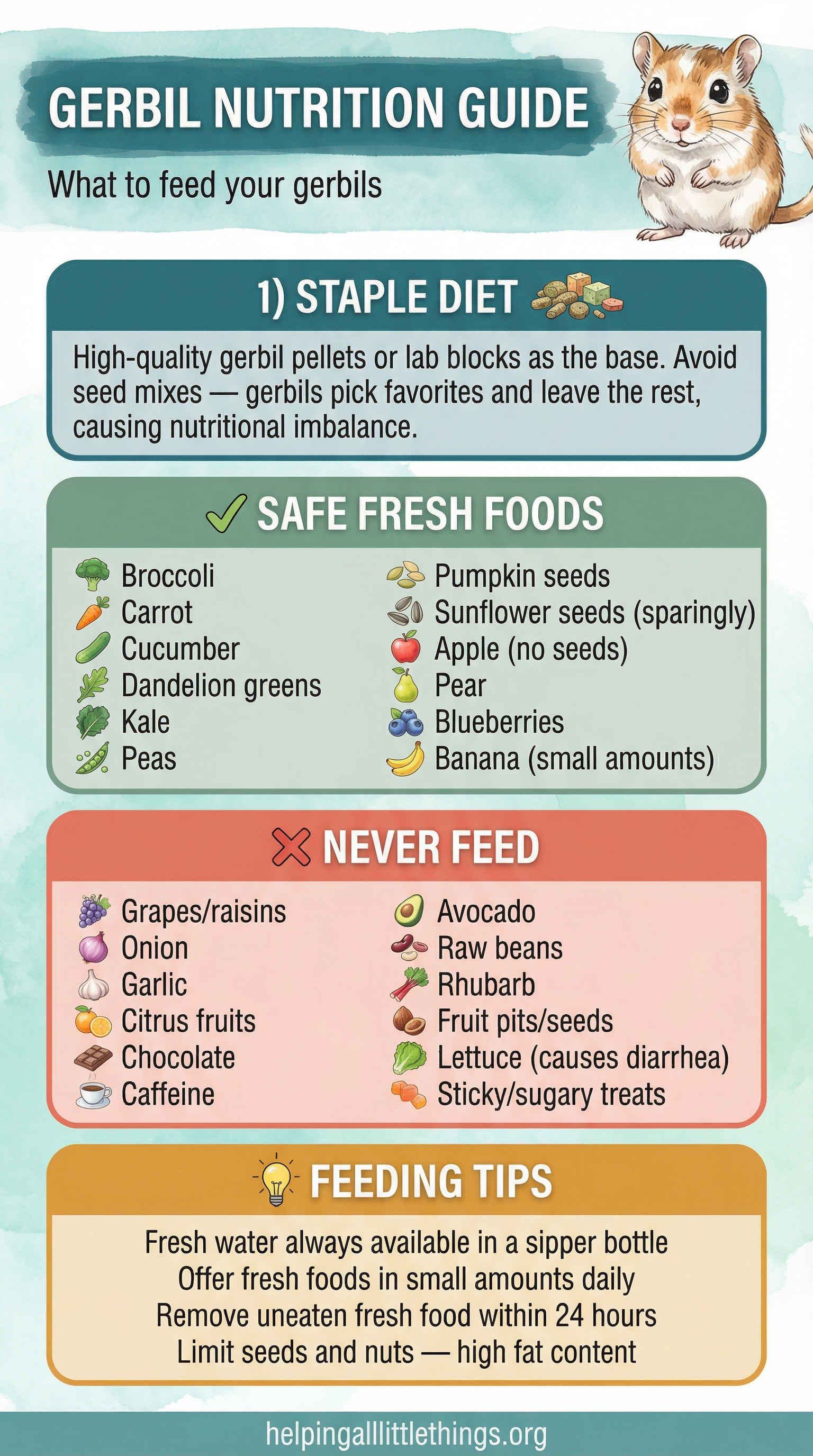
Share this infographic:

Staple Diet: Pellets vs. Seed Mixes
The foundation of your gerbil's diet should be a high-quality commercial gerbil food.
- Recommended: Pelleted or lab block formulas are the best choice. Every piece is nutritionally identical, which prevents selective feeding and ensures a balanced diet.
- Not Recommended: Loose seed mixes should be avoided. Gerbils will often pick out the high-fat seeds (like sunflower and pumpkin seeds) and leave the healthier pellets and grains. This leads to an unbalanced diet, obesity, and other health problems.
Feed approximately 1 tablespoon of pellets per gerbil per day.
Safe Fresh Foods & Treats
Fresh foods can be offered in small amounts as a supplement to their main diet.
| Category | Safe Foods (in small amounts) |
|---|---|
| Vegetables | Broccoli, Carrot, Cucumber, Dandelion Greens, Kale, Peas |
| Fruits | Apple (no seeds), Pear, Blueberries, Banana |
| Seeds/Nuts | Pumpkin seeds, Sunflower seeds (offer these very sparingly as special treats) |
Foods to Avoid
Many human foods are toxic to gerbils. Never feed them the following:
- Grapes or Raisins
- Onion or Garlic
- Citrus Fruits (orange, lemon, etc.)
- Chocolate or Caffeine
- Avocado
- Raw Beans or Potatoes
- Rhubarb
- Fruit pits or seeds
- Lettuce (can cause diarrhea)
- Sugary or sticky treats
Water
Fresh, clean water must be available at all times. A sipper bottle attached to the side of the tank is the best way to provide water, as it keeps the water clean and prevents the bedding from getting wet.