Toothless
Species: Guinea pig
Status: Sanctuary resident
Arrived: April 2026
Condition: Dental disease — broken incisor with jaw abscess
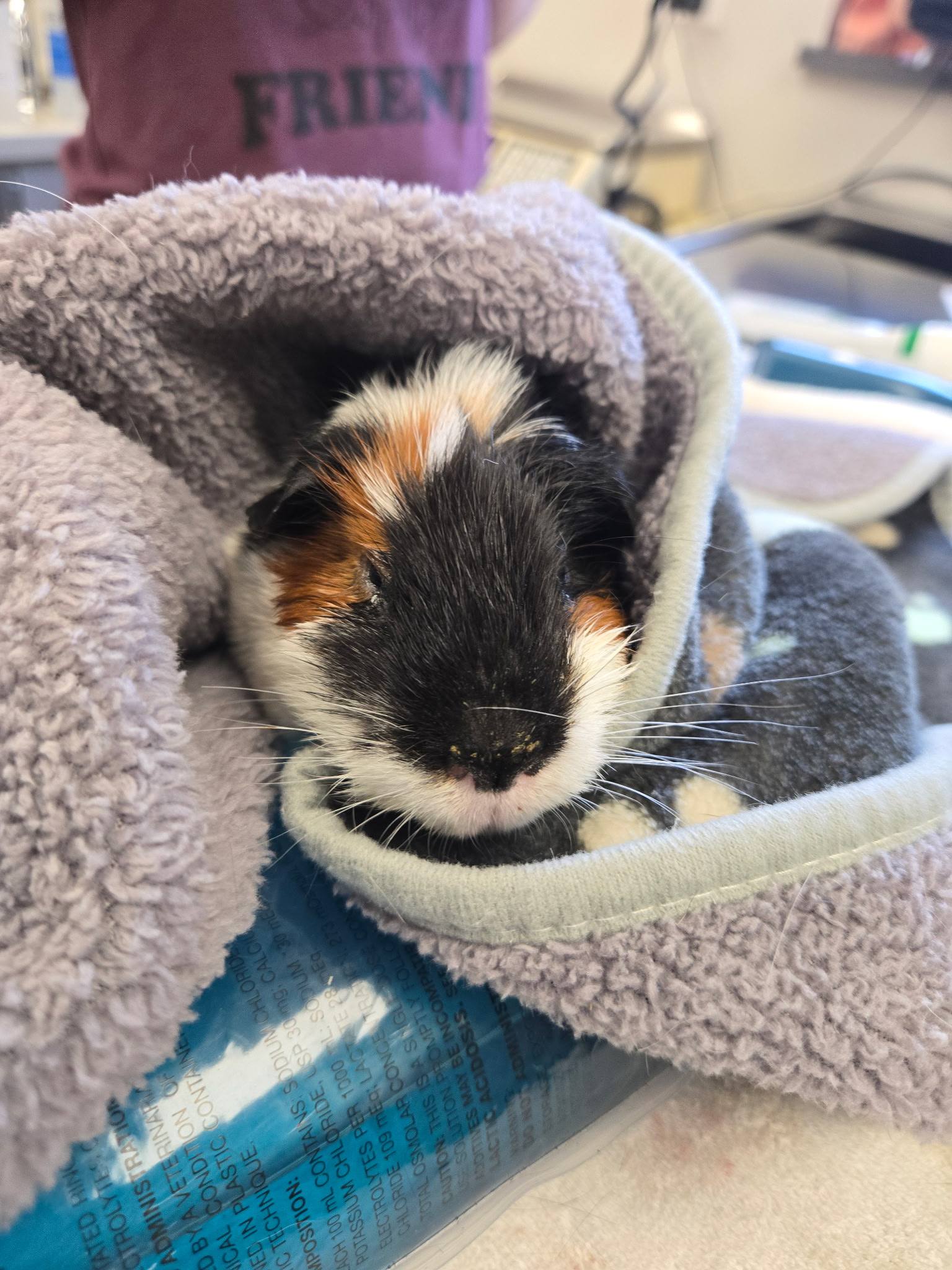
Toothless arrived at HALT Rescue in April 2026 after being pulled from a shelter. Even in his intake photo, something was visible on his chin — a small white spot that turned out to be a chunk of tooth that had broken through his jaw, creating an abscess.
His Story
When Toothless first came to us, he was underweight and not eating well. We could see something was off, but the full picture didn't become clear until his first vet appointment with Dr. Dana.
Dr. Dana cleaned out the abscess and discovered that the white spot visible in his shelter photo was actually a piece of tooth that had broken sideways through the jaw. She administered anesthesia and removed the tooth fragment. Toothless woke up happy and hungry.
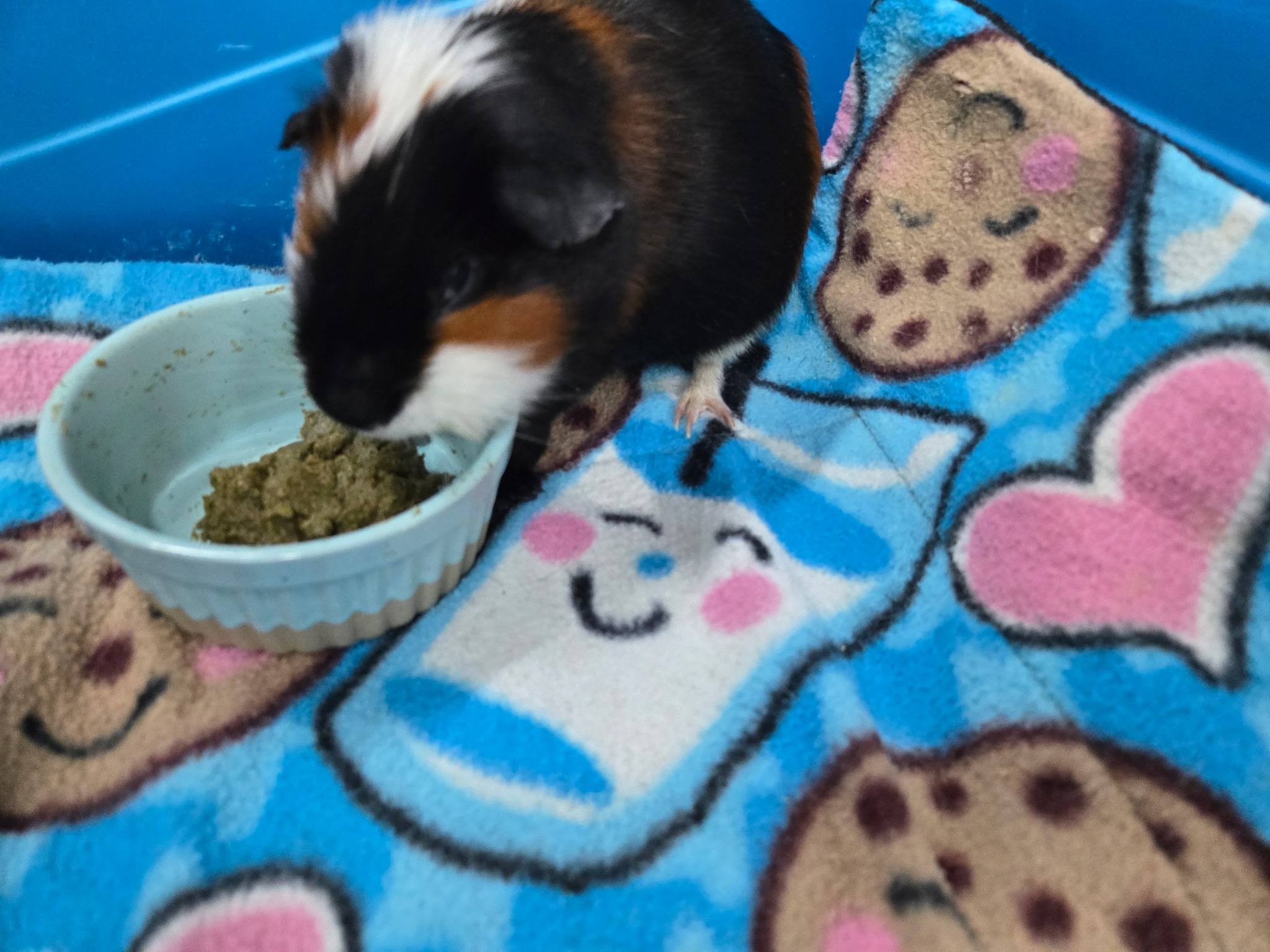
Within days of his surgery, he was eating Recovery food by the bowlful and producing perfectly shaped poops — a great sign that his digestive system was getting back on track. He may always need his incisors trimmed periodically, but his prognosis is excellent.
Photos
His Needs
Toothless will require:
- Regular incisor monitoring and trimming as needed
- Ongoing weight checks
- A diet that supports dental health — unlimited hay, fresh vegetables, and limited pellets
Case Study
Toothless's dental surgery is documented in detail in our case study. If you have a guinea pig with similar symptoms — drooling, weight loss, reluctance to eat, or a visible lump on the chin or jaw — please see a vet as soon as possible.
👉 Read the Case Study: Toothless — Broken Incisor and Jaw Abscess
Learn More
Dental disease is one of the most common serious health issues in guinea pigs. Learn about causes, signs, and treatment: