Dangerous Foods and Treats for Guinea Pigs
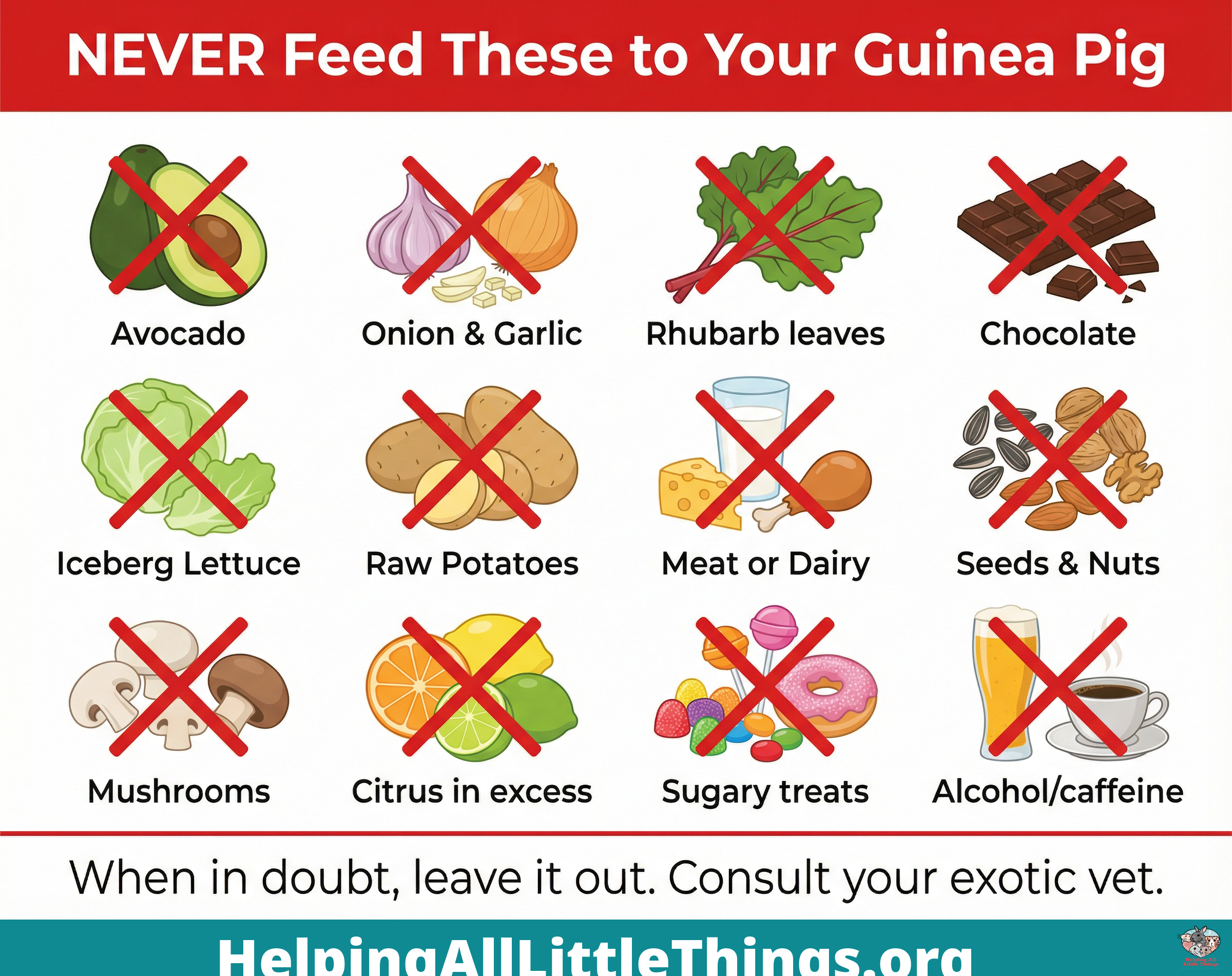

As a loving guinea pig owner, it is natural to want to spoil your pet with tasty treats. However, many common foods — including some vegetables — can be dangerous or even fatal for guinea pigs. Their digestive systems are sensitive, and their herbivorous anatomy means they cannot process many foods that are safe for other animals. Always err on the side of caution: if you are not sure whether a food is safe, do not feed it.
Foods to Never Give Your Guinea Pig
- Meat and Dairy: As strict herbivores, guinea pigs cannot digest animal products. This includes all meat, eggs, cheese, and milk.
- Chocolate, Coffee, and Caffeine: These are highly toxic to most pets, including guinea pigs.
- Onions, Garlic, and Chives: All members of the allium family are poisonous to guinea pigs.
- Avocado: This fruit is high in fat and contains persin, a fungicidal toxin that can be dangerous to guinea pigs.
- Rhubarb: The leaves and stalks contain high levels of oxalic acid, which is poisonous.
- Potatoes: Raw potatoes, especially the skins and any green parts, are toxic.
- Iceberg Lettuce: While not toxic, it has a very high water content and almost no nutritional value, and can cause diarrhea.
- Seeds and Nuts: These are a major choking hazard and are too high in fat.
- Mushrooms: Many varieties of mushrooms are toxic.
- Sugary or Processed Foods: Any food high in sugar, salt, or artificial ingredients — including most human snack foods — is unhealthy and can disrupt their delicate digestive system.
- Commercial Treat Sticks (Seed Sticks): These are often held together with honey or other sugary binders and contain seeds and nuts, making them both unhealthy and a choking hazard.
For a complete guide to a healthy diet, see our article on Nutrition Information for Guinea Pigs.
References
[1] Oxbow Animal Health. (2023). Foods Guinea Pigs Should Never Eat. Retrieved from https://oxbowanimalhealth.com/blog/foods-guinea-pigs-should-never-eat/
[2] The Humane Society of the United States. (n.d.). Guinea pig feeding. Retrieved from https://www.humanesociety.org/resources/guinea-pig-feeding