Worms in Guinea Pigs
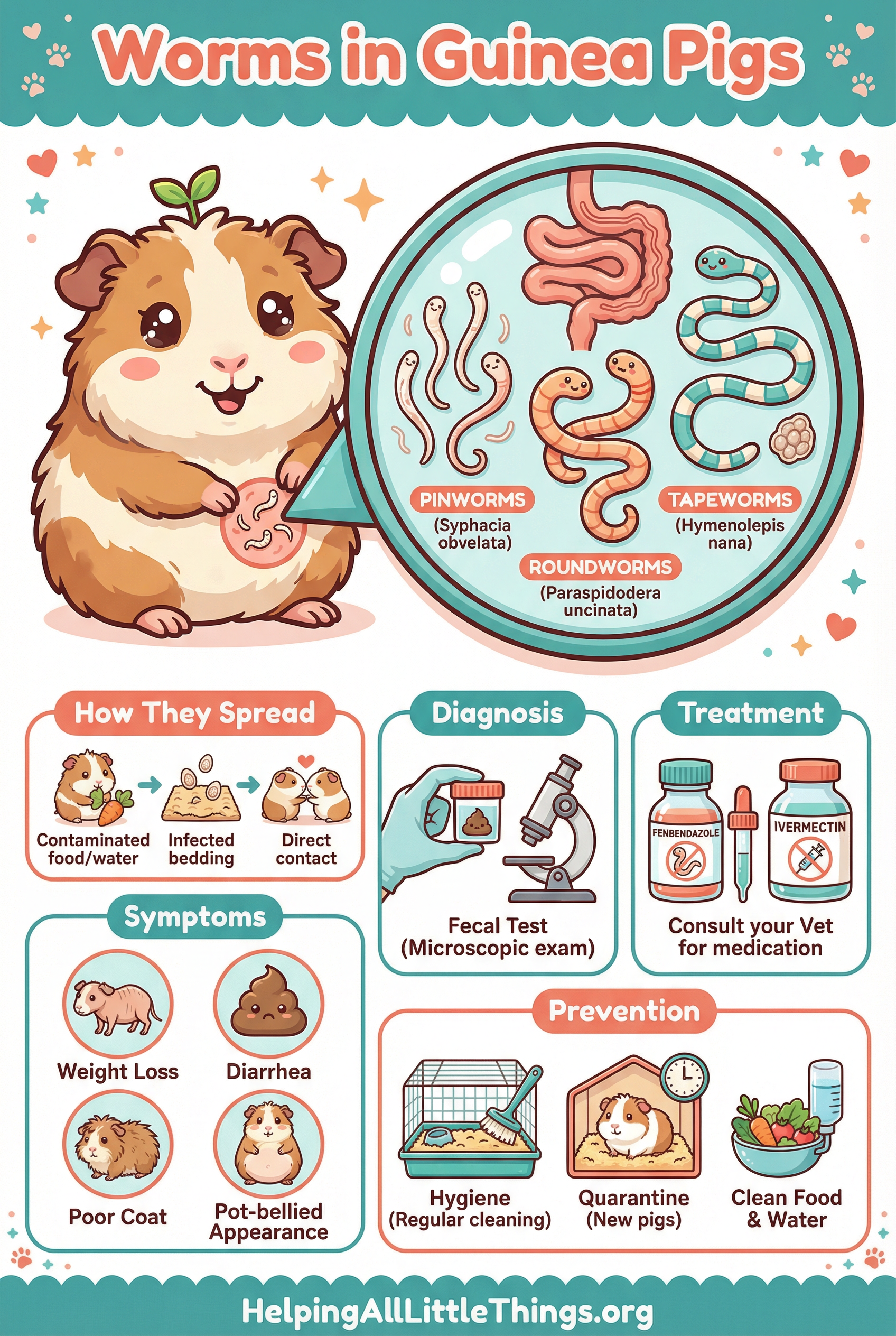

Intestinal worms (helminths) are internal parasites that can infect guinea pigs, though they are less common than external parasites like mites and lice. Worm infestations are typically picked up through contaminated food, water, bedding, or contact with infected animals. Early detection and treatment are important to prevent serious health complications.
Types of Worms Affecting Guinea Pigs
Pinworms (Paraspidodera uncinata)
The most common intestinal worm in guinea pigs, pinworms live in the cecum and large intestine. They are species-specific and cannot be transmitted to humans. Light infestations may cause no obvious symptoms, while heavy burdens can cause digestive disturbance and perianal irritation.
Tapeworms (Moniliformis spp. and others)
Tapeworms are segmented flatworms that attach to the intestinal wall. Guinea pigs may acquire tapeworms through ingestion of intermediate hosts (insects or contaminated feed). Segments may be visible in feces.
Roundworms (Baylisascaris spp.)
Roundworms can occasionally infect guinea pigs, typically through contaminated bedding or feed. Heavy infestations can cause significant intestinal damage.
Threadworms / Strongylids
These small worms can cause intestinal inflammation and diarrhea, particularly in immunocompromised animals.
Signs and Symptoms
Worm infestations can range from subclinical (no visible signs) to severe. Common signs include:
- Unexplained weight loss despite normal or increased appetite
- Diarrhea or soft, abnormal stools
- Lethargy and reduced activity
- Dull, rough coat condition
- Visible worms or worm segments in feces (particularly with tapeworms)
- Perianal irritation — scratching around the bottom or scooting
- Pot-bellied appearance in heavy infestations
- Anemia in severe cases (pale gums, weakness)
Many guinea pigs with light worm burdens show no obvious symptoms. Regular fecal examinations by a vet are the most reliable way to detect infestations early.
Diagnosis
A veterinarian will diagnose worm infestations through:
- Fecal flotation — the most common method; detects worm eggs in a fresh stool sample
- Direct fecal smear — useful for detecting larvae and some protozoa
- Physical examination — assessing body condition, coat quality, and abdominal palpation
- Tape test — pressing tape around the anal area to detect pinworm eggs
Bring a fresh fecal sample (collected within 2 hours) to your veterinary appointment for the most accurate results.
Treatment
Treatment depends on the type of worm identified. A veterinarian will prescribe the appropriate medication:
| Worm Type | Common Treatment |
|---|---|
| Pinworms | Fenbendazole, ivermectin |
| Tapeworms | Praziquantel |
| Roundworms | Fenbendazole |
| Mixed infestations | Fenbendazole (broad-spectrum) |
Important treatment notes:
- Treat all guinea pigs in the household simultaneously, even those without symptoms
- A second treatment round is often required 2–3 weeks later to catch hatching larvae
- Thoroughly clean and disinfect the enclosure, replace all bedding, and wash all accessories
- Follow up with a fecal examination 4 weeks after treatment to confirm clearance
Do not use over-the-counter dewormers designed for dogs or cats on guinea pigs without veterinary guidance. Dosing and safety profiles differ significantly between species.
Prevention
Good husbandry is the most effective way to prevent worm infestations:
- Quarantine new animals for at least 4 weeks and have a fecal examination performed before introducing them to existing guinea pigs
- Source hay and bedding from reputable suppliers; avoid hay that may have been contaminated by wild rodents
- Clean the enclosure weekly and replace all bedding
- Wash fresh vegetables thoroughly before feeding
- Provide clean, fresh water daily; avoid water that may be contaminated
- Annual fecal examinations — recommended even for apparently healthy guinea pigs
- Prevent access to soil where wild animal feces may be present
For a broader overview of parasites affecting guinea pigs, see our Parasites in Guinea Pigs article.
References
[1] Quesenberry, K.E., Mans, C., & Orcutt, C.J. (2020). Ferrets, Rabbits, and Rodents: Clinical Medicine and Surgery (4th ed.). Elsevier.
[2] Carpenter, J.W. (2018). Exotic Animal Formulary (5th ed.). Elsevier.
[3] Meredith, A., & Redrobe, S. (2010). BSAVA Manual of Exotic Pets (5th ed.). British Small Animal Veterinary Association.
[4] Donnelly, T.M., & Brown, C.J. (2004). Guinea pig and chinchilla care and husbandry. Veterinary Clinics of North America: Exotic Animal Practice, 7(2), 351–373.