Stroke in Guinea Pigs
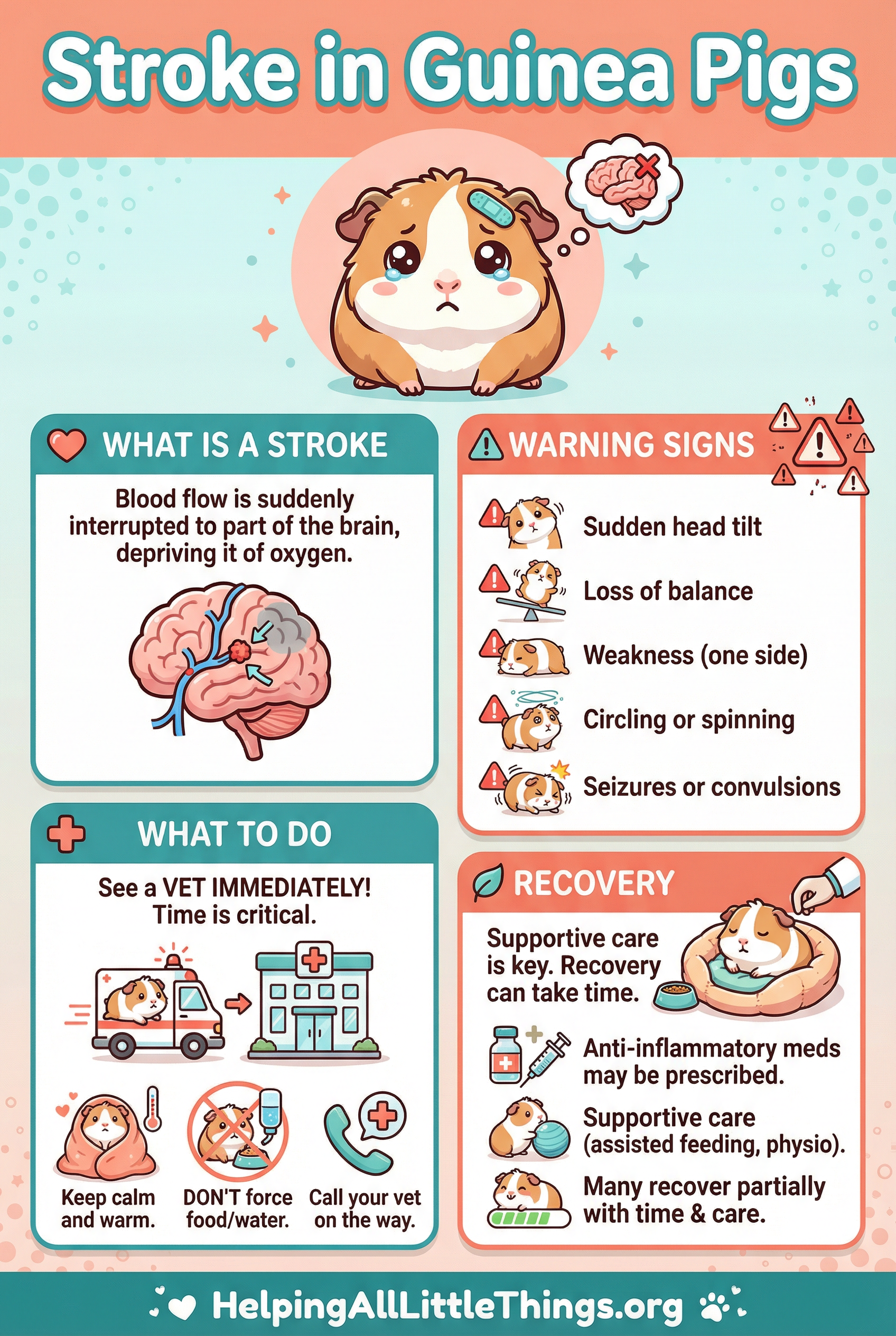

A stroke occurs when blood flow to part of the brain is suddenly interrupted, either by a blockage (ischemic stroke) or a burst blood vessel (hemorrhagic stroke). Strokes can occur in guinea pigs, though they are relatively uncommon. When they do happen, they can be frightening for owners and require prompt veterinary attention.
What Is a Stroke?
A stroke (cerebrovascular accident) results from sudden disruption of blood supply to the brain. Without adequate oxygen and glucose, brain cells begin to die within minutes. The severity and nature of symptoms depend on which part of the brain is affected and how much tissue is damaged.
In guinea pigs, strokes may be associated with:
- Cardiovascular disease — heart conditions that predispose to clot formation
- Hypertension — high blood pressure damaging blood vessels
- Atherosclerosis — hardening and narrowing of arteries
- Infections — bacterial or viral infections affecting the brain or blood vessels
- Trauma — head injuries
- Age — older guinea pigs are at higher risk
- Obesity and poor diet — contributing to cardiovascular disease
It is important to distinguish a stroke from vestibular disease (inner ear problems), which causes very similar symptoms (head tilt, rolling, loss of balance) but is more common and generally has a better prognosis. A veterinarian can help differentiate between the two.
Signs and Symptoms
Stroke symptoms in guinea pigs typically appear suddenly and may include:
- Head tilt — the head is held at an angle, sometimes severely
- Rolling or circling — the guinea pig rolls uncontrollably or circles in one direction
- Loss of balance and coordination (ataxia)
- Rapid, involuntary eye movements (nystagmus)
- Sudden weakness or paralysis of one or more limbs
- Facial drooping on one side
- Confusion or disorientation
- Seizures in severe cases
- Loss of consciousness in the most severe cases
If your guinea pig suddenly develops a head tilt, is rolling uncontrollably, or loses the use of its limbs, this is a veterinary emergency. Seek care immediately.
Emergency Response
If you suspect your guinea pig has had a stroke:
- Stay calm — your guinea pig can sense your stress
- Keep them safe — place them in a small, padded enclosure to prevent injury from rolling or falling
- Keep them warm — maintain a comfortable temperature (65–75°F / 18–24°C)
- Do not force food or water — they may be unable to swallow safely
- Contact your vet immediately — time is critical
Diagnosis
A veterinarian will assess your guinea pig through:
- Thorough neurological examination
- Blood tests (to check for infection, organ function, blood glucose)
- Blood pressure measurement
- X-rays or ultrasound (to assess heart and major vessels)
- MRI or CT scan (if available and the guinea pig is stable enough)
Treatment
There is no specific reversal treatment for stroke in guinea pigs, but supportive care can significantly improve outcomes:
| Treatment | Purpose |
|---|---|
| Anti-inflammatory medications | Reduce brain swelling |
| Fluid therapy | Maintain hydration and blood pressure |
| Nutritional support | Syringe feeding if the guinea pig cannot eat independently |
| Antibiotics | If infection is suspected |
| Physiotherapy | Gentle movement to support neurological recovery |
| Corticosteroids | In some cases, to reduce inflammation (use is controversial) |
Recovery and Prognosis
Recovery from a stroke varies widely depending on severity and the area of the brain affected. Some guinea pigs recover significantly over days to weeks; others may have permanent deficits. Key factors affecting prognosis include:
- Speed of veterinary intervention — faster treatment generally means better outcomes
- Severity of the stroke — mild strokes often have good recovery potential
- Age and overall health — younger, healthier guinea pigs tend to recover better
- Underlying cause — if an underlying condition can be treated, recovery is more likely
Many guinea pigs with mild strokes can go on to live comfortable lives with some adaptations to their environment (lower enclosure sides, soft bedding, easy access to food and water).
References
[1] Quesenberry, K.E., Mans, C., & Orcutt, C.J. (2020). Ferrets, Rabbits, and Rodents: Clinical Medicine and Surgery (4th ed.). Elsevier.
[2] Harkness, J.E., Turner, P.V., VandeWoude, S., & Wheler, C.L. (2010). Harkness and Wagner's Biology and Medicine of Rabbits and Rodents (5th ed.). Wiley-Blackwell.
[3] Meredith, A., & Redrobe, S. (2010). BSAVA Manual of Exotic Pets (5th ed.). British Small Animal Veterinary Association.