Spine Issues in Guinea Pigs
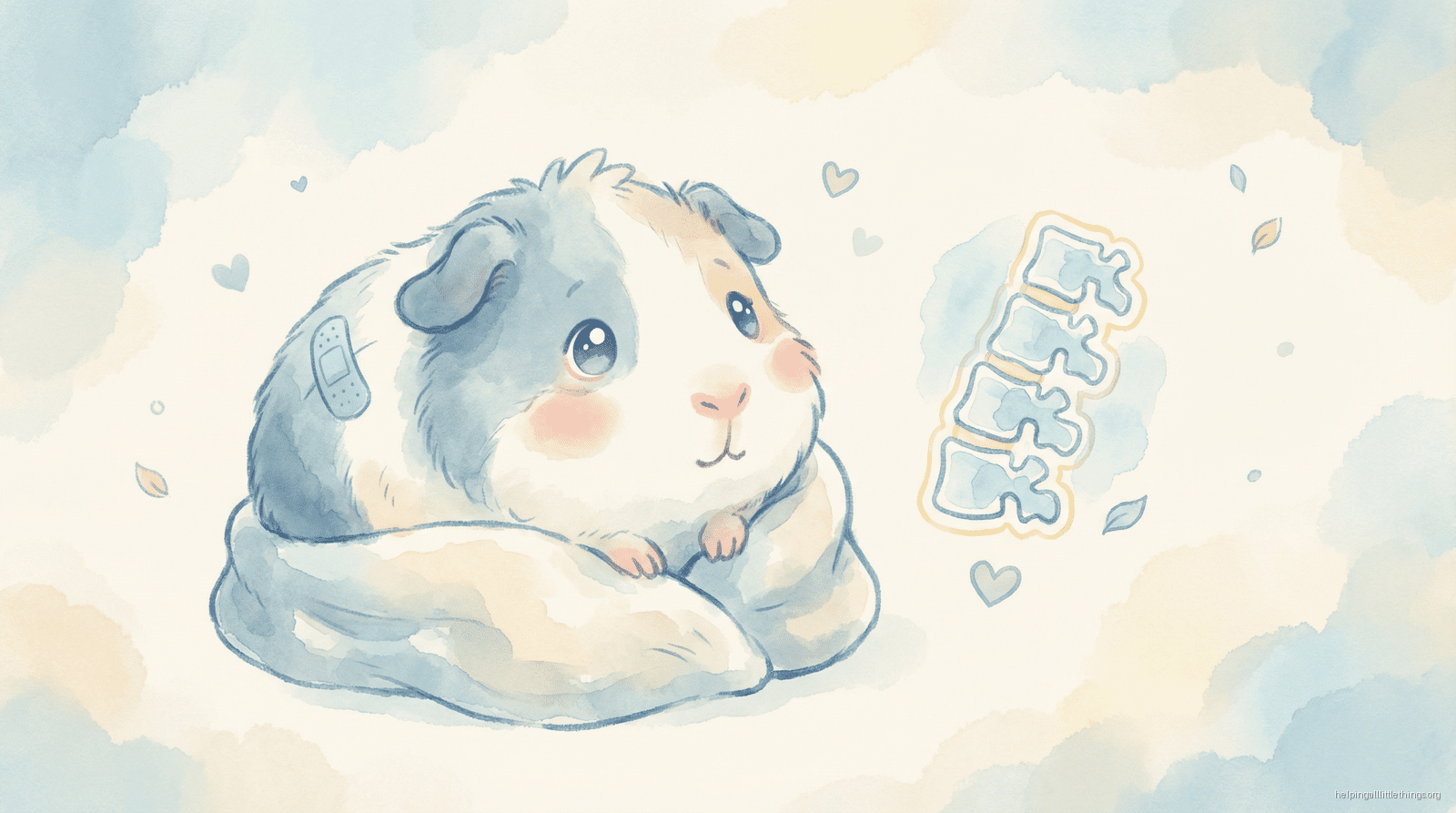

A guinea pig's skeletal structure, particularly its spine, is surprisingly fragile. Unlike more flexible rodents like hamsters or rats, a guinea pig's back is relatively rigid and not designed for significant bending or arching. This makes them highly susceptible to serious and often permanent spinal injuries from improper handling, falls, or the use of inappropriate equipment.
The Guinea Pig Spine: Built for a Life on the Ground
Guinea pigs are terrestrial, ground-dwelling animals. Their spine is adapted for walking, running, and popcorning on flat surfaces. It is not built to be flexible or to absorb the impact of a fall. This fundamental anatomical fact is the reason why certain activities and pieces of equipment are so dangerous for them.
Causes of Spinal Injury
-
Falls: This is a leading cause of traumatic injury. A fall from even a seemingly low height, like from a couch or a child's arms, can be enough to fracture a guinea pig's back. This can result in paralysis of the hind legs and a loss of bladder and bowel control.
-
Improper Handling: Supporting a guinea pig's entire body when picking them up is crucial. If a guinea pig is held incorrectly and struggles, it can twist or kick in a way that injures its own back.
-
Exercise Wheels and Balls: These are extremely dangerous and should never be used for a guinea pig. Forcing a guinea pig to run in a wheel or ball arches its back into an unnatural and damaging position. This can cause severe, chronic pain and permanent spinal damage. There is no such thing as a "safe" wheel for a guinea pig.
-
Leashes and Harnesses: A guinea pig's skeleton is too delicate for a harness. A sudden pull or a jump against the restraint of a leash can easily cause a spinal injury.
Signs of a Spinal Problem
- Sudden Paralysis: The most obvious sign of a traumatic injury is the inability to move the hind legs.
- Dragging of the Hind Legs: Weakness or partial paralysis.
- Pain: The guinea pig may cry out when touched or be reluctant to move.
- Stiffness or an Unwillingness to Move: This can be a sign of chronic pain from arthritis.
- Changes in Gait: A wobbly or unsteady walk.
Age-Related Spine Issues: Arthritis
Just like humans, guinea pigs can develop osteoarthritis as they get older. This is a degenerative joint disease that can affect any joint, including the small joints of the spine. It can cause chronic pain and stiffness, making it difficult for the guinea pig to move around.
- Management: If a vet diagnoses arthritis, they can prescribe pain medications (like Metacam) that are safe for guinea pigs. Providing a single-level cage with soft bedding and easy access to food and water can also help to keep an arthritic guinea pig comfortable.
Prevention is Paramount
Nearly all traumatic spinal injuries are preventable.
- Always Supervise: Never leave a guinea pig unattended on a high surface.
- Teach Proper Handling: Ensure everyone in the household knows how to pick up and hold a guinea pig correctly, with one hand supporting the chest and the other supporting the hindquarters.
- No Wheels, No Balls, No Leashes: These items have no place in responsible guinea pig care.
- Provide a Safe Cage: The cage should be a single level or have low, wide ramps to prevent falls.
If you ever suspect your guinea pig has injured its back, it is a medical emergency that requires immediate veterinary attention.