Scurvy (Vitamin C Deficiency) in Guinea Pigs
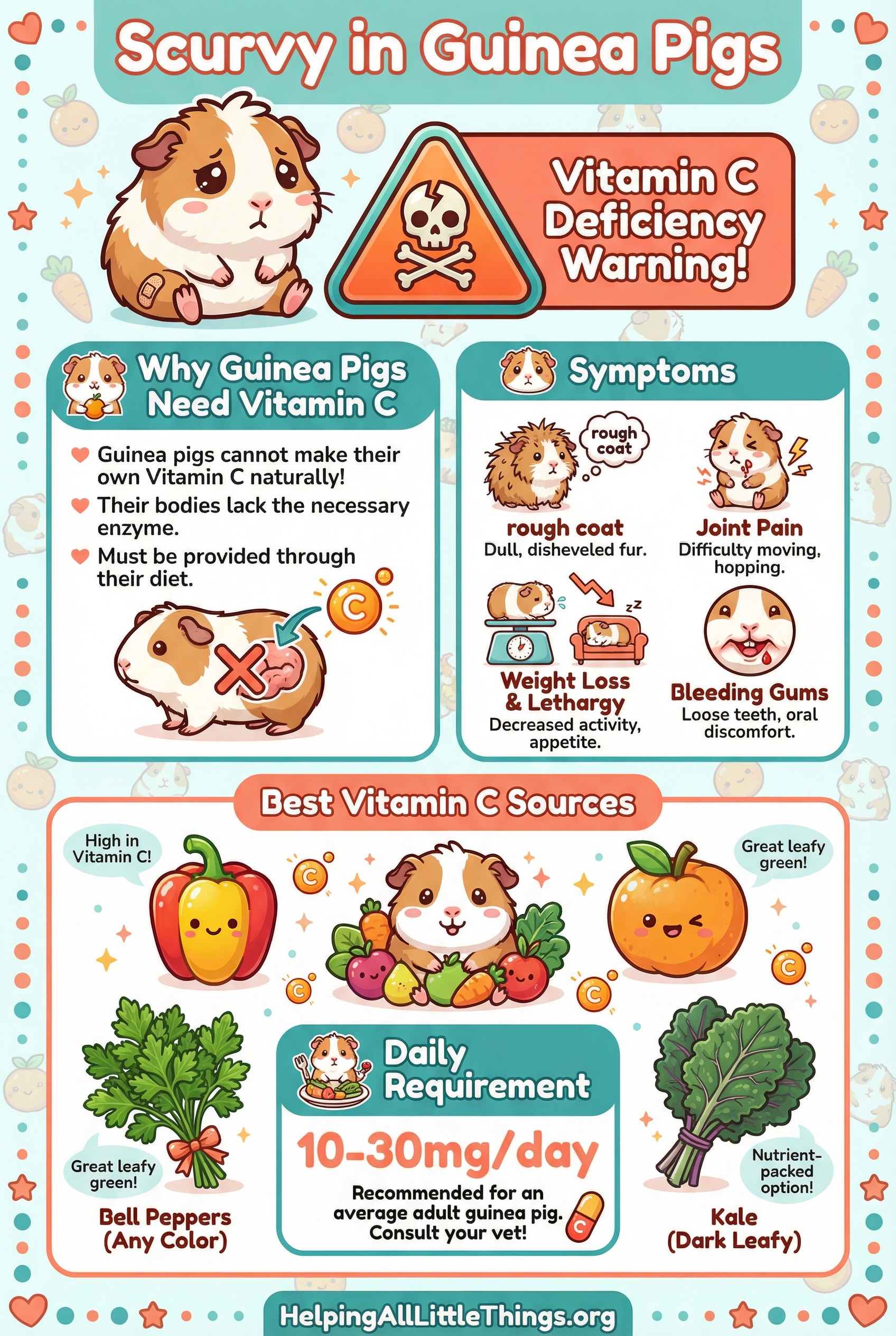

Scurvy is one of the most common and entirely preventable health conditions in guinea pigs. Unlike most mammals, guinea pigs — like humans — cannot synthesize their own Vitamin C (ascorbic acid). They must obtain it entirely through their diet. Without adequate Vitamin C, guinea pigs develop scurvy, a serious condition affecting connective tissue, immune function, and overall health.
Why Guinea Pigs Need Vitamin C
Guinea pigs lack the enzyme L-gulonolactone oxidase, which is required to convert glucose into Vitamin C. This means they are entirely dependent on dietary sources for this essential nutrient. Vitamin C plays a critical role in:
- Collagen synthesis (essential for skin, blood vessels, bones, and connective tissue)
- Immune system function
- Wound healing
- Iron absorption
Daily Vitamin C requirement: 10–30 mg/kg body weight per day; up to 50 mg/kg/day for pregnant or ill guinea pigs.[1]
Causes of Scurvy
Scurvy develops when a guinea pig does not receive adequate Vitamin C over a sustained period. Common causes include:
- Inadequate fresh vegetables — relying solely on pellets without fresh greens
- Old or improperly stored pellets — Vitamin C degrades rapidly; pellets more than 90 days old may have negligible Vitamin C content
- Vitamin C added to water — ascorbic acid degrades within hours in water, especially in light or metal bottles; this is not a reliable supplementation method
- Illness or increased demand — sick, pregnant, or growing guinea pigs have higher Vitamin C requirements
Signs and Symptoms
Scurvy can develop within 2–4 weeks of inadequate Vitamin C intake. Signs progress from subtle to severe:
| Stage | Signs |
|---|---|
| Early | Lethargy, reduced appetite, reluctance to move |
| Moderate | Swollen, painful joints; rough coat; weight loss; dental problems |
| Advanced | Bleeding gums, loose teeth, spontaneous bruising, internal bleeding, death |
Key signs to watch for:
- Swollen, tender joints — guinea pigs may cry out when handled or refuse to walk
- Bleeding gums and loose teeth
- Rough, dull coat with hair loss
- Slow wound healing or spontaneous bruising
- Diarrhea and general weakness
- Hunched posture and reluctance to move
Scurvy can be fatal if left untreated. A guinea pig showing joint pain, bleeding gums, or extreme lethargy needs veterinary care urgently.
Diagnosis
A veterinarian will diagnose scurvy based on:
- Clinical signs and dietary history
- Physical examination (joint swelling, gum condition, coat quality)
- Blood tests (low plasma ascorbic acid levels)
- X-rays may show bone changes in advanced cases
Treatment
Treatment involves immediate Vitamin C supplementation:
- Oral Vitamin C — 50–100 mg/kg/day given directly by syringe, divided into two doses[2]
- Parenteral Vitamin C — in severe cases, a veterinarian may administer Vitamin C by injection
- Dietary correction — immediately introduce fresh Vitamin C-rich vegetables
- Supportive care — pain management for joint swelling, assisted feeding if appetite is poor
Most guinea pigs show improvement within days of starting treatment, though full recovery from advanced scurvy can take several weeks.
Prevention
Prevention is straightforward and critical:
Best Dietary Sources of Vitamin C
| Food | Vitamin C Content |
|---|---|
| Bell peppers (red/yellow) | Very high (~190 mg/100g) |
| Kale | High (~120 mg/100g) |
| Parsley | High (~133 mg/100g) |
| Broccoli | Moderate (~89 mg/100g) |
| Romaine lettuce | Moderate (~24 mg/100g) |
| Strawberries | Moderate (~59 mg/100g) |
Daily fresh vegetable serving: approximately 1 cup of mixed leafy greens and vegetables per guinea pig per day, including at least one Vitamin C-rich item.
Supplementation Tips
- Use Vitamin C tablets (not water-soluble drops) — crush and mix into soft food or give directly
- Do not add Vitamin C to water — it degrades too quickly to be reliable
- Buy fresh pellets and store them in a cool, dark, airtight container; use within 90 days of manufacture
- Increase Vitamin C during illness, pregnancy, or growth — consult your vet for appropriate dosing
For more information on feeding your guinea pig, see our Nutrition Information guide.
References
[1] Quesenberry, K.E., Mans, C., & Orcutt, C.J. (2020). Ferrets, Rabbits, and Rodents: Clinical Medicine and Surgery (4th ed.). Elsevier.
[2] Carpenter, J.W. (2018). Exotic Animal Formulary (5th ed.). Elsevier.
[3] Harkness, J.E., Turner, P.V., VandeWoude, S., & Wheler, C.L. (2010). Harkness and Wagner's Biology and Medicine of Rabbits and Rodents (5th ed.). Wiley-Blackwell.
[4] Donnelly, T.M., & Brown, C.J. (2004). Guinea pig and chinchilla care and husbandry. Veterinary Clinics of North America: Exotic Animal Practice, 7(2), 351–373.