Pneumonia in Guinea Pigs
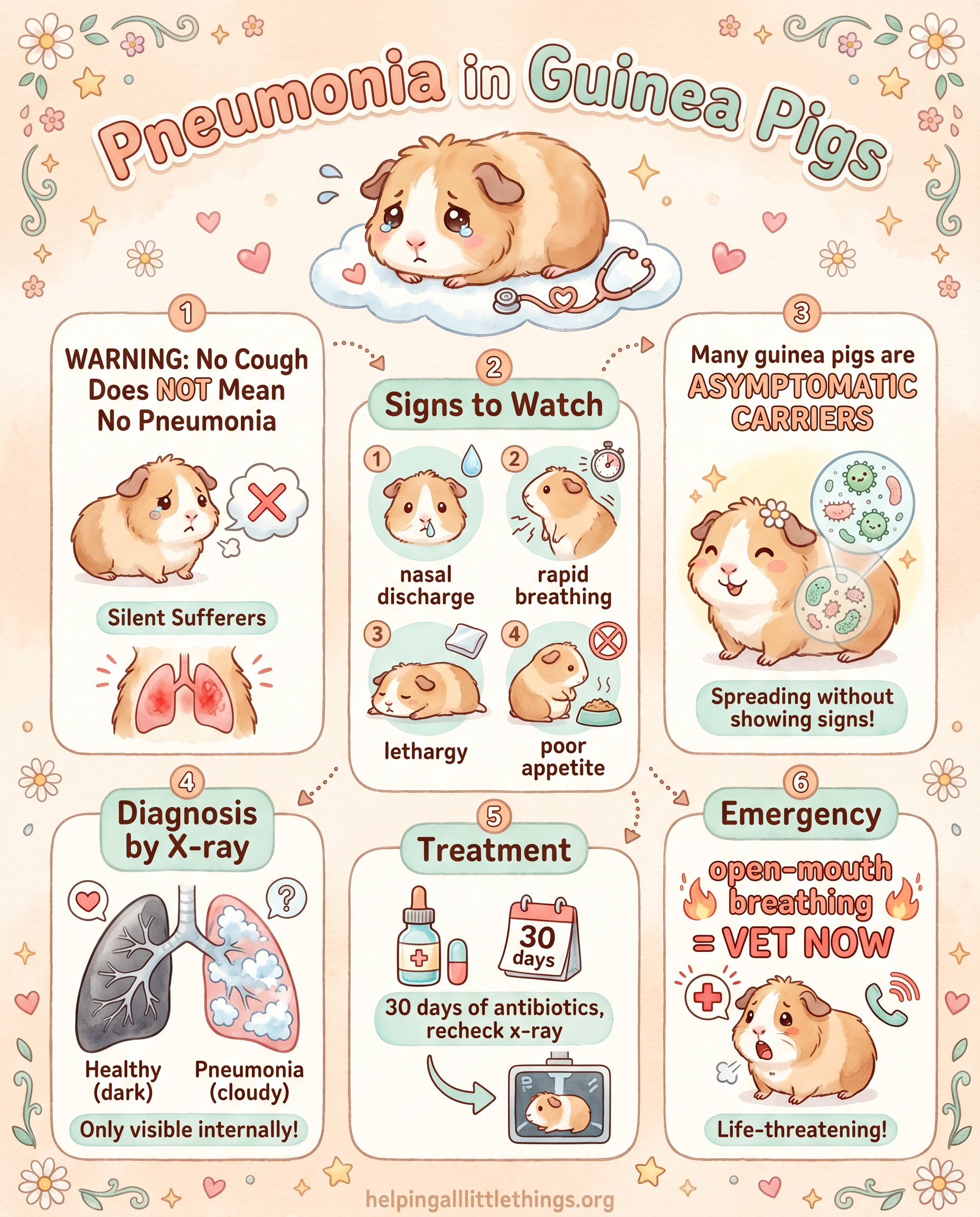

Pneumonia in guinea pigs can be fatal within 24–48 hours of visible symptoms. If your guinea pig is showing any signs of respiratory distress — or if you simply suspect something is wrong — do not wait. Contact an exotic veterinarian immediately.
Pneumonia is an infection of the respiratory system involving inflammation of the air sacs in the lungs (called alveoli). It is one of the most serious and unfortunately common health conditions affecting guinea pigs, and it is frequently underdiagnosed because of one critical, counterintuitive fact:
Unlike in humans, it is extremely common for guinea pigs with pneumonia to NOT have a cough.
This information, along with much of the foundational content in this article, is drawn from the educational materials of the Southern Main Hospital for Small Mammals, whose team has worked to raise awareness of this very common but underdiagnosed condition. You can also follow them on Facebook for ongoing small mammal health education.
Why Pneumonia Is So Dangerous in Guinea Pigs
The danger of pneumonia in guinea pigs lies in how quietly it progresses. Many seemingly healthy guinea pigs carry the bacteria that cause pneumonia in their bodies without displaying any obvious symptoms — a state known as being an asymptomatic carrier.1 There may be subtle changes detectable during a veterinary examination, but to the owner at home, the animal appears perfectly normal.
Even more alarming, guinea pigs with pneumonia may continue to eat and drink normally until the disease is quite advanced.2 This is a survival instinct — prey animals instinctively hide signs of illness to avoid appearing vulnerable. By the time an owner notices that something is wrong, the infection may have progressed to the point where successful treatment is no longer guaranteed.
This is why regular veterinary check-ups are so important for guinea pigs, even when they appear healthy.
What Causes Pneumonia in Guinea Pigs?
Pneumonia in guinea pigs is most commonly caused by bacterial infection. The two most significant pathogens are:3 4
- Bordetella bronchiseptica — the most common cause; guinea pigs can be asymptomatic carriers, and the bacteria can be transmitted from rabbits, dogs, and other guinea pigs. See our dedicated article on Bordetella in Guinea Pigs for more detail.
- Streptococcus pneumoniae and Streptococcus zooepidemicus — less common but capable of causing severe, rapidly progressing disease.
A less common cause is guinea pig adenovirus (GPAdV), a viral infection for which there is no direct cure; treatment is supportive only.5
What Triggers an Outbreak?
Symptoms generally appear when the guinea pig is under some kind of stress. The stress may be caused by:2
- Poor living conditions (dirty cage, poor ventilation, dusty or aromatic bedding)
- Dietary issues, particularly Vitamin C deficiency, which weakens the immune system
- The introduction of a new cage-mate
- The development of another concurrent infection — ear infections commonly occur in parallel with pneumonia and should always be checked for when pneumonia is diagnosed
Recognising the Symptoms
Because the absence of a cough is so unexpected, it is important to know what signs do appear. Symptoms of pneumonia in guinea pigs include:2 5
| Symptom | Notes |
|---|---|
| Nasal discharge | May be clear, white, or yellow |
| Eye discharge | Watery or crusty eyes |
| Rapid or heavy breathing | Sides heaving; audible wheezing or crackling |
| Lethargy | Huddling, reluctance to move, rough coat |
| Poor appetite | A very serious sign — can quickly trigger GI stasis |
| Weight loss | Often subtle in early stages |
| Head tilt | May indicate concurrent middle-ear involvement |
| Open-mouth breathing | A medical emergency — seek care immediately |
Do not wait for a cough before contacting your vet. Most guinea pigs with pneumonia never cough at all.
Diagnosis
Because symptoms can be subtle or absent, x-ray is the gold standard for diagnosing pneumonia in guinea pigs.2
A chest radiograph will show whether the lungs are healthy or inflamed:
- Healthy lungs: The spaces between the ribs appear dark (air-filled)
- Pneumonia: The spaces between the ribs appear cloudy or white, indicating inflammation and fluid in the air sacs
The images below, reproduced with permission from the Southern Main Hospital for Small Mammals, illustrate this difference clearly.
X-ray images from the Southern Main Hospital for Small Mammals will be added here. Contact HALT to provide these images. The healthy lung x-ray shows dark spaces between the ribs (air-filled alveoli), while the pneumonia x-ray shows cloudy or white areas indicating inflammation and fluid.
Additional diagnostics may include:5
- Stethoscope auscultation — listening for abnormal lung sounds (crackling, wheezing)
- Deep nasal or tracheal swab for bacterial culture or PCR to identify the specific pathogen
- Ear examination or aspiration to check for concurrent ear infection
- Bloodwork to assess systemic health and Vitamin C status
Treatment
Antibiotics
Pneumonia in guinea pigs is most commonly treated with antibiotics. Enrofloxacin is a frequently used first-line choice and is available in a banana-flavoured formulation that many guinea pigs accept readily.2
Important: Treatment courses are typically long — often 30 days — because this is a stubborn infection that requires sustained antibiotic levels to fully resolve.2 A recheck x-ray after treatment is strongly recommended to confirm that the lungs have cleared.
Many common antibiotics — including amoxicillin, penicillin, and other beta-lactams — are toxic to guinea pigs and can cause fatal gut dysbiosis. Treatment must always be prescribed by a veterinarian experienced with guinea pigs and exotic small mammals.6
The specific antibiotic chosen may depend on culture and sensitivity results. Other options used under veterinary guidance include trimethoprim-sulfa and chloramphenicol.5
Supportive Care
In addition to antibiotics, supportive care is often essential:5
- Syringe feeding with a high-fibre critical care formula (such as Sherwood SARx Recovery or Oxbow Critical Care) if the guinea pig is not eating voluntarily
- Vitamin C supplementation to support immune function
- Subcutaneous fluids to prevent dehydration
- Oxygen therapy and nebulization in more severe cases, to ease breathing and hydrate the airways
- Mucolytic agents or diuretics may be used by the vet to help clear mucus from the airways
Prognosis
Outcomes depend heavily on how early the infection is caught:5
- Early bacterial pneumonia treated promptly often results in full recovery, though some lung scarring may predispose the animal to future respiratory infections
- Advanced or late-diagnosed cases carry a much higher risk of fatality
- Viral (adenovirus) pneumonia has no direct cure; outcomes range from mild to fatal depending on the severity of the infection
This is why the Southern Main Hospital for Small Mammals emphasises the importance of early detection: more cases will be diagnosed early and treated successfully if owners and vets are aware of how quietly this disease can progress.2
Prevention
Reducing the risk of pneumonia involves addressing the conditions that allow it to take hold:3 5
- Keep the cage clean — change bedding regularly and ensure good ventilation to prevent ammonia buildup
- Never use pine or cedar bedding — the aromatic oils irritate the respiratory tract
- Provide adequate Vitamin C daily — guinea pigs cannot synthesise their own and deficiency rapidly compromises immunity
- Quarantine new animals for a minimum of 2–4 weeks before introducing them to existing guinea pigs
- Never house guinea pigs with rabbits — rabbits are common asymptomatic carriers of Bordetella bronchiseptica
- Keep guinea pigs away from dogs and cats that may carry Bordetella
- Schedule regular exotic vet check-ups — subtle changes in lung sounds or weight can be caught before symptoms become obvious
Related Articles
- Respiratory Issues in Guinea Pigs
- Bordetella in Guinea Pigs
- Ear Infections in Guinea Pigs
- Vitamin C and Scurvy in Guinea Pigs
- Hand-Feeding a Sick Guinea Pig
- Pneumonia in Small Pets: A General Guide