Pelvic Dystocia in Guinea Pigs
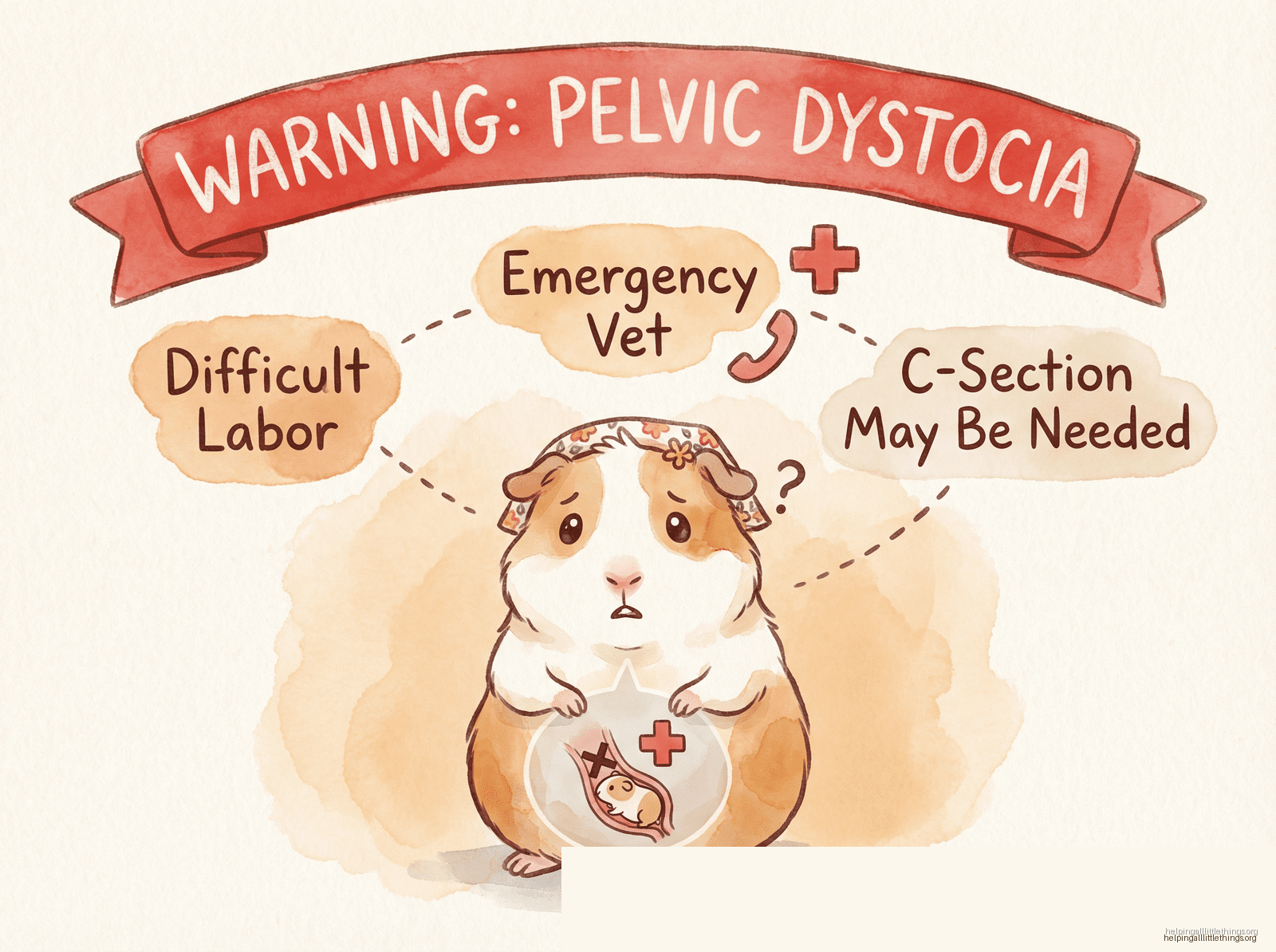

Pelvic dystocia, or difficulty giving birth, is a common and life-threatening emergency in guinea pigs. It is a direct consequence of their unique pelvic anatomy and is the primary reason why responsible breeding of guinea pigs is so complex. Understanding this condition is critical for anyone who owns a female guinea pig, as accidental pregnancies are common.
The Fusing of the Pelvis
A guinea pig's pelvis is made of two halves that are joined at the bottom by a fibrous ligament called the pubic symphysis. In a young, non-pregnant female, this ligament is flexible.
During pregnancy and birth, the hormone relaxin is released, which causes this ligament to soften and separate, allowing the pelvic canal to widen so the large guinea pig pups (piglets) can pass through.
However, if a female guinea pig (sow) is not bred for the first time before she is 7-8 months old, this pubic symphysis begins to mineralize and fuse into solid bone. It loses its flexibility permanently.
What is Pelvic Dystocia?
Pelvic dystocia occurs when a sow is giving birth but the pelvic canal cannot widen enough for the pups to pass. This happens for two main reasons:
- Age-Related Fusion: The sow was bred for the first time after her pelvis had already fused (i.e., she is older than 8 months and this is her first litter).
- Obesity: An obese sow may have excessive fat deposits in the pelvic canal, physically narrowing the birth path.
When dystocia occurs, the pups become stuck in the birth canal. This is a dire emergency for both the mother and the pups.
Signs of Dystocia
A normal guinea pig birth is very quick, with all pups usually delivered within 30 minutes. Signs that a sow is in trouble include:
- Prolonged Labor: Straining and pushing for more than 20-30 minutes with no pup produced.
- Distress: Crying out, exhaustion, or collapse.
- Bloody Discharge: A green or bloody discharge from the vulva without the delivery of a pup.
Action: A Medical Emergency
Dystocia is a situation that requires immediate veterinary intervention. There is no home treatment.
- Veterinary Care: A veterinarian will confirm that a pup is stuck. They may try to manually assist the delivery, but this is often unsuccessful.
- Cesarean Section (C-Section): In almost all cases of true dystocia, the only option is an emergency C-section to save the life of the mother. The survival rate for the pups is often low, as they can be deprived of oxygen while they are stuck.
Prevention: The Only Cure
Pelvic dystocia is entirely preventable through responsible ownership and breeding practices.
- Do Not Breed Older Females: A female guinea pig should never be bred for the first time if she is over 8 months of age. It is a death sentence.
- Prevent Accidental Pregnancies: House male and female guinea pigs separately. Male guinea pigs can be neutered to allow them to live safely with females.
- Sexing: Ensure your guinea pigs are properly sexed when you acquire them to prevent surprise litters.
Because of the serious risk of dystocia, breeding guinea pigs should only be undertaken by experienced, knowledgeable breeders. For the average pet owner, preventing pregnancy is the most important step you can take to protect your female guinea pig from this dangerous and preventable emergency.