Parasites in Guinea Pigs
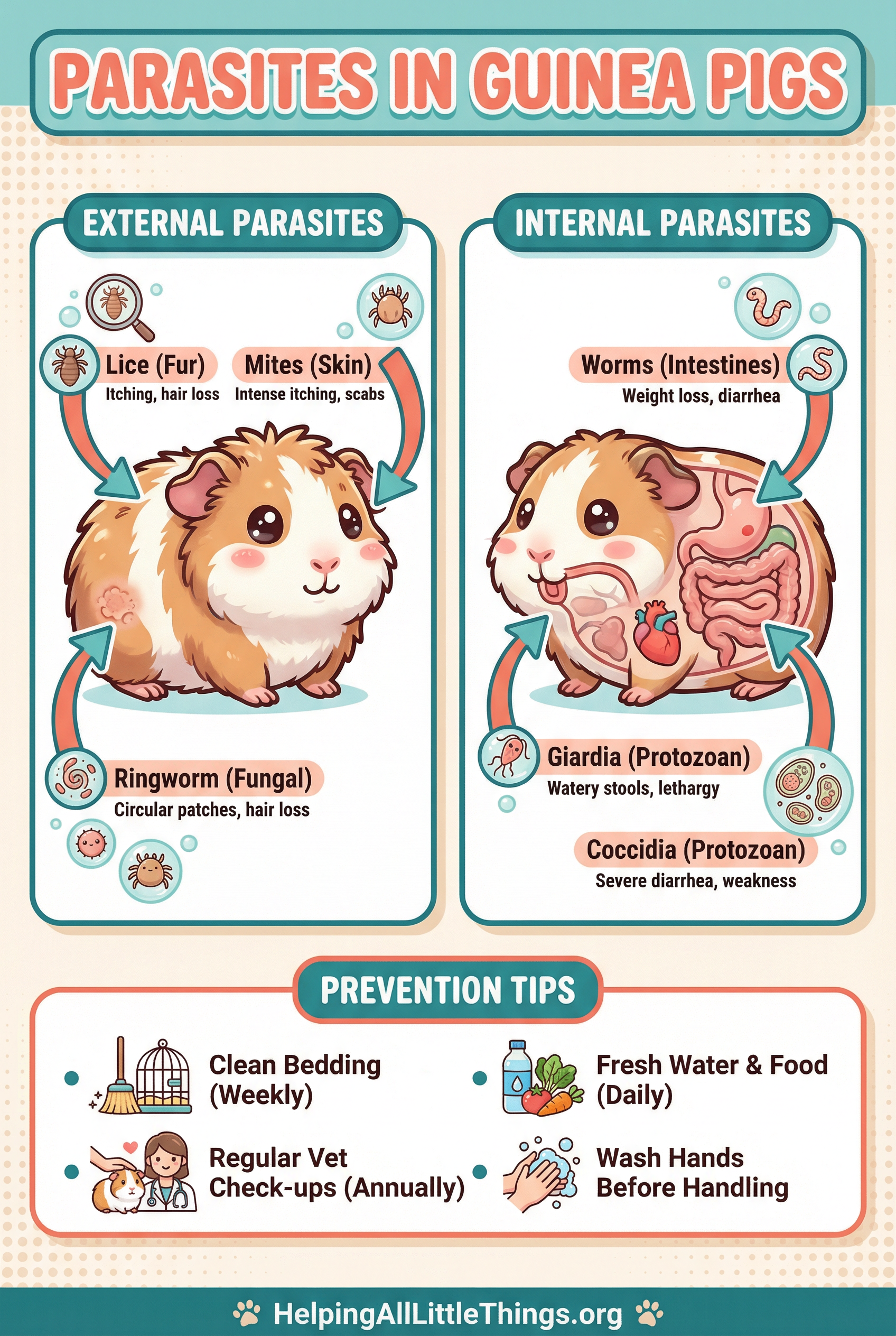

Parasites are one of the most common health concerns for guinea pig owners. Both external parasites (those living on the skin and fur) and internal parasites (those living inside the body) can cause significant discomfort and health problems if left untreated. Early identification and prompt veterinary care are essential to keeping your guinea pig healthy.
External Parasites
External parasites live on the surface of the body — in the fur, on the skin, or in the ears.
Mites
Mites are microscopic arachnids that burrow into the skin, causing intense itching and discomfort. The most common species affecting guinea pigs is Trixacarus caviae (sarcoptic mange mite), which causes mange — a severe, potentially life-threatening condition if untreated.
Signs of mite infestation:
- Intense scratching, often to the point of self-injury
- Hair loss, particularly along the back and flanks
- Crusty, thickened, or reddened skin
- Seizure-like episodes in severe infestations (due to extreme discomfort)
- Weight loss and lethargy
Chirodiscoides caviae, a fur mite, is less severe but still causes itching and coat changes.
Sarcoptic mange can cause seizures in guinea pigs due to the extreme discomfort. If your guinea pig is scratching violently or having episodes that look like seizures, seek veterinary care immediately.
Lice
Guinea pig lice (Gliricola porcelli and Gyropus ovalis) are species-specific and cannot be transmitted to humans or other animals. They are visible to the naked eye as small, pale insects moving through the fur.
Signs of lice infestation:
- Visible insects or white nits (eggs) attached to hair shafts
- Scratching and restlessness
- Dull, rough coat condition
- Hair loss in severe cases
Fleas
While less common than mites or lice, guinea pigs can contract fleas from dogs, cats, or the environment. Fleas cause itching, skin irritation, and can transmit tapeworms.
Ear Mites
Psoroptes cuniculi can occasionally infest guinea pig ears, causing head shaking, ear scratching, and dark waxy discharge.
Internal Parasites
Worms (Helminths)
Intestinal worms are less common in guinea pigs than in some other species but do occur. Types include pinworms (Paraspidodera uncinata), tapeworms, and roundworms.
Signs of worm infestation:
- Unexplained weight loss despite normal appetite
- Diarrhea or soft, abnormal stools
- Lethargy and reduced activity
- Dull coat condition
- Visible worms or worm segments in feces (tapeworms)
- Perianal irritation and scratching
Coccidia
Eimeria species are single-celled protozoan parasites that infect the intestinal tract. Young, stressed, or immunocompromised guinea pigs are most susceptible.
Signs of coccidiosis:
- Diarrhea (sometimes bloody)
- Weight loss
- Lethargy
- Dehydration in severe cases
Giardia
Giardia is a protozoan parasite that can cause chronic diarrhea, weight loss, and malabsorption. It is transmitted through contaminated water or feces.
Diagnosis
A veterinarian will diagnose parasites through:
| Method | Used For |
|---|---|
| Skin scraping | Mites (sarcoptic, demodectic) |
| Coat brushing / tape test | Lice, fur mites |
| Fecal flotation | Worms, coccidia, Giardia |
| Microscopic examination | Identifying species |
| Physical examination | External parasites, skin changes |
Treatment
Treatment depends on the type of parasite identified:
| Parasite | Common Treatment |
|---|---|
| Sarcoptic mites | Ivermectin (injectable or topical), selamectin |
| Fur mites / lice | Ivermectin, selamectin, or pyrethrin-based products |
| Worms | Fenbendazole or other anthelmintics |
| Coccidia | Trimethoprim-sulfamethoxazole or toltrazuril |
| Giardia | Metronidazole or fenbendazole |
Never use dog or cat flea/tick products on guinea pigs without veterinary guidance. Many common products (especially those containing permethrin or fipronil) are toxic to guinea pigs.
All guinea pigs in the household should be treated simultaneously to prevent re-infestation. Bedding, enclosures, and accessories should be thoroughly cleaned and disinfected.
Prevention
Preventing parasite infestations involves good husbandry and hygiene practices:
- Quarantine new animals for at least 4 weeks before introducing them to existing guinea pigs
- Clean the enclosure weekly and replace all bedding
- Source hay and bedding from reputable suppliers to minimize contamination risk
- Avoid contact with wild animals or areas frequented by wild rodents
- Regular veterinary check-ups including fecal examinations annually or if symptoms appear
- Wash hands before and after handling guinea pigs, especially if you have other pets
For more information on specific parasites, see our dedicated articles on Mites in Guinea Pigs, Lice in Guinea Pigs, Coccidia in Guinea Pigs, and Giardia in Guinea Pigs.
References
[1] Quesenberry, K.E., Mans, C., & Orcutt, C.J. (2020). Ferrets, Rabbits, and Rodents: Clinical Medicine and Surgery (4th ed.). Elsevier.
[2] Carpenter, J.W. (2018). Exotic Animal Formulary (5th ed.). Elsevier.
[3] Meredith, A., & Redrobe, S. (2010). BSAVA Manual of Exotic Pets (5th ed.). British Small Animal Veterinary Association.
[4] Donnelly, T.M., & Brown, C.J. (2004). Guinea pig and chinchilla care and husbandry. Veterinary Clinics of North America: Exotic Animal Practice, 7(2), 351–373.