Neurologic Diseases in Guinea Pigs
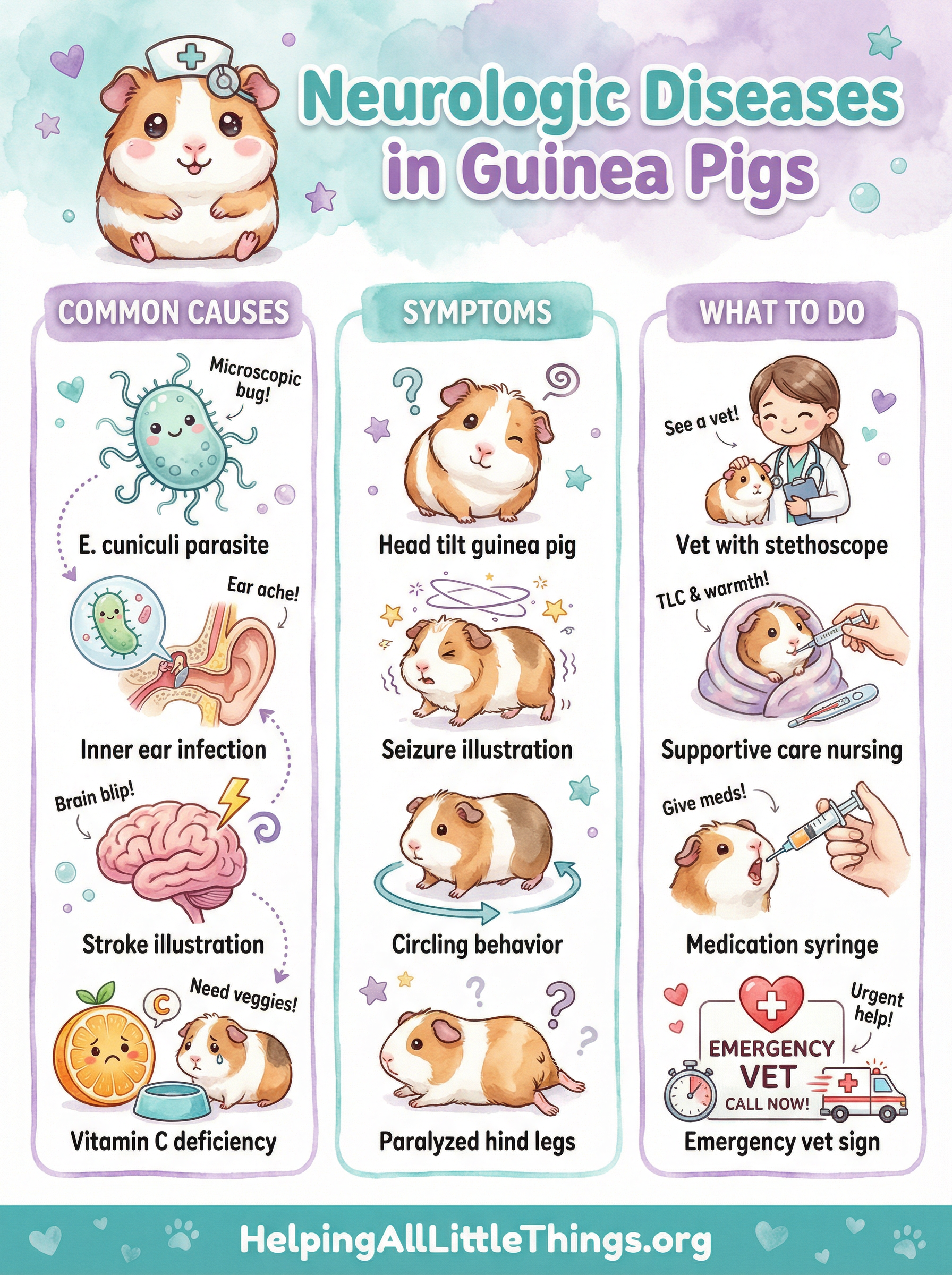

Neurological symptoms in guinea pigs — head tilt, loss of balance, seizures, circling, or paralysis — can be alarming to witness. These signs can have several different underlying causes, and prompt veterinary assessment is essential to identify the cause and begin appropriate treatment. Many guinea pigs with neurological conditions can recover well or maintain a good quality of life with proper care.
Common Causes
1. Encephalitozoon cuniculi (E. cuniculi)
E. cuniculi is a microsporidian parasite that infects the brain, kidneys, and eyes. It is one of the most common causes of neurological symptoms in guinea pigs and is spread through infected urine. Symptoms include head tilt, loss of balance, circling, and seizures. Treatment with fenbendazole and anti-inflammatory medication can significantly improve outcomes.1
For a detailed overview, see our article on E. cuniculi in Guinea Pigs.
2. Inner Ear Infections (Otitis Interna)
Bacterial infections of the inner ear are a common cause of head tilt and balance problems in guinea pigs. The inner ear controls balance, and when it is inflamed or infected, guinea pigs lose their ability to orient themselves normally. Treatment with systemic antibiotics can be very effective, particularly when started early.
For more detail, see our article on Ear Infections in Guinea Pigs.
3. Stroke (Cerebrovascular Accident)
Strokes occur when blood flow to part of the brain is interrupted, either by a clot or a bleed. They can cause sudden-onset neurological signs including head tilt, weakness, and loss of coordination. Unlike infections, strokes are not treatable with antibiotics, but supportive care and anti-inflammatory medication can support recovery. Some guinea pigs recover partially or fully; others have permanent deficits.
4. Vitamin C Deficiency (Scurvy)
Guinea pigs cannot synthesize their own Vitamin C and must obtain it entirely through their diet. Severe deficiency causes scurvy, which can affect the nervous system as well as the musculoskeletal system. Neurological signs of scurvy include weakness, reluctance to move, and in severe cases, loss of coordination. Treatment involves immediate Vitamin C supplementation and dietary correction.2
5. Meningitis
Meningitis — inflammation of the membranes surrounding the brain and spinal cord — can be caused by bacterial or viral infections. It is a serious, life-threatening condition. Symptoms include seizures, loss of coordination, head tilt, lethargy, and fever. Treatment requires aggressive antibiotic therapy and supportive care.
6. Trauma
Head injuries from falls or being dropped can cause neurological symptoms. The severity depends on the extent of the injury. Supportive care, anti-inflammatory medication, and strict rest are the primary treatments.
7. Tumors
Brain tumors are uncommon in guinea pigs but can cause progressive neurological signs. Diagnosis typically requires advanced imaging (MRI or CT). Treatment options are limited.
Symptoms
Neurological symptoms in guinea pigs include:
| Symptom | Description |
|---|---|
| Head tilt | Persistent tilting of the head to one side; often associated with inner ear disease or E. cuniculi |
| Loss of coordination (ataxia) | Stumbling, staggering, or inability to walk normally |
| Circling | Walking in tight circles, usually toward the affected side |
| Rolling | Uncontrolled rolling to one side; indicates severe vestibular dysfunction |
| Nystagmus | Rapid, involuntary eye movements |
| Seizures | Uncontrolled shaking, paddling, or twitching |
| Paralysis | Inability to move one or more limbs |
| Lethargy | Reduced activity, spending more time lying down |
| Behavior changes | Confusion, disorientation, or unusual aggression |
Any guinea pig showing sudden neurological symptoms — especially head tilt, seizures, or inability to walk — requires urgent veterinary attention. Many of these conditions are treatable, but time is critical.
Diagnosis
Because multiple conditions can cause similar neurological symptoms, diagnosis involves ruling out causes systematically:
- Physical and neurological examination — assessing reflexes, coordination, eye movements, and muscle tone
- Otoscopic examination — checking for ear infection
- Blood tests — assessing for infection, Vitamin C levels, and organ function
- Serology — antibody testing for E. cuniculi (note: a positive result indicates exposure, not necessarily active disease)
- Urinalysis — checking for E. cuniculi spores
- Radiographs — assessing the skull and spine
- Advanced imaging (MRI/CT) — available at specialist centers; provides detailed assessment of the brain and inner ear
Treatment
Treatment depends on the underlying cause:
| Cause | Treatment |
|---|---|
| E. cuniculi | Fenbendazole (28-day course); anti-inflammatory drugs (meloxicam or prednisolone) |
| Inner ear infection | Systemic antibiotics (4–8 weeks); anti-inflammatory drugs |
| Stroke | Supportive care; anti-inflammatory drugs; nursing care |
| Vitamin C deficiency | Immediate Vitamin C supplementation; dietary correction |
| Meningitis | Aggressive antibiotic therapy; supportive care |
| Trauma | Rest; anti-inflammatory drugs; supportive care |
Supportive care is important for all neurological cases:
- Syringe feeding if the guinea pig cannot eat independently
- Ensuring access to water (a bowl may be easier than a bottle for a guinea pig with a head tilt)
- Soft, padded bedding to prevent injury from rolling or falling
- Warmth and a calm, low-stress environment
- Regular monitoring and communication with your vet
A guinea pig with a persistent head tilt can still live a happy, comfortable life. Many owners of "tilty pigs" report that their pets adapt remarkably well and remain active, social, and engaged. The key is ensuring they can access food and water safely and that their environment is adapted to prevent injury.